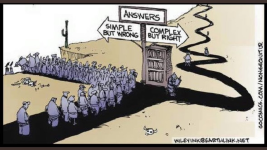
@Chadk, thanks for the kudo. I didn’t mention it in the Philippines story, but ill-conceived measures often leads to non-strategic results. In the PI we measured the success of the program on the $$ value of the property recovered when in fact our strategic goal was to reduce property theft. We should have been measured on the $$ value reduction in property loss.Great story. Reminds me of the so called "gun buyback programs". People turning in trash, fake, toy, BB, and broken guns for cash to buy good working guns. Hey, but at least they did SOMETHING!! lol
There is a fantastic historical example of this that had real world implications for the lives of 1000s of merchant seaman in WWII. Prior to the US entrance in WWII, the US was sending 100s of merchant ships across the North Atlantic to re-supply Britain and Russia. Losses to aerial bombing from land based German planes based in the Baltic were extensive and unsustainable. The U.S. Navy and Merchant Marine decided to put anti-aircraft guns on merchant ships and man them with trained Navy personnel. When the program was first evaluated, the primary measure of success was the number of German aircraft shot down. When that number was so low and the U.S. entered WWII after Pearl Harbor, the Navy recommended taking the guns and crews off the merchant ships as they were needed in the Pacific. This almost happened until a savvy Merchant Marine officer challenged the decision on strategic grounds. “Why did we put the guns on the ships?” After some cajoling the answer became clear to all. We really didn’t put the guns and crews on the ship to shoot down German aircraft, we put the guns on the ships to stop the wholesale sinking of merchant ships. After honest analysis, the evidence was clear. Despite having not shot down many German aircraft, ship losses to German aircraft had dropped dramatically. Although the Navy almost abandoned the program because they needed the gun crews in the Pacific, when they looked at the strategic goal: reduce ship losses, they came to an elegant solution. They kept the guns on the ships and trained merchant seaman to load and fire the guns. It worked. Why?
When you are shot at, you change your behavior. When German aircraft weren’t being shot at, they could target ships with their bombs at 1000ft where accuracy was very high. When shot at, they were forced to 10,000ft where accuracy was significantly reduced. It really did not matter that a German aircraft was shot down or not, it only mattered that they couldn’t effectively target a merchant ship.
The lesson from this story is simply this: Measure the success or failure of your effort against the Strategic Goal, otherwise no matter how righteous you may think your tactics are, you may in fact generate non-strategic results.
Last edited: