
Solunar Tables

Tom Butler

Grandpa, Small Stream Fanatic
Forum Supporter
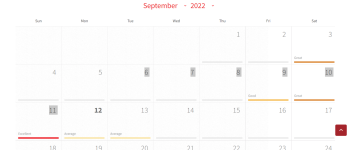
I know we've discussed this before, but I'm not noticing any correlation. I've kept an eye on the tables this summer, and it just hasn't panned out. I fish freshwater lakes and streams.
As an example yesterday was supposed to be good, but was the slowest day of the week, and the "best times" were really slow. Dead calm and smokey haze probably had more of an effect.
They may make good talking points or excuses, but conditions such as barometric pressure and solunar tables just don't seem to have undue influence around here.
I guess my point is I wouldn't let these things stop me from going, nor would I plan around them, I'll just go.
 

Attachments
  • 1663000597306.png
    1663000597306.png
    323.6 KB · Views: 3
Last edited:
I find for musky it matters more. Steelhead I don't like fishing the day after a bright or fuller moon. My theory is with the low night light they are traveling all night and there is no morning shift or jostling. I think jostling and jockeying for position and moving into holding water for the day is when steelhead bite. Just a theory but perhaps it helps
 
I have long subscripted to the very best time to fish is when you have the chance!

That said I believe in at least some cases those solunar lunar tables have some predictable value as fish activity though they are likely only one factor. Back in the 1968 to test whether there was any validity to those activity tables for PS winter steelhead. I had noticed that there they to may have predicted the best time to catch one of those steelhead. In December of that year, I opted to ignore those tables and just recorded the time I caught a steelhead. For the month I caught 18 steelhead (they were late) with 15 or more than 80% were caught during one of those predicted activity periods. With that information in hand, I decided that those tables were a valid aid to my fishing. Since then, on trips or when my time may limited I will note the expected periods of activity.

I feel they have value with predators like largemouth or small bass. However, with trout their predictability was less reliable. I suspect that is because the trout activity is often driven more by such things a hatch timing. That said in the last few years during some of my lake fishing during periods of minimal insect activity I found I wanted to be fishing during one of those periods which often yielded high catch rates than other times.

Curt
 
The best solution is probably just to fish every day. Kind of like MGTom. ;) You'll probably hit it right eventually that way.
After years of a couple outings at most it's great to be able to go so much. Just wish I wasn't at the computer doing meetings and setting up classes today! Couple more years. Even the idiot is due to stumble into something good once in a while.:)
I find for musky it matters more. Steelhead I don't like fishing the day after a bright or fuller moon. My theory is with the low night light they are traveling all night and there is no morning shift or jostling. I think jostling and jockeying for position and moving into holding water for the day is when steelhead bite. Just a theory but perhaps it helps
That theory makes sense to me. And the moon affects tides so there is probably some correlation between these and the tide tables for saltwater folks.
 
I have long subscripted to the very best time to fish is when you have the chance!

That said I believe in at least some cases those solunar lunar tables have some predictable value as fish activity though they are likely only one factor. Back in the 1968 to test whether there was any validity to those activity tables for PS winter steelhead. I had noticed that there they to may have predicted the best time to catch one of those steelhead. In December of that year, I opted to ignore those tables and just recorded the time I caught a steelhead. For the month I caught 18 steelhead (they were late) with 15 or more than 80% were caught during one of those predicted activity periods. With that information in hand, I decided that those tables were a valid aid to my fishing. Since then, on trips or when my time may limited I will note the expected periods of activity.

I feel they have value with predators like largemouth or small bass. However, with trout their predictability was less reliable. I suspect that is because the trout activity is often driven more by such things a hatch timing. That said in the last few years during some of my lake fishing during periods of minimal insect activity I found I wanted to be fishing during one of those periods which often yielded high catch rates than other times.

Curt
I know you have a lot of experience, thanks for sharing your knowledge.
 
Back
Top