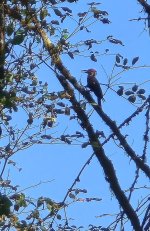
Some Birds of Paradise. [No, not this bird of paradise.].
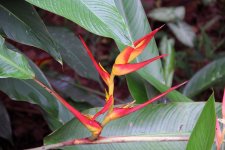
More accurately, some birds at Paradise, Mt. Rainier
Grouse can be cryptic, until they aren’t… This sooty grouse hen strutted across the parking lot at the site of the old Visitor Center at Paradise as soon as we arrived.
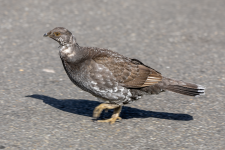
I was left scrambling for my camera, but she posed and lingered nearby.
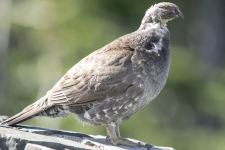
I was anticipating that there might be some chicks around accompanying her but none appeared.
I commonly encounter Canada jays in the Paradise area. Well-known beggars and camp-robbers, they have little fear of humans. As we neared the terminus of the Nisqually Glacier Overlook trail, we encountered a noisy family group, a pair of breeding adults
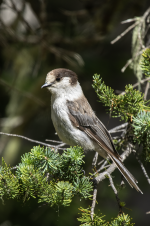
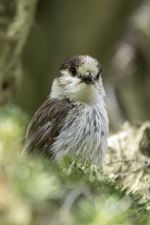
and several fledglings.
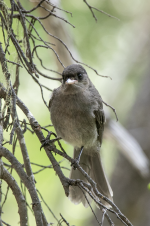
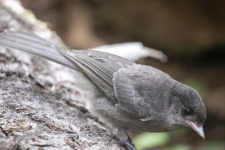
They were foraging through the forest, rather than looking for a handout.
Canada jays begin breeding quite early in the season, in March and April, often when the area is still snow-covered. A common behavior among jay species is cooperative breeding where one or more offspring helps with raising siblings from a subsequent breeding season or two. In Canada jays, one fledgling dominates the others and drives off the other siblings. This dominant sibling will assist the parents with caching food to survive the winter (no second breeding attempt in the summer). Single expelled siblings may join an unrelated pair whose breeding attempt failed. During the next breeding season, the helper is kept away from the nest and nestlings, but it will then help feed fledglings (when it is no longer a cannibalism threat). Ultimately, these helpers are hanging around in the hopes of inheriting their natal territory or a nearly territory.
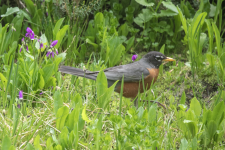
This visit was a productive one for thrushes. We had several good views of American robins, including this foraging male.
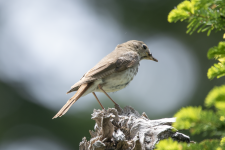
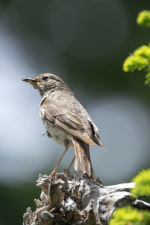
We heard, and Merlin confirmed, both varied thrushes and Swainson’s thrushes. Both can be quite cryptic, but at one point a Swainson’s popped into view briefly, enough time for a few snaps.
Steve










 Nice pic.