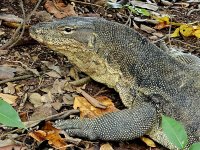
NFR Got any Herp pictures?

Non-fishing related
So I’m on my daily 6-8 mile trek minding my own business just north of Little Round Top and I happen glance to the right and I see this guy waiting for the light to change on Sedgewick Ave. Eastern Rat Catcher. He was a good 6+’ trying to hide from me. Couldn’t get all of him in one frame. Beautiful black on a cream colored bottom.
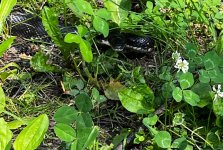
IMG_3649.jpegIMG_3644.jpegIMG_3642.jpeg
Tried to get him across the road to safety but he wouldn’t budge even when I gave him a stern talking to. On my way back through an hour+ later there were no signs of him or a H&R herpicide so life was good.
 
No pics as they were too fast and I was too slow. I was on a beach recently where I saw at least six garter snakes. They were all about the same size. They were in the driftwood between the shore and someone’s lawn. You can tell the driftwood has been there for a long time.
Is it just good habitat, something under the driftwood they like dining on or a group of recent offspring?
SF
 
No pics as they were too fast and I was too slow. I was on a beach recently where I saw at least six garter snakes. They were all about the same size. They were in the driftwood between the shore and someone’s lawn. You can tell the driftwood has been there for a long time.
Is it just good habitat, something under the driftwood they like dining on or a group of recent offspring?
SF
They could be from the same brood, especially given their similar sizes. Were they small enough to be this year's brood? From what I can find online, females typically give birth in late July through September. But with a mild winter, the females may have mated earlier in the spring. Gestation is 2-3 months after mating. Garter snakes are ovoviviparous. Females retain fertilized eggs and give birth to juveniles.
Juveniles will eat insects (such as grasshoppers), earthworms, and slugs. But with the intertidal close at hand, they will also feed on small fish, such as tidepool sculpins.
Steve
 
They could be from the same brood, especially given their similar sizes. Were they small enough to be this year's brood? From what I can find online, females typically give birth in late July through September. But with a mild winter, the females may have mated earlier in the spring. Gestation is 2-3 months after mating. Garter snakes are ovoviviparous. Females retain fertilized eggs and give birth to juveniles.
Juveniles will eat insects (such as grasshoppers), earthworms, and slugs. But with the intertidal close at hand, they will also feed on small fish, such as tidepool sculpins.
Steve

Steve,
Great info. These all looked like they were probably 18-20”.
SF
 
So I’m on my daily 6-8 mile trek minding my own business just north of Little Round Top and I happen glance to the right and I see this guy waiting for the light to change on Sedgewick Ave. Eastern Rat Catcher. He was a good 6+’ trying to hide from me. Couldn’t get all of him in one frame. Beautiful black on a cream colored bottom.
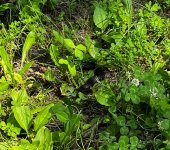
View attachment 185976View attachment 185977View attachment 185978
Tried to get him across the road to safety but he wouldn’t budge even when I gave him a stern talking to. On my way back through an hour+ later there were no signs of him or a H&R herpicide so life was good.
In Gettysburg ?
 
Yep, 17325
Cool place

Used to go there on day trips when I was a kid, running around the battlefield was fun for us kids.
 
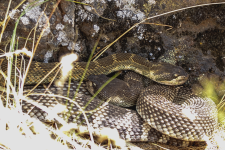
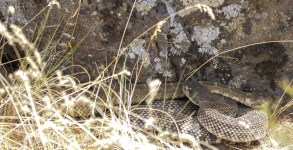
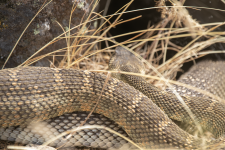
Western Rattlesnakes at Oak Creek Nature Area. June 2026. My wife and I went on a one-day flora and fauna adventure to the foothills of Eastern Washington. We stoped at the Oak Creek Natural Area and hiked along the Tieton River. As we headed back, I lagged several minutes behind her as I was taking bird and plant photographs. Passing a table-sized basalt boulder about 15’ off the trail, my peripheral vision caught a movement at the base of the boulder. It was a pair of intertwined western rattlesnakes in the shadows.
A01WesternRattlesnakePairAdjust2C2A2648-2.png
A02WesternRattlesnakePairTrim2C2A2651.png
I strongly suspect that I interrupted a mating encounter. Typically, western rattlesnakes mate in the spring. The females retain the fertilized eggs while they complete their development in about three months. The young rattlesnakes are born alive in the fall = ovoviviparous.
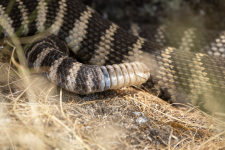
When they noticed me, one immediately dove into a hole leading under the boulder. The other quickly followed.
A03WesternRattlesnake2C2A2660.png
A04WesternRattlesnakeRattle2C2A2666.png
It was a great encounter for me. I never felt threatened, only excited. It was only the second or third rattlesnake that I have encountered in 6 decades. While I acknowledge that I don’t spend much time in “rattlesnake land”, I have spent enough time that I would have seen them more often than this.
Steve
 
No pics as they were too fast and I was too slow. I was on a beach recently where I saw at least six garter snakes. They were all about the same size. They were in the driftwood between the shore and someone’s lawn. You can tell the driftwood has been there for a long time.
Is it just good habitat, something under the driftwood they like dining on or a group of recent offspring?
SF
there's a stretch of puget sound beach i spent a lot of time on in recent years that has a ton of western fence lizards, and also many northern alligator lizards, both populating that high tide - driftwood zone. plenty of garters in there too, including some big ones. once in a while, a rubber boa. i figure the snakes had a pretty easy time catching lizards, esp the babies when they were emerging. but the most plentiful protein source by volume that i noticed were the sand fleas, and i'm guessing that was the base of the food pyramid for all of those herps. endless supply.
 
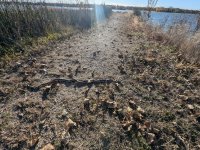
Bull Snake from November; we were both out on the jetty catching some rays. I also caught some fish. No word on how the snake did.
Snek.jpgSnek closeup.jpg
Bullfrog from two weeks ago; was fishing a CPR tournament where the tourney identifier was "Eat Kermit"; thought the little guy should be warned.
Eat Kermit.jpg
 
Western Rattlesnakes at Oak Creek Nature Area. June 2026. My wife and I went on a one-day flora and fauna adventure to the foothills of Eastern Washington. We stoped at the Oak Creek Natural Area and hiked along the Tieton River. As we headed back, I lagged several minutes behind her as I was taking bird and plant photographs. Passing a table-sized basalt boulder about 15’ off the trail, my peripheral vision caught a movement at the base of the boulder. It was a pair of intertwined western rattlesnakes in the shadows.
View attachment 186353
View attachment 186354
I strongly suspect that I interrupted a mating encounter. Typically, western rattlesnakes mate in the spring. The females retain the fertilized eggs while they complete their development in about three months. The young rattlesnakes are born alive in the fall = ovoviviparous.
When they noticed me, one immediately dove into a hole leading under the boulder. The other quickly followed.
View attachment 186351
View attachment 186352
It was a great encounter for me. I never felt threatened, only excited. It was only the second or third rattlesnake that I have encountered in 6 decades. While I acknowledge that I don’t spend much time in “rattlesnake land”, I have spent enough time that I would have seen them more often than this.
Steve
Any rattle from them? I've been fortunate in that all my encounters of "I don't feel like moving" have involved them rattling. I've had a couple encounters where they just move away without making any sound.

I've multi-day floated a certain river maybe 10 or 12 times, and I've encountered a rattler on 8 or 9 of those trips. To the point that I'm almost disappointed if I don't. Most of those encounters have been in camp. It took a few times to get used to it, for sure, but eventually I got to the point where the snake's presence was fine. It'd be pointed out for all to know/see, and then we'd just go back to lounging and enjoying ourselves. Eventually someone would have reason to amble about and check in on it, and the snake would be gone. Definitely an acquired comfort level, but turns out they don't want much to do with us either.

Thanks for sharing the pics. I'm always impressed with their girth compared to the gopher snakes I run into.
 
Last edited:
Any rattle from them? I've been fortunate in that all my encounters of "I don't feel like moving" have involved them rattling. I've had a couple encounters where they just move away without making any sound.

I've multi-day floated a certain river maybe 10 or 12 times, and I've encountered a rattler on 8 or 9 of those trips. To the point that I'm almost disappointed if I don't. Most of those encounters have been in camp. It took a few times to get used to it, for sure, but eventually I got to the point where the snakes presence was fine. It'd be pointed out for all to know/see, and then we'd just go back to lounging and enjoying ourselves. Eventually someone would have reason to amble about and check in on it, and the snake would be gone. Definitely an acquired comfort level, but turns out they don't want much to do with us either.

Thanks for sharing the pics. I'm always impressed with their girth compared to the gopher snakes run into.
No, no rattling at all. I was perhaps 15 feet away from them. Their only response to my presence was to dive into a hole under the boulder and I'm not sure that both of them would fit.
Steve
 
Back
Top