From the local "
weatherman"; a (fortunately tenured) PhD in Atmospheric Sciences whose team of researchers studies regional and global climate change by focusing on high-resolution modeling of how greenhouse gases interact with Pacific Northwest weather:
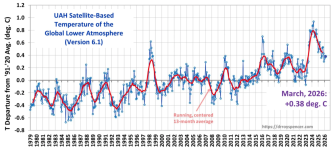
[There has been] "a slow rise in temperature over the past 50 years, by about 1°C. This is probably mainly due to increasing CO2 and other greenhouse gases in the atmosphere."
View attachment 181480
This blog provides updated forecasts and comments on current weather or other topics

cliffmass.blogspot.com
How significant is 1°C over 50 years to our forests.
Dr Mass is not a forester but seems to believe that high summer temps do dry out an ever-increasing bio-mass of standing timber and deadfallalong with (non-native) grasses in our forests, that as
@509 has pointed out combined with 40+ years of modern "
green, science based" forest practices have created
unsustainable forests, that are...
and are a (the?) major factor contributing to massive forest fires.
Photo by Genna Martin/The Herald Let’s dwell on a figure for a moment: 1,718. That’s the number of square miles burned by wildfires in Washington

web.archive.org
The WA CCA has spent $1.5 billion as of late 2025 on projects such as community investments (over $850M) and environmental initiatives that as of the last report that WADOE has (had the courage to admit) removed 78,000 metric tons of 96.1 million metric tons of annual greenhouse gas emissions.
Even according to WADOE, wildfires in Washington state have become a massive source of CO2 emissions, that in some high-fire years temporarily rival or exceed the state's entire transportation sector.
Has there been a
reliable cost-benefit analysis of spending for public forest management - (that may have significant recreational benefits i.e. increasing improving road access) vs the CCA and other Climate Change Initiatives (Engineered) for the amount of greenhouse gasses that can actually be prevented-removed?
As climate change accelerates, forests play a pivotal role in global carbon dynamics by providing both carbon sequestration and ecosystem resilience. …

www.sciencedirect.com