Navigation
Install the app
How to install the app on iOS
Follow along with the video below to see how to install our site as a web app on your home screen.
Note: This feature may not be available in some browsers.
More options
Style variation
You are using an out of date browser. It may not display this or other websites correctly.
You should upgrade or use an alternative browser.
You should upgrade or use an alternative browser.
Got any bird pics?
- Thread starter Wadin' Boot
- Start date
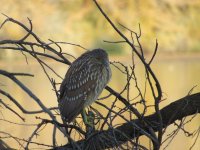
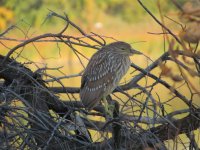
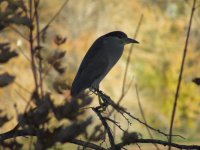
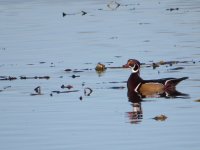

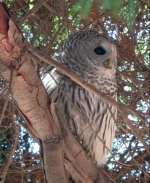
Son and I went out for stockers on Green Lake today, on the way over crows outed this guy from the neighbor's chimney. Not 100% sure why we typically see these guys in October/November but that seems pretty consistent over the past 4-5 years
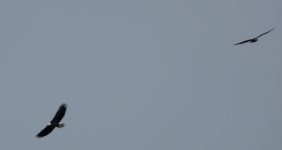
Saw a couple of bald eagles playing in the thermals
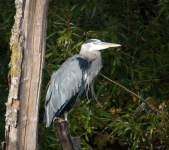
And this guy just hanging around
Saw a couple of bald eagles playing in the thermals
And this guy just hanging around
Attachments
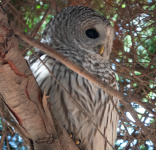

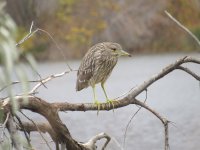
I vote crow. Pointy not really curvy bill, and smooth not shaggy throat.

tkww
Life of the Party
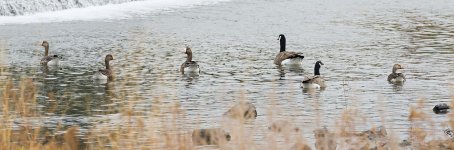
A few white-fronted geese stopped by. Here's a particularly well-marked one.
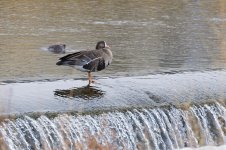
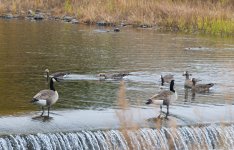
I noticed this one in a small group. Just a touch smaller, with a slightly thinner neck, pale cheeks (though the one GWFG it's next too also happens to have paler cheeks), and a lack of white front. The bill is also a little different, with black lining and no hook at the end of it.
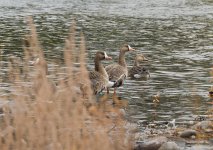
Sits a little less prominently in the water, on both ends.
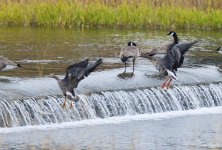
Here's it flying next to a "normal" GWFG. The leg (and bill) color differences stand out a bit more in comparison, as well as the neck, legs and overall size differences. Also lacks the white line where the wing attaches (this can be seen in other pics). The GWFG is also banded, which I think is pretty cool.
I noticed this one in a small group. Just a touch smaller, with a slightly thinner neck, pale cheeks (though the one GWFG it's next too also happens to have paler cheeks), and a lack of white front. The bill is also a little different, with black lining and no hook at the end of it.
Sits a little less prominently in the water, on both ends.
Here's it flying next to a "normal" GWFG. The leg (and bill) color differences stand out a bit more in comparison, as well as the neck, legs and overall size differences. Also lacks the white line where the wing attaches (this can be seen in other pics). The GWFG is also banded, which I think is pretty cool.

fkajwg
formerly known as ...
Do you happen to know if springtime is a customary time for a Flock at this location?Recent planned trip and hikes with my daughter at Pinnacles National Park while driving her back to school after spring break. An opportunity to see the first California Condors in my lifetime. Pretty amazing to see in the wild, considering my childhood memory of the remaining few being captured and their offspring fed with hand puppets in an effort to save the species. To see a pair mating was a highlight, as well as a couple peregrine chases any time they approached its nesting cliff. Atop the high peaks I was able to view them at eye level.
#27 does #86
Peregrine chase
In flight
B&W silhouette


I watch a lot of webcams at other locations and they certainly come and go, e.g. Henrietta peak, or Pacheco peak, but I don’t have Any clear idea if they are on a seasonal schedule
I have been to the redwoods a couple years and kept my eyes out for birds of the Klamath flock, w/o success
Jay
fkajwg
formerly known as ...
A major line of domestic ducks are derived from mallards, vs the other main line, Muscovy, so I’d say domestic or domestic wild mallard hybrid. I try not to use up too many processing cycles puzzling over mallards any moreSeems like a hybrid? Smaller size, shorter neck, tail curls. But clearly shows some mallard lineage, IMO. Thoughts?
View attachment 171190View attachment 171191
I think this is the first time I've had a swan show up.
View attachment 171192

Nisqually NWR, 26 October 2025. Part 1 of 3: New-world sparrows (Passerellidae). Fall brings major changes to the Nisqually NWR. The leaves on the dominant deciduous trees have turned a rich pumpkin-orange, appropriate for Halloween.
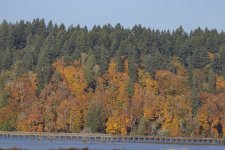
And then they fall in heaps that cover the boardwalks like a brown carpet.
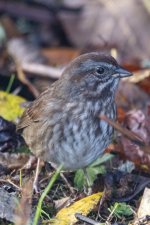
The local sparrows are exploiting the remaining bounty of summer. In late summer, the song sparrows turned shy, but they have transitioned to their bold selves recently.
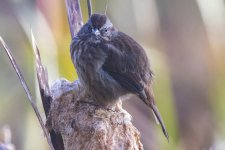
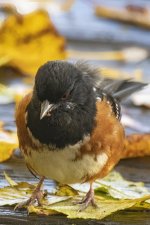
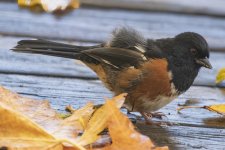
Rufous-sided towhees can be schizophrenic. At times, they will be incredibly shy and squeak warnings from deep in the understory, and at other times, they will be totally oblivious to your presence and do their thing regardless.
Several flocks of golden-crowned sparrows have invaded the refuge for the fall and winter. In addition to harvesting seeds and fruits from the summer, they are snipping off the tender blades of fresh green grass. These flocks tend to be quite stationary through the winter, consistently occupying small areas with access to fresh grass and deep cover. The birds are a mix of adults (black stripes on a yellow crown)
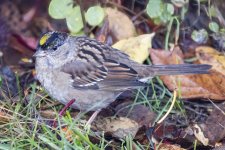
and juveniles (brown stripes on a yellow crown).
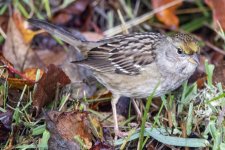
The black versus brown distinctions help establish dominance hierarchies in these overwintering feeding flocks.
Steve
And then they fall in heaps that cover the boardwalks like a brown carpet.
The local sparrows are exploiting the remaining bounty of summer. In late summer, the song sparrows turned shy, but they have transitioned to their bold selves recently.
Rufous-sided towhees can be schizophrenic. At times, they will be incredibly shy and squeak warnings from deep in the understory, and at other times, they will be totally oblivious to your presence and do their thing regardless.
Several flocks of golden-crowned sparrows have invaded the refuge for the fall and winter. In addition to harvesting seeds and fruits from the summer, they are snipping off the tender blades of fresh green grass. These flocks tend to be quite stationary through the winter, consistently occupying small areas with access to fresh grass and deep cover. The birds are a mix of adults (black stripes on a yellow crown)
and juveniles (brown stripes on a yellow crown).
The black versus brown distinctions help establish dominance hierarchies in these overwintering feeding flocks.
Steve
Nisqually NWR, 26 October 2025. Part 2 of 3: Shorebirds (Charadriiformes). Fall marks the return of many shorebird species to Nisqually. Some species are just passing through on their way to their overwintering grounds farther south. For other species, they will stay through winter until they migrate north to their breeding grounds. Hudsonian whimbrels fit in the former group.
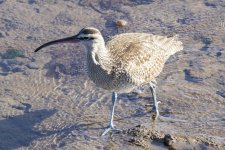
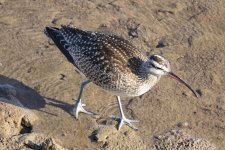
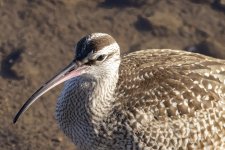
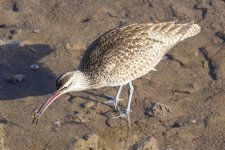
[In 2025, the two “whimbrel” subspecies were elevated to full species status: the Hudsonian species of North and South America and the Eurasian whimbrel of Europe, Asia, Africa, and Australia. The decision was based on morphological and genetic differences between the two former subspecies. That decision added a species to my life list as I had seen the Eurasian whimbrel while visiting the Northern Territory of Australia. Some birders deliberately seek out subspecies in the hopes that they will be elevated later.] Hudsonian whimbrels overwinter along the shores Southern California and the Gulf Coast and along the shorelines of South America as far south as the Strait of Magellan. Through October, there have been two whimbrels hanging around the elevated boardwalk. Their long, curved bills probed deep into burrows in the mud
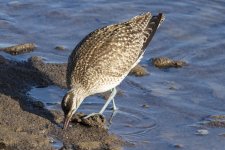
and extracted a shore crab every few minutes.
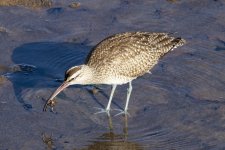
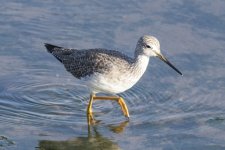
You can find a few greater yellowlegs at Nisqually even in summer, but their numbers jump in the fall and they are a consistent presence until spring.
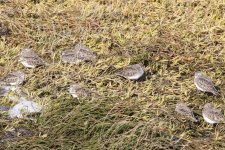
Nisqually harbors flocks of smaller shorebirds: dunlins, dowitchers, Western sandpipers, and least sandpipers. Their lives are a balance between the rich resources of the mudflats and the threat posed by hunting peregrine falcons. At high tide, this flock of least sandpipers (reliably identifiable by their yellow legs) rested in the Salicornia while they waited for the tide to drop and the mudflats to be exposed again.
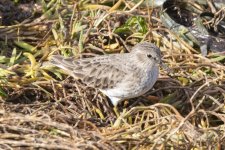
Finally, a normally-cryptic Wilson’s snipe decided to nap out in the open in an opening in the freshwater marsh, the same location where the bitterns, soras, and Virginia rails had been seen in the late summer. It spent most of its time with its bill tucked into its back feathers (not the best light…).
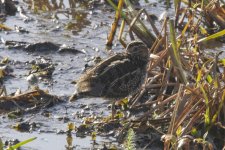
It would be energized for a few moments to probe the mud for a snack
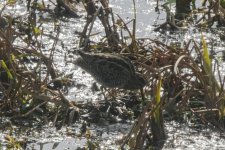
before returning to its nap.
Steve
[In 2025, the two “whimbrel” subspecies were elevated to full species status: the Hudsonian species of North and South America and the Eurasian whimbrel of Europe, Asia, Africa, and Australia. The decision was based on morphological and genetic differences between the two former subspecies. That decision added a species to my life list as I had seen the Eurasian whimbrel while visiting the Northern Territory of Australia. Some birders deliberately seek out subspecies in the hopes that they will be elevated later.] Hudsonian whimbrels overwinter along the shores Southern California and the Gulf Coast and along the shorelines of South America as far south as the Strait of Magellan. Through October, there have been two whimbrels hanging around the elevated boardwalk. Their long, curved bills probed deep into burrows in the mud
and extracted a shore crab every few minutes.
You can find a few greater yellowlegs at Nisqually even in summer, but their numbers jump in the fall and they are a consistent presence until spring.
Nisqually harbors flocks of smaller shorebirds: dunlins, dowitchers, Western sandpipers, and least sandpipers. Their lives are a balance between the rich resources of the mudflats and the threat posed by hunting peregrine falcons. At high tide, this flock of least sandpipers (reliably identifiable by their yellow legs) rested in the Salicornia while they waited for the tide to drop and the mudflats to be exposed again.
Finally, a normally-cryptic Wilson’s snipe decided to nap out in the open in an opening in the freshwater marsh, the same location where the bitterns, soras, and Virginia rails had been seen in the late summer. It spent most of its time with its bill tucked into its back feathers (not the best light…).
It would be energized for a few moments to probe the mud for a snack
before returning to its nap.
Steve
Nisqually NWR, 26 October 2025. Part 3 0f 3. Other birds. The Hudsonian whimbrels are not the only birds to enjoy the shore crabs that are abundant at Nisqually. This ring-billed gull
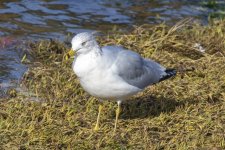
found a substantial crustacean snack during its hunt.
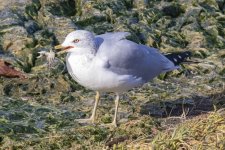
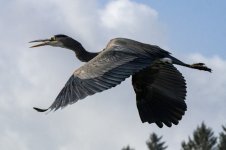
Great blue herons are fierce threats on land or on the water, though even they are wary of passing bald eagles.
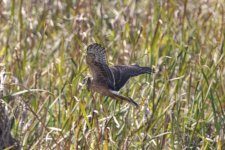
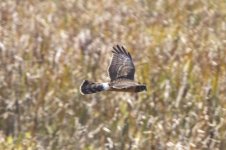
Gliding over the marsh, a northern harrier hen search for the unwary. They fly like acrobatic planes.
Interestingly, the mallards, especially the drakes, are less wary within the Twin Barns loop,
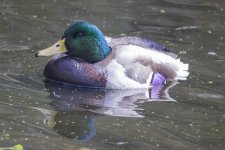
but they are far more skittish in the freshwater marsh and saltwater mudflats. This is a prudent choice…
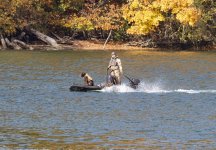
For the last several years, about 100 cackling geese have overwintered as Nisqually. But at this point, the numbers have swollen to several hundred perambulating lawn mowers.
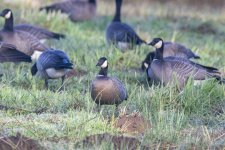
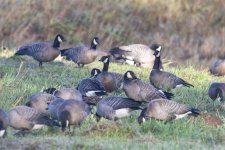
When the group spooks, their calls echo across the refuge. The sky is filled with their chaotic flights. The flocks quickly land and resume their mass consumption of green grass.
The first northern pintails have arrived, mostly hens.
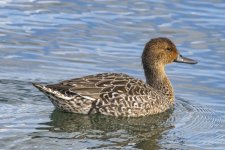
They will soon be joined by Northern shovelers and green winged teals. Similarly, the first buffleheads have arrived with goldeneyes, ring-necked ducks, and scaups to come.
Steve
found a substantial crustacean snack during its hunt.
Great blue herons are fierce threats on land or on the water, though even they are wary of passing bald eagles.
Gliding over the marsh, a northern harrier hen search for the unwary. They fly like acrobatic planes.
Interestingly, the mallards, especially the drakes, are less wary within the Twin Barns loop,
but they are far more skittish in the freshwater marsh and saltwater mudflats. This is a prudent choice…
For the last several years, about 100 cackling geese have overwintered as Nisqually. But at this point, the numbers have swollen to several hundred perambulating lawn mowers.
When the group spooks, their calls echo across the refuge. The sky is filled with their chaotic flights. The flocks quickly land and resume their mass consumption of green grass.
The first northern pintails have arrived, mostly hens.
They will soon be joined by Northern shovelers and green winged teals. Similarly, the first buffleheads have arrived with goldeneyes, ring-necked ducks, and scaups to come.
Steve
Cabezon:
Excellent, as usual. I spent considerable time at Nisqually in the early-mid 70’s. The old barns provided a great nesting structure for, what else, barn owls!
Excellent, as usual. I spent considerable time at Nisqually in the early-mid 70’s. The old barns provided a great nesting structure for, what else, barn owls!
Interestingly, I have NEVER seen a barn owl at Nisqually. They do appear on the occasional eBird report for Nisqually and I overheard a discussion by some birders who speculated that the person posting these reports and images was entering the refuge before its opening time when the barn owl was still out and about. There used to be nesting great horned owl within the Twin Barns loop, but I have not seen them in almost a decade. Barred owls are more common now.Cabezon:
Excellent, as usual. I spent considerable time at Nisqually in the early-mid 70’s. The old barns provided a great nesting structure for, what else, barn owls!
Steve

Love the sound… it makes you look up.
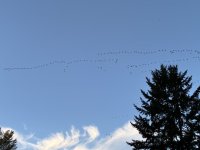

A few white-fronted geese stopped by. Here's a particularly well-marked one.
I noticed this one in a small group. Just a touch smaller, with a slightly thinner neck, pale cheeks (though the one GWFG it's next too also happens to have paler cheeks), and a lack of white front. The bill is also a little different, with black lining and no hook at the end of it.
Sits a little less prominently in the water, on both ends.
Here's it flying next to a "normal" GWFG. The leg (and bill) color differences stand out a bit more in comparison, as well as the neck, legs and overall size differences. Also lacks the white line where the wing attaches (this can be seen in other pics). The GWFG is also banded, which I think is pretty cool.
The one bird looks to me like an young of the year GWFG. The bill coloration, lack of white plumage at the base are both characteristics of immature birds - I've handled quite a few over the years. There's also a fair amount of variation in size and plumage coloration depending on which subpopulation these birds are part of.
The first northern pintails have arrived, mostly hens.
Interesting - are the broods with the hens? Adult (after hatch year) drakes should be starting to color up. Usually they are the first to arrive on the wintering grounds but that's typically earlier in the fall and much further south. They go through their summer molt on large open wetlands and lakes and start their fall migration much earlier than the hens/broods. You should be able to distinquish the sexes on hatch year birds by looking at the size and bill coloration.
Thanks as always for sharing your excellent images!
Thank you. I now remember that you had commented on the disjunct migration timing of hens versus drakes on a previous post of mine. The image that I posted was one of two birds that stayed in close proximity. In reviewing the images that I took, the two birds looked quite similar.Interesting - are the broods with the hens? Adult (after hatch year) drakes should be starting to color up. Usually they are the first to arrive on the wintering grounds but that's typically earlier in the fall and much further south. They go through their summer molt on large open wetlands and lakes and start their fall migration much earlier than the hens/broods. You should be able to distinquish the sexes on hatch year birds by looking at the size and bill coloration.
Thanks as always for sharing your excellent images!
Steve
tkww
Life of the Party
Thank you for the info!The one bird looks to me like an young of the year GWFG. The bill coloration, lack of white plumage at the base are both characteristics of immature birds - I've handled quite a few over the years. There's also a fair amount of variation in size and plumage coloration depending on which subpopulation these birds are part of.

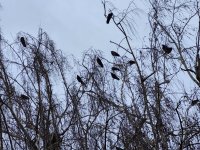
It sounds like a murder happening. Some of the evening gathering.

SpeyrodGB
Life of the Party
Are you sure Alfred Hitchcock wasn't re-incarnated somewhere in there?It sounds like a murder happening. Some of the evening gathering.
View attachment 172681

We took a day trip to Fort Simcoe State Park near White Swan to see Lewis's Woodpeckers. Unique woodpeckers both in their color scheme and behavior. Instead of drilling holes in trees, they fly around and pluck insects out of the air like swallows or flycatchers. These ones were gathering acorns for their winter diet.