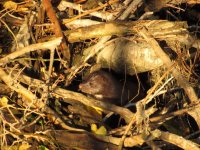
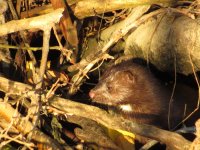
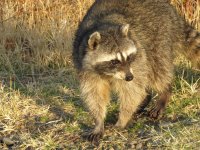
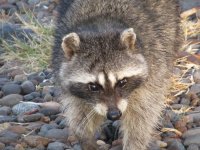
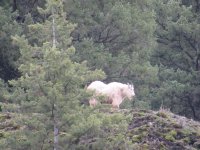
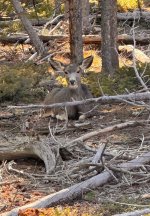
San Juan Island, Xmas 2025. Mammals. Over the years, my wife and I have developed several loops as we explore the wildlife on the island. If the weather cooperates, we’ll be out for most of the day. Mornings often start at Argyle Lagoon / Jackson Beach or American Camp. At American Camp, we may hike to Jakle’s Lagoon if there is time. There is always an obligatory stop at the DNR site overlooking Goose Island, a walk out to the Cattle Point Lighthouse, and a search from the Rampart Site for short-eared owls and northern harriers (sometimes several stops at the Rampart Site…).
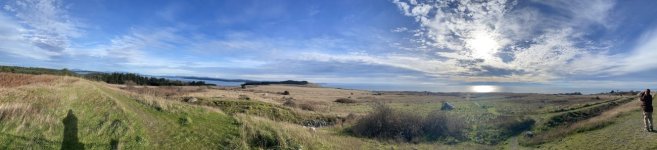
We then swing by False Bay and San Juan Valley and end the day at Limekiln State Park. A second loop starts at San Juan County Park, heads next to English Camp, and ends at the docks at Roche Harbor.
Of course, the opportunity to see killer whales is a huge attraction (and industry) on San Juan Island. And we had perfect conditions to see whales or dolphins on several days. Alas, neither the Biggs killer whales (marine-mammal specialists, aka the transients) nor the Southern Resident killer whales (the fish specialists) came into view on this trip.
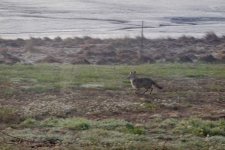
But we did have great views of other iconic mammals on the island. On a visit to the DNR site near Cattle Point, I spotted a red fox along the side of the road. It was staring intently into the grassy ditch. It was so focused that I was able to drive slowly past it, park at the DNR site, and then rush back on foot with my camera/telephoto lens.
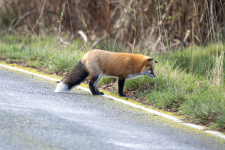
Its tail was just so thick. But between my presence and others, the fox decided to head into the shrubs in search of more privacy.
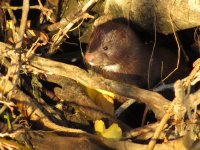
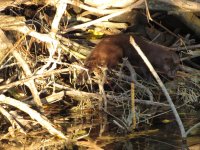
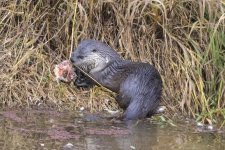
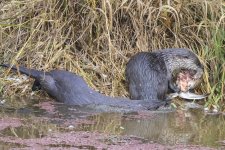
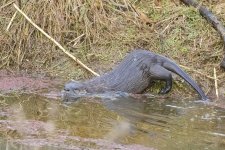
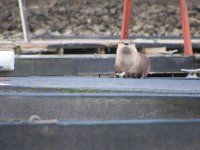
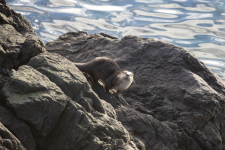
Shortly after viewing the fox, I spotted a river otter cavorting on the rocks below the bluff at the Cattle Point Lighthouse.
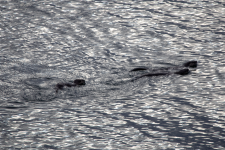
Later in the week, a family group of three otters were actively diving just off the rocks at Cattle Point. All three would dive and they would then reappear one by one, often chewing on something that they had found.
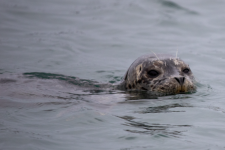
The island’s marinas, like Friday Harbor and Roche Harbor, are reliable sites to find harbor seals.
Several of the rocks and islands in the Cattle Pass area are known haul-out (summer image)
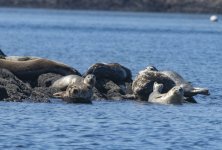
/ pupping spots (summer image).
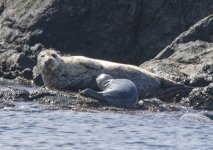
We see sea lions less frequently, but they are reliable in the Cattle Pass area. The most common sea lion species that you will find are California sea lions (summer picture with a Steller's sea lion on the right),
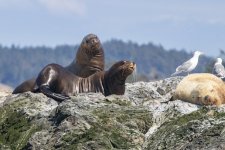
but mixed in are massive Stellar’s sea lions (summer picture)
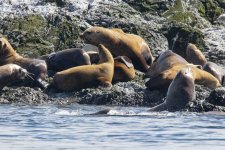
that haul out on Whale Rocks, the rocky islands on the Lopez Island side of Cattle Pass (summer picture).
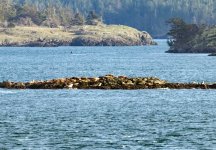
You can hear barking by sea loins across the water. Essentially, Whale Rocks is an attractive nuisance for Bigg’s killer whales.
On our last visit to the Cattle Point DNR site, I watched a pair of California sea lions force their way into the channel between SJI and Goose Island against a strong outgoing current. The bull captured something off the bottom, probably a ling cod based on size and shape. The sea lion repeatedly grasped the carcass, thrashed its head to pull off a chunk of its prey which then splashed a few feet away.
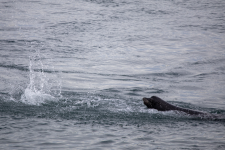
The sea lion and prey drifted toward Cattle Point in the tidal current and the sea lion repeated the process multiple times as it ate its lunch
Steve



 www.montanaoutdoor.com