
Navigation
Install the app
How to install the app on iOS
Follow along with the video below to see how to install our site as a web app on your home screen.
Note: This feature may not be available in some browsers.
More options
Style variation
You are using an out of date browser. It may not display this or other websites correctly.
You should upgrade or use an alternative browser.
You should upgrade or use an alternative browser.
this fly was on fire
- Thread starter SurfnFish
- Start date
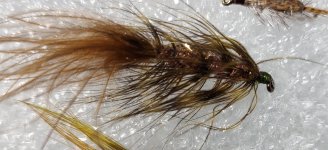

Looks like a seal bugger with a longer hackle than typical. Here’s what mine looks like. I could match yours with some minor tweaks.
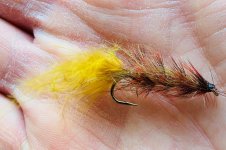

so tail is Marabou, not
so tail is Marabou and not Schlappen..?Looks like a seal bugger with a longer hackle than typical. Here’s what mine looks like. I could match yours with some minor tweaks.
View attachment 156016
Yes, marabou fibers stripped off the stem and kept sparse. Sparse dubbing on the body and widely spaced wraps of hackle. Maximum movement from the hackle and tail fibers on the retrieve.so tail is Marabou, not
so tail is Marabou and not Schlappen..?
Looks like a Wooly Bugger with grizzly dyed dark olive bugger hackle, fibres stripped off one side of the stem, no extra turn at the head, so the fly is sparse (sinks faster). I also see a copper wire rib, that appears to go from tail to head, meaning the hackle was wrapped head to tail. The brownish body is quite thin; maybe a dubbing like R.Harrop or Partridge SLF Finesse.

Funny how often “less is more” ends up being the call on flies. Sparse patterns work! Also I think Otter is right - looks like a copper wire wrap/rib. It looks fishy

Pink Nighty
Legend
Copper ice dub sparse over brown marabou body?

JimTravers¤£a!!Travers
Life of the Party
That's every day on the waters when you're reppin Bohupowah Gear. I go a Bohupowah rig!!
East Coaster
Steelhead
To be honest, I never get too excited about a particular fly pattern (i.e., the details of materials, how it's tied, etc.) without understanding what about it seemed to appeal more to the fish. In this case, @SurfnFish , what were you using that wasn't working as well? Comparing what was different about this "hot" fly from the less successful flies you and the second guy were using is likely the key to understanding the secret to the success of the pattern that worked. For example, it could be as simple as the size - I've been in situations where a size 4 chartreuse/white clouser couldn't make it past 3 strips before getting hammered, when a size 1/0 of the same exact tie wouldn't be touched. On a different day, the reverse might be true. That's extremely simple of course, but in your case, were the less successful flies similar to the one shown (size/weight, color, profile), or were they very different? If the latter, it could be any of a number of things that made it "hot" on that occasion. Just a thought.......
all had on intermediate lines, all pulling leech patterns andan assortment of damselflies patterns. The guy lighting them up, very cool dude, offered all of us one of his ties, so we took turns sliding alongside..his fly box was filled with patterns all with extra long hackle....on my first cast I got tagged by a big fish who snapped me off..the other two guys began regularly picking up fish on the gifted flies as well.To be honest, I never get too excited about a particular fly pattern (i.e., the details of materials, how it's tied, etc.) without understanding what about it seemed to appeal more to the fish. In this case, @SurfnFish , what were you using that wasn't working as well? Comparing what was different about this "hot" fly from the less successful flies you and the second guy were using is likely the key to understanding the secret to the success of the pattern that worked. For example, it could be as simple as the size - I've been in situations where a size 4 chartreuse/white clouser couldn't make it past 3 strips before getting hammered, when a size 1/0 of the same exact tie wouldn't be touched. On a different day, the reverse might be true. That's extremely simple of course, but in your case, were the less successful flies similar to the one shown (size/weight, color, profile), or were they very different? If the latter, it could be any of a number of things that made it "hot" on that occasion. Just a thought.......
What was noticeable was the guy lighting them up used very rapid small retrieves to impart a lot of action on the long hackles.
With that said, every day is different...last week I was using a much smaller and thinner profile and did well including a couple over 20".
I'll swing by the fly shop today and pick up some materials to try and replicate the pattern to add to my leech box..and when I return to the lake later this week may find red Ice Cream Cones chiron's to be the hot ticket...lol

Hale Bopp Leech.?
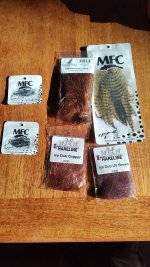
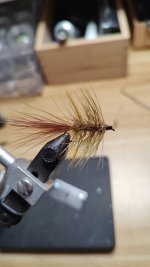

And next time, no offense intended, use 2X ! ;-)well, maybe a distant cousin? lol
View attachment 156521
all good..as a hack tyer, always open for suggestionsAnd next time, no offense intended, use 2X ! ;-)
just checked the hooks, which are MFC 3XL..so 2XL would be better because..?And next time, no offense intended, use 2X ! ;-)
Sorry, the explanation mark made my comment look like a hook length. I meant 2X tippet, throw that 4X in your midge box! ;-)just checked the hooks, which are MFC 3XL..so 2XL would be better because..?
Better tyers than me should weigh in, I think the longer the shank the more "leverage" the fish has to get off the hook.... but maybe my thinking is off.
Good luck!!