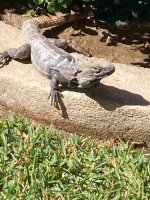
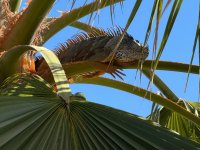
NFR Got any Herp pictures?

Non-fishing related
Got yourself some nice looking hydric soil there, too.
Yup, that was right adjacent to the pond, the artesian well and several springs keep it pretty swampy - will be planting some lobelia (cardinalis and siphilitica) and other wild flowers that like wet feet. Part of the pond rehab project.

cheers
 
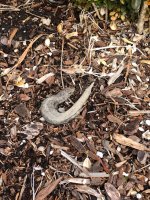
Just this little fella encountered on a rainy coastal steelheading day...

1000018311.jpg
 
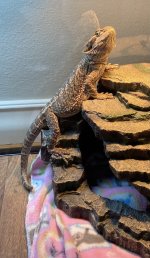
Been looking after a friend's Bearded Dragon for the last week. Fairly easy to maintain but the excrement clean up is horrendous, smells terrible. My older son had been asking us to get him one but after this last week he's not so keen anymore.View attachment 142784
Not only is the maintenance clean-up gross, but they are also an exotic pet that requires an exotic veterinarian. Best to buy pet insurance.
 
Been looking after a friend's Bearded Dragon
I spotted & caught my neighbor's Dragon sunning on one of my shrubs last summer. His little boy had taken it outside and it got away. I must admit that it startled me initially.
 
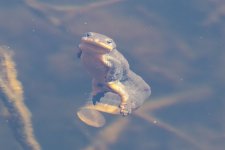
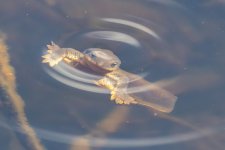
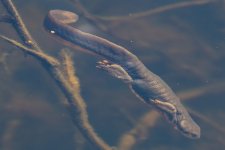
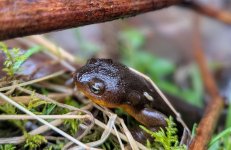
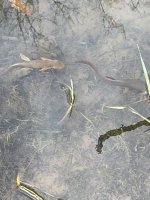
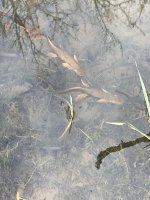
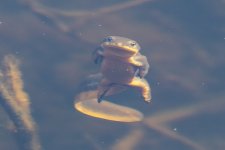
While some individuals overwinter in the pond, most rough-skinned newts (Taricha granulosa) migrate into the main pond at McLane Creek in the spring. As the males migrate into the pond, their tails flatten laterally to facilitate swimming, they develop swollen vents, their rough skin becomes smoother, and their toe pads become cornified for holding onto females.
Like many other amphibians, the skin of these newts absorbs dissolved oxygen and releases carbon dioxide when underwater. But they will also surface periodically to inhale air that fills their lungs. Birds and mammals use negative pressure ventilation; air is drawn into the lungs by subambient (“negative”) pressure generated by expansion of the thoracic volume. Newts and other air-breathing amphibians (and like air-breathing fishes) use positive-pressure ventilation to force air into their lungs. As the newt rises to the surface, the animal relaxes the sphincter between the lungs and its throat. The water pressure drives the old air out of the lungs and out of the mouth. The newt then takes a mouthful of air. With its mouth closed, it compresses the mouth cavity and this positive pressure drives the air in the mouth into the lungs.
A01RoughSkinnedNewt5967.jpg
A02RoughSkinnedNewt5968.jpg
A03RoughSkinnedNewt5969.jpg
A04RoughSkinnedNewt5970.jpg
The eggs, larvae, and adults of Taricha newts are toxic. Skin glands synthesize an anti-predator chemical called tetrodotoxin which blocks voltage-gated sodium channels that are critical to for muscle and nerve function. The newts are resistant to their own tetradotoxin. Some populations of garter snakes have evolved partially resistant to this toxin and can eat the newts, especially those with lower levels of tetrodotoxin. This has led to an evolutionary arms race between the newts and the predatory snakes.
Steve

 
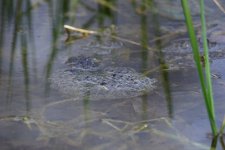
Wood frogs from our pond in the Poconos, they sound like quacking ducks:

1742507528738.jpeg

1742507565478.jpeg

1742507698048.jpeg


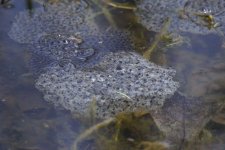
Egg masses

1742508004216.jpeg

1742508062635.jpeg

We also have these, I think salamander, Spotted Salamander? I haven't seen Spotteds, only Norther Reds, but they deposit eggs in the fall. Herpetologists, what say you?

1742508186805.jpeg
 
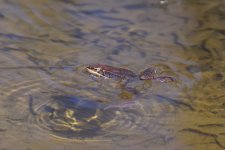
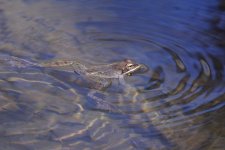
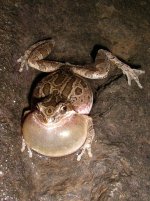
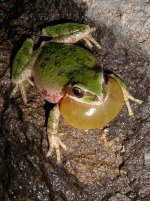
Crazy what you can find when you hit the "What's new" button. Looking through this reminded thread reminded me of these very old pics from a trip the neighborhood pond with the kids. About time for these guys to start making noise. Unreal how loud they are when you are right next to them.

2006-04-21 013.JPG

2006-04-21 023.JPG
 
Back
Top