BriGuy
Life of the Party
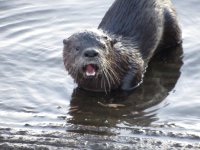
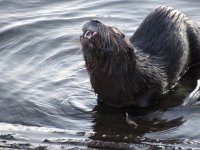
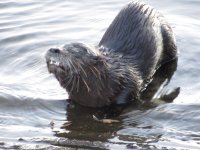
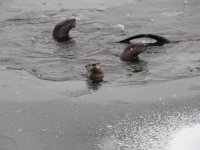
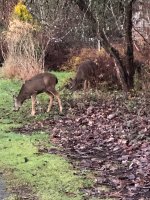
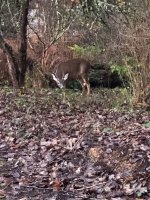
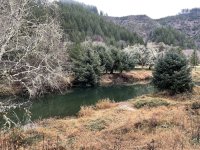
From my morning walk along the Columbia by the house.
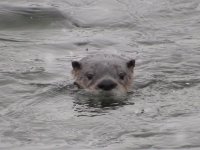
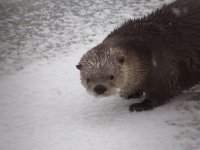
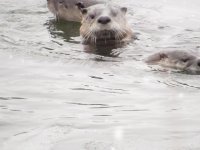
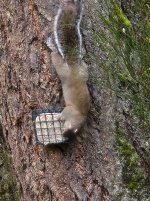
View attachment 133113View attachment 133114View attachment 133115View attachment 133116
View attachment 133117
Pretty good variety of critters for a single walk!

Follow along with the video below to see how to install our site as a web app on your home screen.
Note: This feature may not be available in some browsers.
From my morning walk along the Columbia by the house.
View attachment 133117


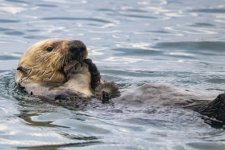
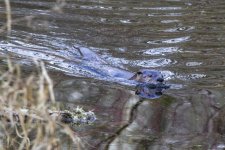
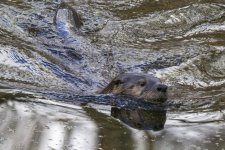

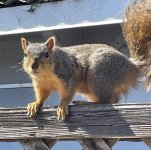
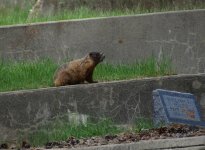 Not as “cute” as an otter, but still dignified. Knowing that an otter is not a rodent might the above land based rascal and otters split away from each other in the deep dark past at some time, maybe millions of years ago?
I'm not an expert on mammalian evolution, but the field has been studied extensively via analysis of fossils and molecular techniques (which sometimes agree...). From what I've read this morning, fossil evidence indicates that the order Rodentia, to which this yellow-bellied marmot belongs, diverged from the other mammal lines in the Paleocene, about 66 million years ago. At that time the northern continents (North America, Asia, and Europe) were still joined to form Laurasia. Some molecular clock studies have placed the divergence of rodents from other mammals even earlier, into the late Cretaceous (72 to 100 million years ago).Land based rodent guarding the graves of Seth Bulloch, Wild Bill and Calamity Jane in Deadwood SD.
View attachment 141643Not as “cute” as an otter, but still dignified. Knowing that an otter is not a rodent might the above land based rascal and otters split away from each other in the deep dark past at some time, maybe millions of years ago?
Calling @Cabezon ?
Thank you Steve. Your in depth reports on flora and fauna on the forum are greatly appreciated and are a highlight to my early morning coffee hours. My wife thought this one was cute. I mentioned to her that I believed they can carry the plague. Response: Soo…I'm not an expert on mammalian evolution, but the field has been studied extensively via analysis of fossils and molecular techniques (which sometimes agree...). From what I've read this morning, fossil evidence indicates that the order Rodentia, to which this yellow-bellied marmot belongs, diverged from the other mammal lines in the Paleocene, about 66 million years ago.



When my wife and I visited Crazy Horse memorial (I jokingly call it Charley Horse) there was a large ball of fur lying near the base of the ongoing sculpture and I asked the guide what it was. He said he wasn't sure but it was either a marmot or a gorilla. I went with marmot. I was also a little abashed cuz I've seen marmots in Oregon.I'm not an expert on mammalian evolution, but the field has been studied extensively via analysis of fossils and molecular techniques (which sometimes agree...). From what I've read this morning, fossil evidence indicates that the order Rodentia, to which this yellow-bellied marmot belongs, diverged from the other mammal lines in the Paleocene, about 66 million years ago. At that time the northern continents (North America, Asia, and Europe) were still joined to form Laurasia. Some molecular clock studies have placed the divergence of rodents from other mammals even earlier, into the late Cretaceous (72 to 100 million years ago).
Otters belong to the family Mustelidae, which includes weasels, badgers, otters, martens, and wolverines. The mustellids are in the order Carnivora. This order is divided into the suborder Feliformia ("cat-like" Carnivora, such as large [lions and tigers] and small cats [domestic cats, fishing cats], mongooses, and hyenas) and the suborder Caniformia ("dog-like" Carnivora, like foxes, bears, dogs, wolves, skunks, and seals). The first Carnivora fossils first appear about 60 million years ago (Paleocene) in North America and then spread through the other Laurasian continents. As North America and South America joined via the Isthmus of Panama about 3 - 7 million years ago, many North American placental mammals invaded South America; these invaders replaced many of the marsupial mammals that had evolved there (the Great American Biotic Interchange). In turn, a few marsupial species invaded North America, such as the Virginia opossum and the common opossum (which ranges from northern South America through Central America to southern Mexico).
The closest sister group to the Mustelidae appears to be the Procyonidae (raccoons and coatis). Also closely related to this group are the skunks and the red panda (not the giant panda, which is a mostly herbivorous bear, of the Himalayas and southwestern China). The closest relative of these families (comprising the superfamily Musteloidea) is the Pinnipedia (seals, sea lions, walrus) and Ursidae (bears).
Steve