Cutthroat fly color?

What colors do you tend to throw most of the time?

  • Boring (natural)

    Votes: 16 57.1%
  • Obnoxious (non-natural)

    Votes: 12 42.9%

  • Total voters
    28
I was out with NRC recently and he was using more muted natural colors while I was using brighter non-natural colors. I realized then that bright colors aren't everyone's go to. I'm wondering what the breakdown of people fishing cutthroat is?
 
Searuns seem to be stupid carnivorous gluttons. Yesterday I landed fish on 6 different flies, from a muted Rickards Stillwater bug, to a flashy Kreelex pattern.
 
Last edited:
I still love fishing a simple olive buggers for SRC. It mimics marine worms and baitfish and I turn to it often if fish are around but acting finicky. Generally though, they’ll eat most things you put in front of their faces.
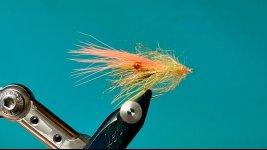
Over the last year, variations of this fly in a number outlandish pinks and peaches has been my favorite SRC pattern. Maybe more fish see it…do they “see” bright colors like we do? Anyway, both I guess, depending on the situation. Finding fish is the toughest part of SRC fishing. Seems to be less about the pattern in most cases IMO.

IMG_6233.jpeg
 
Last edited:
I like hot shrimp pink early in the low light morning then change over to more natural colors as it gets brighter. I’m pretty sure they can spot the bright flies from further away in the dark.

A lot of times they’re just not around, or zipping in and out of an area so fast they didn’t get a chance to see the fly. I think the profile and how the fly swims matters more maybe, who knows… you just got to switch it up til you get a hit.
 
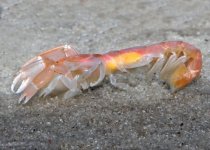
This kind of color scheme;

View attachment 132625

I have no idea if SRC actually eat a lot of sand shrimp, but I have caught them in an area that is loaded with sand shrimp, and I once caught a resident coho there that had sand shrimp in its stomach.

Tacoma Red who used to post on the old board had posted this when I had asked if searun eat small crabs. I’d have to think sand shrimp would be included with other “shrimp” that are part of src’s diet.
SF

IMG_9722.jpeg
 
For you Oregon SRC anglers - here's a summary of a feeding ecology study in the Salmon River Estuary (Oregon) which is my "home" tidewater. Note that shrimp (Crangon), crab (Brachyura) and barnacles (Cirripedia) are represented. What's absent (and a surprise) are mud shrimp which are abundant in the Salmon estuary.

TABLE 2.—Prey items identified in cutthroat stomach samples.

Pelagic Fish
Chinook salmon (Oncorhynchus tshawytscha)
Northern anchovy (Engraulis mordax)
Pacific herring (Clupea harengus)
Shiner perch (Cymatogaster aggregata)
Surf smelt (Hypomesus pretiosus)

Benthic Fish
Pacific staghorn sculpin (Leptocottus armatus)
Prickly sculpin (Cottus asper)
Saddleback gunnel (Pholis ornata)
Flatfish spp. (family Pleuronectidae)
Pacific sand lance (Ammodytes hexapterus)

Estuarine Invertebrates
Isopoda
Eogammarus spp.
Corophium spp.
Crangon spp.
Cirripedia
Brachyura Zoea
Brachyura parts
Mysidae
Polychaeta
Nematoda

Terrestrial Invertebrates
Soldier Beetle (family Cantharoidae)
Ladybug (genus Coccinellidae)
 
I wanted to add that in my experience, brown has been the best color for Oregon tidewater SRC's. One interesting observation: The Northern CA/Southern Oregon cutts (Klamath, Smith Winchuck, Chetco, Sixes, estuaries) were way more picky about wanting brown compared to fish in the Salmon and Nestucca tidewaters where I have had some success with pink and orange mixed in with the patterns I use. That said, I'm still learning the waters around our Oregon place near Lincoln City.
 
For you Oregon SRC anglers - here's a summary of a feeding ecology study in the Salmon River Estuary (Oregon) which is my "home" tidewater. Note that shrimp (Crangon), crab (Brachyura) and barnacles (Cirripedia) are represented. What's absent (and a surprise) are mud shrimp which are abundant in the Salmon estuary.

TABLE 2.—Prey items identified in cutthroat stomach samples.

Pelagic Fish
Chinook salmon (Oncorhynchus tshawytscha)
Northern anchovy (Engraulis mordax)
Pacific herring (Clupea harengus)
Shiner perch (Cymatogaster aggregata)
Surf smelt (Hypomesus pretiosus)

Benthic Fish
Pacific staghorn sculpin (Leptocottus armatus)
Prickly sculpin (Cottus asper)
Saddleback gunnel (Pholis ornata)
Flatfish spp. (family Pleuronectidae)
Pacific sand lance (Ammodytes hexapterus)

Estuarine Invertebrates
Isopoda
Eogammarus spp.
Corophium spp.
Crangon spp.
Cirripedia
Brachyura Zoea
Brachyura parts
Mysidae
Polychaeta
Nematoda

Terrestrial Invertebrates
Soldier Beetle (family Cantharoidae)
Ladybug (genus Coccinellidae)

For you Oregon SRC anglers - here's a summary of a feeding ecology study in the Salmon River Estuary (Oregon) which is my "home" tidewater. Note that shrimp (Crangon), crab (Brachyura) and barnacles (Cirripedia) are represented. What's absent (and a surprise) are mud shrimp which are abundant in the Salmon estuary.

TABLE 2.—Prey items identified in cutthroat stomach samples.

Pelagic Fish
Chinook salmon (Oncorhynchus tshawytscha)
Northern anchovy (Engraulis mordax)
Pacific herring (Clupea harengus)
Shiner perch (Cymatogaster aggregata)
Surf smelt (Hypomesus pretiosus)

Benthic Fish
Pacific staghorn sculpin (Leptocottus armatus)
Prickly sculpin (Cottus asper)
Saddleback gunnel (Pholis ornata)
Flatfish spp. (family Pleuronectidae)
Pacific sand lance (Ammodytes hexapterus)

Estuarine Invertebrates
Isopoda
Eogammarus spp.
Corophium spp.
Crangon spp.
Cirripedia
Brachyura Zoea
Brachyura parts
Mysidae
Polychaeta
Nematoda

Terrestrial Invertebrates
Soldier Beetle (family Cantharoidae)
Ladybug (genus Coccinellidae)
Curious where this study comes from? I know there's been some serious studies being done up in the Hood Canal area the past few years, but not so much down here. Thanks ~ Justin
 
Curious where this study comes from? I know there's been some serious studies being done up in the Hood Canal area the past few years, but not so much down here. Thanks ~ Justin
Hey Justin - here are a couple of links where you can download the studies. These were both done in the Salmon River estuary.

 
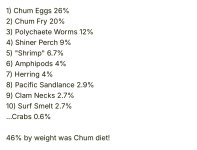
Tacoma Red who used to post on the old board had posted this when I had asked if searun eat small crabs. I’d have to think sand shrimp would be included with other “shrimp” that are part of src’s diet.
SF

View attachment 132682
Wow. No less than 46% of their diet comes from chum; mostly eggs! Makes a lot of sense, but it's still fascinating to see that metric.
 
Lately, at least with my fishing patterns tending towards orangish / pinkish colors have been getting a lot more attention than baitfish or marine worm patterns.
Every year is different though. Last year around this time marine worms were killing it, especially olive colored.
Edit…..Worm success may also have something to do with the moon phase. I’m just not sure how much. We have a full moon coming up on the 12th, so maybe things will pick up.
SF
 
Last edited:
On the topic of the thread, I fish a lot of olive bugger variations for SRC, but I have found they are becoming less and less effective on the beaches I fish. I'm also seeing at least twice the number of anglers I used to see on those beaches, and I think that explains a lot of it. I don't know if it's color or pattern that might solve the puzzle, and I'm not sure there is any silver bullet. Mostly, I think the increased pressure is what has lowered my success rate in recent years.
 
Back
Top