Hogsnatcher
Smolt
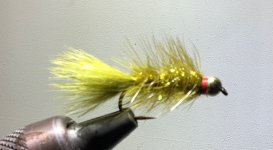
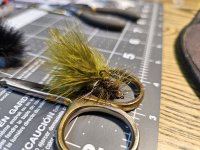
Curious what are people’s best WB’s. Would like to see some patterns for ideas. I’m just not convinced they all work equally as well!
Thanks
Thanks
Last edited:

Follow along with the video below to see how to install our site as a web app on your home screen.
Note: This feature may not be available in some browsers.

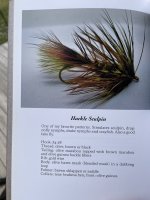
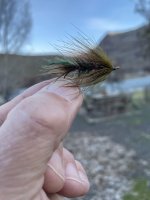

Do you ever tie/fish this weighted with wire?
I haven’t, often fished off a tip of t8, or full intermediate line.Do you ever tie/fish this weighted with wire?

I’m just not convinced they all work equally as well!
Thanks
I find that hitting the hackle hard with Velcro removes the corkscrew effect.What is your intended use--still/slow or faster moving water?
Particularly for slow or still water, I am really choosy about the marabou I use. Depending on the feather, I usually avoid the tip that is thin and stiff. Instead I try to find barbs with bushier barbules and are much more flexible. I want those fibers to pulse and move in the water, not just slim down into a mass.
Also, I usually take at least one full turn of hackle at the head of the fly that is perfectly perpendicular to the hook shank, and only after that start winding down the shank. Depending on how stiff your palmering hackle is, you can induce some serious spin on the retrieve if that front turn is cocked at an angle. You can even the front hackle out with some thread wraps, but then you have a larger thread head that personally I think is kinda ugly.
Thanks, I will keep that in mind.I find that hitting the hackle hard with Velcro removes the corkscrew effect.

IMHO tail length is crucial! I believe a reasonably thick marabou tail that is the length of hook shank will out fish the shorter tails! As for body material I am slowly switching over to Brahma from hackle. Finding the right kind of saddle hackle has become difficult and "expensive" to obtain. https://video.search.yahoo.com/yhs/...1f6346aa11c184b07a5b5482e3e7bcde&action=clickCurious what are people’s best WB’s. Would like to see some patterns for ideas. I’m just not convinced they all work equally as well!
Thanks

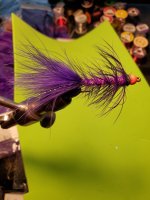
On the trout WB’s how do you keep the tail from wrapping around the bend?I tie mine like @Zak for the most part. Over the years, I have learned that I like the tails 1.5x the length of the body and two-tone (2 feathers), with the darker color on top. I also have come to prefer Ice Dub for the body (using a dubbing loop, so you can really pick it out after winding the hackle), and I place a small amount of a contrasting color of Ice Dub behind the cone/bead/whatever, as a "collar."
Favorite colors of mine include olive, black/peacock, and just about any shade of purple. On the olives, I use a sculpin orange or amber color under olive for the tail. Pale pink is another great color for under-tails. I usually go straight black on the black/peacock.
Here's an example that shows most of what I'm describing. I use this one for salmon, so it's big and loud, with a tungsten bead.
View attachment 126810
Well, I fish rivers mostly.What is your intended use--still/slow or faster moving water?
Particularly for slow or still water, I am really choosy about the marabou I use. Depending on the feather, I usually avoid the tip that is thin and stiff. Instead I try to find barbs with bushier barbules and are much more flexible. I want those fibers to pulse and move in the water, not just slim down into a mass.
Also, I usually take at least one full turn of hackle at the head of the fly that is perfectly perpendicular to the hook shank, and only after that start winding down the shank. Depending on how stiff your palmering hackle is, you can induce some serious spin on the retrieve if that front turn is cocked at an angle. You can even the front hackle out with some thread wraps, but then you have a larger thread head that personally I think is kinda ugly.

Longer tails in rivers. Shorter tails in lakes. Works well for me...Well, I fish rivers mostly.
Sometimes I put 2-3 wraps of dubbed thread behind and under the tail. If I use ice dub I brush some fibers into the tail for flash. Once I put a drop of super glue on the base of the tail and that worked.On the trout WB’s how do you keep the tail from wrapping around the bend?