
Navigation
Install the app
How to install the app on iOS
Follow along with the video below to see how to install our site as a web app on your home screen.
Note: This feature may not be available in some browsers.
More options
Style variation
You are using an out of date browser. It may not display this or other websites correctly.
You should upgrade or use an alternative browser.
You should upgrade or use an alternative browser.
Got Yelled At
- Thread starter LBL
- Start date

In my experience, yes. I worked for a state agency as a summer job when I was in college and worked about half my career for Federal agencies. Both the public and private sectors were populated mostly by people who took a personal interest in their work and are proud of what they do. And both sectors have a minority of slackers who took as little pride in themselves as they did in their work and just tried to skate along by doing as little as they could get away with. The biggest difference that I noticed is that in the private sector, dead weight individuals could be fired or terminated pretty easily - not always though - whereas in the public sector it's a giant bureaucratic PITA that can take up to nearly two years of protracted process to fire a slacker after they've passed the initial 6-month probationary period. That requirement motivated some less energetic managers to assign the slacker to some mundane dead end stem-winder position to keep them out of the way from where the real work needed to be done.Is it though?
Dan Flores provides an exhaustive account of the history and absolute necessity of wildlife resource management in "Wild New World: the Epic Story of Animals and People in America".....though I suspect those who spout gibberish about such matters aren't big on reading either.Really, read about gray wolves, albatrosses, bald eagles, buffalo/bison and any number of threatened species that have made great comebacks because of governmental regulation. It has also been the government that has tried to save any number of lakes for native species that have been destroyed by folks dumping gold fish or other highly destructive invasive species. It was governmental interdiction that led to the clean-up and restoration of the Great Lakes, clean-up of the air/decrease of the acid rain that destroyed millions of acres of forest and killed hundreds/thousands of lakes and streams throughout the northeast. Those lakes and streams are now full of fish to fish and rejuvenated forests full of game to hunt.
It is sometimes worth while to look around, and look back and acknowledge the good that has been done for us all. The government is generally populated by hard working, well meaning individuals trying to do a job the best they can.
Full disclosure - I am not a government worker and have no tie whatsoever to the current or any past government.
Cheers

Appreciated. But I remain curious as to what federal entity existed that could have promulgated such a regulation.The citation for that quote was:
Belanger, D. O. 1988. Managing American wildlife. Univ. Mass. Press. 225pp.
Contained in :
English and American Wildlife Law: Lessons from the Past
By Michael Stockdale

I don't get the hate for govt workers or the assumption that they are all incompetent. In my experience the percentage of half-ass lazy fools in govt jobs (not counting elected politicians) is no greater than any other sizable business. Which is to say, a few of the folks working there are awesome, most are just fine, and some are morons who screw things up for everyone else. I think anyone who has ever worked a job anywhere larger than a mom/pop company would say the same. You know who the superstars are, you know who the dumpster fires are, and most everyone else falls in the generally competent middle somewhere.
The issue is that humanity has always had a very bad "shoot the messenger" problem where we blame whoever is behind the desk for the decisions of their bosses if we don't like those decisions or they cause us hassle. And it's one thing to have Comcast be annoying about your TV channel package, its another to have the city planning dept mess with your house building permit over some outdated law. One is vastly more emotional than the other.
And remember, nobody tells stories of the normal uneventful interactions they have with companies or agencies. We all just tell the terrible ones. If we're shooting the shit around the campfire, I'm not telling you how quickly the city got out and fixed a pothole I reported through their web app (seriously, within 24 hours). Oh no. I'm telling you how the water dept screwed me out of $30 for a bogus late fee because of a account snafu with my bank. EVEN THOUGH I PAID BY CHECK IN PERSON ON THE DAY IT WAS DUE.
But that's humans for you.
The issue is that humanity has always had a very bad "shoot the messenger" problem where we blame whoever is behind the desk for the decisions of their bosses if we don't like those decisions or they cause us hassle. And it's one thing to have Comcast be annoying about your TV channel package, its another to have the city planning dept mess with your house building permit over some outdated law. One is vastly more emotional than the other.
And remember, nobody tells stories of the normal uneventful interactions they have with companies or agencies. We all just tell the terrible ones. If we're shooting the shit around the campfire, I'm not telling you how quickly the city got out and fixed a pothole I reported through their web app (seriously, within 24 hours). Oh no. I'm telling you how the water dept screwed me out of $30 for a bogus late fee because of a account snafu with my bank. EVEN THOUGH I PAID BY CHECK IN PERSON ON THE DAY IT WAS DUE.
But that's humans for you.

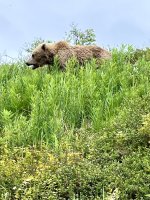

What I found through a little research is the "first" regulations for wildlife are kind of all over the place. I guess that is because there were 13 colonies, each with their own set of priorities based on geography, habitat, and population density.
"The first major federal law to protect wildlife in the United States was the Lacey Act of 1900. The law was passed in response to concerns about the interstate trafficking of illegally taken game and its impact on states and wildlife resources. The law made it a federal offense to transport wildlife across state lines if it was taken illegally in any state. It also prohibited the importation of species that were considered harmful. The Lacey Act was based on the federal government's authority to regulate interstate and foreign commerce. While the law supported the enforcement of state wildlife laws, its influence was initially limited because there were few protective laws to enforce.
In 1903, President Theodore Roosevelt established the first federal bird reservation on Pelican Island in Florida, which was the first unit of the National Wildlife Refuge System. In 1916, the National Park Service Act established national parks, monuments, and reservations, which also provide habitats for wildlife."
"In the 1630s, measures were taken to increase the population of white-tailed deer, which were a staple in the colonial diet."
"Colonial governments exercised their control over wildlife with great regularity. Massachusetts Bay Colony (1630) and Connecticut (1647) enacted their first wolf bounty."
"Colonial hunting laws were generally liberal and rarely enforced, which led to a decline in wildlife around European settlements."
"On 14 February 1646 Portsmouth, Rhode Island, ordered a closed season on deer (Trefethen 1975)."
"Wildlife regulations in the American colonies were enacted in South Carolina between 1693 and 1790 to protect the natural landscape for settlement. The laws offered cash bounties to encourage the destruction of "beasts of prey" like wolves, bears, lions, tigers, and wildcats that threatened colonial agriculture, animal husbandry, and the spread of colonial settlements. "
"The first major federal law to protect wildlife in the United States was the Lacey Act of 1900. The law was passed in response to concerns about the interstate trafficking of illegally taken game and its impact on states and wildlife resources. The law made it a federal offense to transport wildlife across state lines if it was taken illegally in any state. It also prohibited the importation of species that were considered harmful. The Lacey Act was based on the federal government's authority to regulate interstate and foreign commerce. While the law supported the enforcement of state wildlife laws, its influence was initially limited because there were few protective laws to enforce.
In 1903, President Theodore Roosevelt established the first federal bird reservation on Pelican Island in Florida, which was the first unit of the National Wildlife Refuge System. In 1916, the National Park Service Act established national parks, monuments, and reservations, which also provide habitats for wildlife."
"In the 1630s, measures were taken to increase the population of white-tailed deer, which were a staple in the colonial diet."
"Colonial governments exercised their control over wildlife with great regularity. Massachusetts Bay Colony (1630) and Connecticut (1647) enacted their first wolf bounty."
"Colonial hunting laws were generally liberal and rarely enforced, which led to a decline in wildlife around European settlements."
"On 14 February 1646 Portsmouth, Rhode Island, ordered a closed season on deer (Trefethen 1975)."
"Wildlife regulations in the American colonies were enacted in South Carolina between 1693 and 1790 to protect the natural landscape for settlement. The laws offered cash bounties to encourage the destruction of "beasts of prey" like wolves, bears, lions, tigers, and wildcats that threatened colonial agriculture, animal husbandry, and the spread of colonial settlements. "

FinLuver
Native Oregonian…1846
But how many of the good ones actually stand up and say HEY…WTH ARE WE DOING?!?!?The ones I know are...
Most people try and do a good job at what they do, no matter where they work.
Sure... some are less motivated than others, but that's true in every profession, every trade, every business.
To think or say all government employees are lazy and don't care is simply a dumbfuck, dildo type statement, made by morons...of which of course there are plenty.
I bet the numbers are low.
Last edited:

Back on topic...I actually emailed wdfw on this very subject about a year ago. I wanted to practice spey casting on a local river to me, which was closed for the majority of the year. No hook, just yarn to see the end of the leader turn over. They said I would be harassing returning salmon and steelhead, which then becomes a big no go.

This is all about perception. While their interpretation of harassing is asinine, they have to give a response that is in context with people holding a net, a spear or a rod.
Is WDFW going to respond to a complaint about boys throwing rocks into a river? No, they won't. Even though those rocks are disturbing any steelhead or salmon present way more than a piece of split shot or yarn on the end of a spey rig they don't appear to be fishing closed waters. They're just boys doing what boys do. If it looks like you're fishing there will naturally be suspicion because there are so many idiots that fish out of season.
Should the guy be yelling? No. But back to the perception thing. If we all start standing in a river waving a rod with yarn WDFW will have to send one of their officers (they only have 8 or 9 in the whole damn state) to check things out.
If it's me...I'm going to practice on open waters. It makes everyone's life easier.

Bambooflyguy
Legend
Thanks for getting this thread back on the topic! As I said before, practice casting on a river that’s open…..use a fly instead of yarn and you might even get some bonus fish! (And the yelling might be “nice fish!”)

Among other things he excelled at....... Washington chunked shad.....Damn, while I admit that I stopped reading the constitution at the bill of rights, but its pretty cool that fly fishing made it in? You think it was Washington that snuck it in or Franklin? Maybe Jefferson?

He also played a role in enforcement...albeit on his own land...Among other things he excelled at....... Washington chunked shad.....
"Colonial governments exercised their control over wildlife with great regularity. Massachusetts Bay Colony (1630) and Connecticut (1647) enacted their first wolf bounty. On 14 February 1646 Portsmouth, Rhode Island, ordered a closed season on deer (Trefethen 1975). In 1698 Connecticut set an annually recurring deer season which provided the possession of fresh meat or skins during the closed season was accepted as proof of a violation (Tober 1981). In 1776 the first federal game law declared a closed season on deer in all the colonies except Georgia (Belanger 1988). Professional enforcement of games laws, however, was difficult to secure. Towns balked at appointing police, and citizen wardens refused to serve. Those who did serve were expected to look in the opposite direction. The real watchdogs for the system were designed to be private citizens acting as informers. Some aristocrats in the absence of civil servant enforcers dealt with poachers individually. George Washington repeatedly warned his neighbor across the Potomac to avoid his Mt. Vernon duck marsh. Responding to unauthorized shooting one day, Washington mounted his horse and galloped in the direction from where the shots came. The poaching neighbor upon seeing him, fled in a skiff. Washington rode his mount into the water and seized the boat. Fearing for his life, the desperado leveled his gun at Washington's chest, swearing that he intended to shoot. Paying no attention to the threat, Washington dragged the marauder ashore by his hair, disarmed him, and administered a humiliating cowhiding. The punishment was effective, his neighbor thereafter poached ducks elsewhere."
There's just not much in the way of righteous cowhiding going on these days.....He also played a role in enforcement...albeit on his own land...
"Colonial governments exercised their control over wildlife with great regularity. Massachusetts Bay Colony (1630) and Connecticut (1647) enacted their first wolf bounty. On 14 February 1646 Portsmouth, Rhode Island, ordered a closed season on deer (Trefethen 1975). In 1698 Connecticut set an annually recurring deer season which provided the possession of fresh meat or skins during the closed season was accepted as proof of a violation (Tober 1981). In 1776 the first federal game law declared a closed season on deer in all the colonies except Georgia (Belanger 1988). Professional enforcement of games laws, however, was difficult to secure. Towns balked at appointing police, and citizen wardens refused to serve. Those who did serve were expected to look in the opposite direction. The real watchdogs for the system were designed to be private citizens acting as informers. Some aristocrats in the absence of civil servant enforcers dealt with poachers individually. George Washington repeatedly warned his neighbor across the Potomac to avoid his Mt. Vernon duck marsh. Responding to unauthorized shooting one day, Washington mounted his horse and galloped in the direction from where the shots came. The poaching neighbor upon seeing him, fled in a skiff. Washington rode his mount into the water and seized the boat. Fearing for his life, the desperado leveled his gun at Washington's chest, swearing that he intended to shoot. Paying no attention to the threat, Washington dragged the marauder ashore by his hair, disarmed him, and administered a humiliating cowhiding. The punishment was effective, his neighbor thereafter poached ducks elsewhere."

There are a more than a few dungeons in Seattle people can refer you to...There's just not much in the way of righteous cowhiding going on these days.....
Thanks, but I'm really not into the whole attending church thing.There are a more than a few dungeons in Seattle people can refer you to...

Man we've had very different experiences.In my experience, yes. I worked for a state agency as a summer job when I was in college and worked about half my career for Federal agencies. Both the public and private sectors were populated mostly by people who took a personal interest in their work and are proud of what they do. And both sectors have a minority of slackers who took as little pride in themselves as they did in their work and just tried to skate along by doing as little as they could get away with. The biggest difference that I noticed is that in the private sector, dead weight individuals could be fired or terminated pretty easily - not always though - whereas in the public sector it's a giant bureaucratic PITA that can take up to nearly two years of protracted process to fire a slacker after they've passed the initial 6-month probationary period. That requirement motivated some less energetic managers to assign the slacker to some mundane dead end stem-winder position to keep them out of the way from where the real work needed to be done.

Man we've had very different experiences.
To be fair, you work in construction management right? I can only imagine dealing with local, state and fed agencies in terms of permiting, zoning etc.
Also to be clear, I have no skin in the game.


Just make sure you take off your helmet before yiuTry being a fly fisherman AND cyclist. No wonder no one likes me.
Really, read about gray wolves, albatrosses, bald eagles, buffalo/bison and any number of threatened species that have made great comebacks because of governmental regulation. It has also been the government that has tried to save any number of lakes for native species that have been destroyed by folks dumping gold fish or other highly destructive invasive species. It was governmental interdiction that led to the clean-up and restoration of the Great Lakes, clean-up of the air/decrease of the acid rain that destroyed millions of acres of forest and killed hundreds/thousands of lakes and streams throughout the northeast. Those lakes and streams are now full of fish to fish and rejuvenated forests full of game to hunt.
It is sometimes worth while to look around, and look back and acknowledge the good that has been done for us all. The government is generally populated by hard working, well meaning individuals trying to do a job the best they can.
Full disclosure - I am not a government worker and have no tie whatsoever to the current or any past government.
Cheers
1. A great deal of great lakes clean up was caused by invasive bi valves.
2. Getting rid of DDT was good.
3. Yes the governments are destroying ungulate populations by expanding predator population both native and invasive.
Despite billions in spending and decades of study all our government organizations have done absolutely nothing for Spotted owls, murlets, or any salmon run.. all talk no capability.. they are such a failure that any further closures of any kind is wrong.
They are have been doing a shitty job for 100 years..
Again this is the managers not the biologists.
Also someone mentioned that I was immune to science.... well no more than fish and wildlife managers involved in the northwest
You absolutely cannot look at our situation today and think they have done anything other than F- work.