
Navigation
Install the app
How to install the app on iOS
Follow along with the video below to see how to install our site as a web app on your home screen.
Note: This feature may not be available in some browsers.
More options
Style variation
You are using an out of date browser. It may not display this or other websites correctly.
You should upgrade or use an alternative browser.
You should upgrade or use an alternative browser.
Your Favorite Traveling Sedge Patterns???
- Thread starter Old406Kid
- Start date


Tom Thumb would be one option.
SF
SF

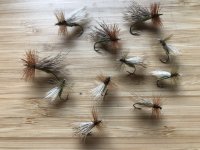
Slow retreive to create a wake. Size 8-10 fly. Olive dubbing. Two elkhair wings. Brown hackle.
Last edited:

BigSplashTom
Steelhead
Two flies, Tom thumb and Gils Monster size 4 - 8 (3x)

DryFly82
Life of the Party
I primarily fish the Tom Thumb (mostly static) and Mikulak Sedge (active retrieve) in sizes 6-8 for the traveling sedge. This is by far my favorite type of fishing. Tips and tricks:
1. When the water is glass, cast the fly and leave it. Fish are spooky when it is glass and sunny, but if you leave it sitting where they are rising, they will eventually come up for it.
2. When there is a little riffle, try both active and static. A little wind provides cover for the fish to feel safe.
3. Don't worry about spooking the fish in low light conditions. Just put it near them and they will find it either active or static.
4. Hatches often work from east to west. The east side of the lake gets the evening sun longer in the evening, so the water will be warmer. The first rises will be on that side if all else is equal.
5. During traveler season, warm afternoon and evening = good hatch at night. Plan to be on the lake between when the sun falls below the horizon and darkness.
6. Don't be afraid to fish shallow in low light conditions. I've caught many of my biggest fish in less than 5' of water.
7. If you know a hatch is coming always have a rod rigged and ready. When you see that first rise you can go after it right away.
8. Consider rigging two rods because if you get a tangle in the middle of a hatch the last thing you want to do is re-rig when fish are boiling around you.
9. If you can fish two rods just cast one out and leave it in the rod holder. Often that works better than an active retrieve.
10. Put a little floatant on the fly to help it stay up.
11. Use flouro tippet...mono is much more visible to the fish (especially sunny/glass conditions).
12. Leader+tippet should be about 14' (especially sunny/glass conditions).
13. You can afford to go with stronger leaders during low light conditions.
14. When a fish strikes, do not set the hook...try to leave the fly until you feel the fish. If they are on the line and you set the hook, you will likely break off. Also, fish often try to knock the fly under and then come back for it. My brother was stalking a big rainbow in sunny/glass conditions and saw it knock his fly under, swim to the bottom, and then immediately return to take his fly...a short fight later he had a 7lb rainbow in the net all because he didn't react on the first attack.
15. When you see a big fish rise as a one off don't be afraid to put away what you are doing and go 1-vs-1 with it. This situation is more common in the afternoon. For example, I saw a big fish rise twice on the opposite side of the lake, so I spent 5 minutes to row over to within range and put the fly in his zone. It took about 10 minutes, but he eventually came up and a few minutes later I had a nice 21" fish in the net.
16. Once a fish has come up for your fly don't keep pounding the area with an active retrieve. You can get more than one chance, but you have to be careful not to spook them off. Either put it back out there and let it sit, or cast to a different location for a few minutes and then try the again.
Bonus tip: When you know a big hatch is coming, fish those big caddis nymphs in the evening...big fish love them.
If you listen to podcasts, I highly recommend Phil Rowley's "Littoral Zone #8 - Dry Fly Strategies and Tactics for Stillwaters with Jeff Perin". https://www.wetflyswing.com/545
1. When the water is glass, cast the fly and leave it. Fish are spooky when it is glass and sunny, but if you leave it sitting where they are rising, they will eventually come up for it.
2. When there is a little riffle, try both active and static. A little wind provides cover for the fish to feel safe.
3. Don't worry about spooking the fish in low light conditions. Just put it near them and they will find it either active or static.
4. Hatches often work from east to west. The east side of the lake gets the evening sun longer in the evening, so the water will be warmer. The first rises will be on that side if all else is equal.
5. During traveler season, warm afternoon and evening = good hatch at night. Plan to be on the lake between when the sun falls below the horizon and darkness.
6. Don't be afraid to fish shallow in low light conditions. I've caught many of my biggest fish in less than 5' of water.
7. If you know a hatch is coming always have a rod rigged and ready. When you see that first rise you can go after it right away.
8. Consider rigging two rods because if you get a tangle in the middle of a hatch the last thing you want to do is re-rig when fish are boiling around you.
9. If you can fish two rods just cast one out and leave it in the rod holder. Often that works better than an active retrieve.
10. Put a little floatant on the fly to help it stay up.
11. Use flouro tippet...mono is much more visible to the fish (especially sunny/glass conditions).
12. Leader+tippet should be about 14' (especially sunny/glass conditions).
13. You can afford to go with stronger leaders during low light conditions.
14. When a fish strikes, do not set the hook...try to leave the fly until you feel the fish. If they are on the line and you set the hook, you will likely break off. Also, fish often try to knock the fly under and then come back for it. My brother was stalking a big rainbow in sunny/glass conditions and saw it knock his fly under, swim to the bottom, and then immediately return to take his fly...a short fight later he had a 7lb rainbow in the net all because he didn't react on the first attack.
15. When you see a big fish rise as a one off don't be afraid to put away what you are doing and go 1-vs-1 with it. This situation is more common in the afternoon. For example, I saw a big fish rise twice on the opposite side of the lake, so I spent 5 minutes to row over to within range and put the fly in his zone. It took about 10 minutes, but he eventually came up and a few minutes later I had a nice 21" fish in the net.
16. Once a fish has come up for your fly don't keep pounding the area with an active retrieve. You can get more than one chance, but you have to be careful not to spook them off. Either put it back out there and let it sit, or cast to a different location for a few minutes and then try the again.
Bonus tip: When you know a big hatch is coming, fish those big caddis nymphs in the evening...big fish love them.
If you listen to podcasts, I highly recommend Phil Rowley's "Littoral Zone #8 - Dry Fly Strategies and Tactics for Stillwaters with Jeff Perin". https://www.wetflyswing.com/545

Old406Kid
Legend
AAron, thanks for taking the time to provide so much detail!I primarily fish the Tom Thumb (mostly static) and Mikulak Sedge (active retrieve) in sizes 6-8 for the traveling sedge. This is by far my favorite type of fishing. Tips and tricks:
1. When the water is glass, cast the fly and leave it. Fish are spooky when it is glass and sunny, but if you leave it sitting where they are rising, they will eventually come up for it.
2. When there is a little riffle, try both active and static. A little wind provides cover for the fish to feel safe.
3. Don't worry about spooking the fish in low light conditions. Just put it near them and they will find it either active or static.
4. Hatches often work from east to west. The east side of the lake gets the evening sun longer in the evening, so the water will be warmer. The first rises will be on that side if all else is equal.
5. During traveler season, warm afternoon and evening = good hatch at night. Plan to be on the lake between when the sun falls below the horizon and darkness.
6. Don't be afraid to fish shallow in low light conditions. I've caught many of my biggest fish in less than 5' of water.
7. If you know a hatch is coming always have a rod rigged and ready. When you see that first rise you can go after it right away.
8. Consider rigging two rods because if you get a tangle in the middle of a hatch the last thing you want to do is re-rig when fish are boiling around you.
9. If you can fish two rods just cast one out and leave it in the rod holder. Often that works better than an active retrieve.
10. Put a little floatant on the fly to help it stay up.
11. Use flouro tippet...mono is much more visible to the fish (especially sunny/glass conditions).
12. Leader+tippet should be about 14' (especially sunny/glass conditions).
13. You can afford to go with stronger leaders during low light conditions.
14. When a fish strikes, do not set the hook...try to leave the fly until you feel the fish. If they are on the line and you set the hook, you will likely break off. Also, fish often try to knock the fly under and then come back for it. My brother was stalking a big rainbow in sunny/glass conditions and saw it knock his fly under, swim to the bottom, and then immediately return to take his fly...a short fight later he had a 7lb rainbow in the net all because he didn't react on the first attack.
15. When you see a big fish rise as a one off don't be afraid to put away what you are doing and go 1-vs-1 with it. This situation is more common in the afternoon. For example, I saw a big fish rise twice on the opposite side of the lake, so I spent 5 minutes to row over to within range and put the fly in his zone. It took about 10 minutes, but he eventually came up and a few minutes later I had a nice 21" fish in the net.
16. Once a fish has come up for your fly don't keep pounding the area with an active retrieve. You can get more than one chance, but you have to be careful not to spook them off. Either put it back out there and let it sit, or cast to a different location for a few minutes and then try the again.
Bonus tip: When you know a big hatch is coming, fish those big caddis nymphs in the evening...big fish love them.
If you listen to podcasts, I highly recommend Phil Rowley's "Littoral Zone #8 - Dry Fly Strategies and Tactics for Stillwaters with Jeff Perin". https://www.wetflyswing.com/545
Timing of the travelling sedge hatch can vary with lake elevation. The sedge hatch at BC's Knouff lake (elevation 3,770) used to peak about the third week of June. Have found sedges at the BC's Meadow lakes and Thuya Lakes (4,000-5,000 elevation) during July. It's not unusual to see some sporadic travelling sedges on Washington alpine lakes all summer. I carry a few sedge dries in my washington high lakes box but I've never encountered a selective rise to sedges while hiking to Washington alpine lakes.
My favorite "sedge" patterns were muddler type flies in colors matching the hatching bugs. A dubbed body (usually olive) with a few strands of crystal flash as an under wing with an over wing of deer hair and a spun and clipped deer hair head. I would grease the fly up and fish it in the surface film ala the skittering natural.
Learned that after a few days of the sedge hatch the trout would begin looking for the bugs well in advance of the actually "hatch". A number of times I would experience some of the best fishing several hours in advance of the appearance of the first sedge in the evening. The trout were more than willing to come to the fly with the advance of bugs on the water and a typically afternoon riffle provide cover for any clumsy presentations. Not sure what was more fun having that afternoon sedge fishing or after dusk where casting our flies in the reflecting moon light was great fun. Maybe booking ending the sedge with both opportunities was the best of both worlds.
Curt
Learned that after a few days of the sedge hatch the trout would begin looking for the bugs well in advance of the actually "hatch". A number of times I would experience some of the best fishing several hours in advance of the appearance of the first sedge in the evening. The trout were more than willing to come to the fly with the advance of bugs on the water and a typically afternoon riffle provide cover for any clumsy presentations. Not sure what was more fun having that afternoon sedge fishing or after dusk where casting our flies in the reflecting moon light was great fun. Maybe booking ending the sedge with both opportunities was the best of both worlds.
Curt

"In the dark" remains my favorite, but your entire 2nd paragraph is spot-on. Well-stated!after dusk where casting our flies in the reflecting moon light was great fun.

BDD
Steelhead
Goddard caddis was my first go-to traveling sedge pattern for BC lakes. Started using them in smaller sizes for small creeks and did just as well on them too.
Anybody got a BC traveling sedge lake they want me to try out in the next couple of weeks? Be happy to report back to you...itching to go back.
Anybody got a BC traveling sedge lake they want me to try out in the next couple of weeks? Be happy to report back to you...itching to go back.

Me too. In all the years going to BC, I've only hit the traveler hatch twice. One of those two times was epic. @DryFly82 - thank you for your detailed post!...itching to go back.

Gotta give you props on this suggestion. Aggressive take on a twitchy Thumb. Thnx!Tom Thumb would be one option.
SF
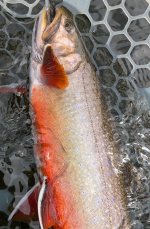
Goddard Caddis. Floats like a cork, works well & never gave me any reason to find something else. I omit tying antennae on mine.
Same. Not sure that it’s the best for actually catching fish, but I have had so much fun with it over the decades. It even works great as a skater pattern in rivers when you suddenly find yourself in a remote spot with lots of fish and you never thought to pack a proper skating fly!

I hit the traveling sedge hatch at a lake in BC. Once it got going, as long as it floated and was about the right size they would bite it. The fishing was so frantic there was no way you could have two rods out, especially when it started to get dark. A Stimulator worked very well.

Goddard Caddis