We need to up our seriousness and honesty so that what we say isn't propaganda, this applies to everything.We need to up our propaganda game!
"We now know where Putin is located and we are tracking his moves." - US Intelligence

Follow along with the video below to see how to install our site as a web app on your home screen.
Note: This feature may not be available in some browsers.
We need to up our seriousness and honesty so that what we say isn't propaganda, this applies to everything.We need to up our propaganda game!
"We now know where Putin is located and we are tracking his moves." - US Intelligence

When it comes to war, honesty is not always the best policy. It's said that truth is the first casualty of war. That's not completely bad. You don't want to tip off your opponent about your next move, or any move. I do hope that the US is doing more to assist Ukraine that what is reported in the news.We need to up our seriousness and honesty so that what we say isn't propaganda, this applies to everything.
When it comes to war, honesty is not always the best policy. It's said that truth is the first casualty of war. That's not completely bad. You don't want to tip off your opponent about your next move, or any move. I do hope that the US is doing more to assist Ukraine that what is reported in the news.
T. Boone Pickens was quite successful using these tactics on a variety of companies over several decades.So, isn't that known as Market Manipulation? something that's supposed to be illegal under SEC rules ?

Simplified…Yes, but very difficult to prosecute. Large institutional investors and influential financial figures do it constantly. The crypto world is similar; the owners of huge crypto wallets are able to impact market price. Very large movements in any asset class can ripple throughout a market. It is difficult to factually differentiate between a holder's sincerely held belief about the future value of a financial instrument or their desire to make gains through manipulation of its value.
SEC prosecutions mostly occur when someone with foreknowledge of a large transaction (like an employed CFA) uses such information to position transactions for insider gains and/or lies to a federal SEC investigator about their actions. Lying to a state or federal investigator is an automatic slamdunk felony. Only a dope doesn't know investigators (or attorneys in general) don't tend to ask questions for which they don't already know the answers.
Simply put; the financial pissants get caught and the big boys walk free. So what else is new?
I suspect that new (and very broad) crypto question on this year's tax form will generate quite a few serious pissant IRS prosecutions in the coming years as crypto rubes attempt to sophistry their way out of truthfully answering a very straightforward question that will easily be flagged for future review.

Probably not…DILLIGAF
Rob, good luck getting next to Putin for anything, he knows he’s a target and is lying low…I disagree. Putin should know exactly what is going to happen to him next time he steps one foot outside of Russia, no matter where that foot is. North Korea, China, Iran or anywhere else. He should know a team of navy seals is going to apprehend him and take him to Gitmo to await trial as a common terrorist.
Hell with waiting till he steps foot outside we should go drag his ass out the Kremlin. We tell other Russian officials we are doing it and that we expect them to not intervene.. our way or the highway. American exceptionalism, to a lesser degree NATO exceptionalism? You're damn right.
That make us a bully? No.


Free speech...or hate speech?Awesome watching many in legacy media melt down over this.
These folks hate free speech as much as Mossman.

Free speech...or hate speech?

Awesome watching many in legacy media melt down over this.
These folks hate free speech as much as Mossman.
The doctors says…more dog walking and fishing are needed…to stay healthy.Careful what you wish for ...
Stating that legacy media hate free speech is moronic and without evidence, and demonstrates a complete lack of understanding of the First Amendment - what bumper sticker did you read that on?


I think what I need to carry on with this discussion is precise definitions of "legacy media" and "free speech" so we are both playing in the same sandbox.Free speech.
And don't take my word. Listen to Musk. He nails it.


Careful what you wish for ...
Stating that legacy media hate free speech is moronic and without evidence, and demonstrates a complete lack of understanding of the First Amendment - what bumper sticker did you read that on?
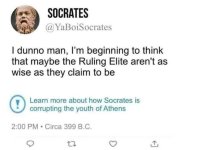

I think what I need to carry on with this discussion is precise definitions of "legacy media" and "free speech" so we are both playing in the same sandbox.
Free speech.
And don't take my word. Listen to Musk. He nails it.

If you don't agree, label it "hate speech".Free speech...or hate speech?
So..."Got Milk?" is hate speech.If you don't agree, label it "hate speech".