RILOBITES
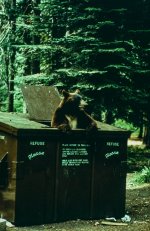
A cinnamon-colored black bear in Glacier National Park in Montana. Credit...Don Johnston/Alamy

By Sam Jones
Dec. 16, 2022
3 MIN READ
Sign up for Science Times Get stories that capture the wonders of nature, the cosmos and the human body. Get it sent to your inbox.
Black bears have black fur, right? It’s there in the name.
“In the eastern part of North America, where I grew up, we have American black bears, and they’re only black,” said Emily Puckett, an evolutionary biologist at the University of Memphis.
People are even warned with a color-coded aphorism about how to behave during a bear encounter: “If it’s black, fight back; if it’s brown, lie down; if it’s white, say good night.”
The American black bear, Ursus americanus, did not get the memo when that saying was circulated: It comes in a variety of shades, including blond and cinnamon. The cinnamon bear is a U. americanus that wears a reddish brown coat and can look strikingly similar to grizzlies and other brown bears of the species Ursus arctos.
Recently, Dr. Puckett and colleagues uncovered the mutation that gave rise to this cinnamon situation millenniums ago, which potentially gave some bears an evolutionary edge. The scientists also discovered a mutation responsible for the amber coat of the grizzly. Their findings were published in the journal Current Biology on Friday.
To find out what genetic change or changes could have led to the cinnamon coat, the researchers sequenced the genomes of nearly 200 U. americanus bears and identified a mutation in the gene for the protein TYRP1, known to be involved in melanin pigment production. The same mutation causes a form of albinism in people. The researchers uncovered a different mutation, also in TYRP1, in U. arctos.
The researchers suspected that a mutant version of TYRP1 would be enough to produce a lighter colored coat. To test this, they introduced the U. americanus and U. arctos mutations — separately — into pigment-producing cells, and they did indeed find that those cells produced little to no pigment.
They then calculated that the TYRP1 mutation first cropped up in U. americanus over 9,000 years ago in western North America, where it is still most common. Scientists have proposed that a lighter coat mimicking that of grizzlies would be advantageous in the west, where American black bears and grizzlies share territory and resources. A lighter coat also absorbs less heat, potentially benefiting a bear in the warm southwest.
Two black-colored black bears in south-central Alaska. Credit...Charles Vandergaw/Alaska Stock, via Alamy

Image
A grizzly bear stalked the Chilkoot River in Alaska. Grizzly bears are often, but not always, lighter colored than black bears, and have more rounded ears and a distinctive hump above the shoulders.Credit...Ron Erwin/All Canada Photos, via Alamy

Dr. Puckett and colleagues didn’t find significant support for these two hypotheses and instead proposed that this could be a case of crypsis — matching the environment to avoid predation. While black bears grow to be strong predators in their own right, especially as cubs they can become meals for mountain lions, wolves, bobcats, even other bear species. In the case of U. americanus, a cinnamon coat would match the more open southwest landscape, while a darker coat would blend into the forests back east.
American black bears aren’t the first bears thought to use cryptic coloration — the giant panda is believed to use its opposing colors to blend into a mix of dark and light surroundings. But the researchers aren’t ruling out the possibility that mimicry, thermoregulation and crypsis could be working together to benefit U. americanus, “providing little fitness advantages on multiple physiological and behavioral fronts,” Dr. Puckett said.
More people will likely encounter U. americanus as the bears continue to expand their range, said Sue Fairbanks, an ecologist at Oklahoma State University who was not involved in the work. Over the last few decades, increased protections for U. americanus — including stricter hunting laws — as well as restoration of their deforested habitats and, in some places, bear reintroduction programs, have meant humans and bears are coming face-to-face more often. In Dr. Fairbanks’ state, for instance, people will report seeing grizzlies. But grizzlies don’t live in Oklahoma.
“We have to keep reminding people that black bears can be brown,” she said.
https://www.nytimes.com/interactive/2021/well/live/bear-attack-tips.html
What Should You Do When the Bear Is Cinnamon?
A cinnamon-colored black bear in Glacier National Park in Montana. Credit...Don Johnston/Alamy
By Sam Jones
Dec. 16, 2022
3 MIN READ
Sign up for Science Times Get stories that capture the wonders of nature, the cosmos and the human body. Get it sent to your inbox.
Black bears have black fur, right? It’s there in the name.
“In the eastern part of North America, where I grew up, we have American black bears, and they’re only black,” said Emily Puckett, an evolutionary biologist at the University of Memphis.
People are even warned with a color-coded aphorism about how to behave during a bear encounter: “If it’s black, fight back; if it’s brown, lie down; if it’s white, say good night.”
The American black bear, Ursus americanus, did not get the memo when that saying was circulated: It comes in a variety of shades, including blond and cinnamon. The cinnamon bear is a U. americanus that wears a reddish brown coat and can look strikingly similar to grizzlies and other brown bears of the species Ursus arctos.
Recently, Dr. Puckett and colleagues uncovered the mutation that gave rise to this cinnamon situation millenniums ago, which potentially gave some bears an evolutionary edge. The scientists also discovered a mutation responsible for the amber coat of the grizzly. Their findings were published in the journal Current Biology on Friday.
To find out what genetic change or changes could have led to the cinnamon coat, the researchers sequenced the genomes of nearly 200 U. americanus bears and identified a mutation in the gene for the protein TYRP1, known to be involved in melanin pigment production. The same mutation causes a form of albinism in people. The researchers uncovered a different mutation, also in TYRP1, in U. arctos.
The researchers suspected that a mutant version of TYRP1 would be enough to produce a lighter colored coat. To test this, they introduced the U. americanus and U. arctos mutations — separately — into pigment-producing cells, and they did indeed find that those cells produced little to no pigment.
They then calculated that the TYRP1 mutation first cropped up in U. americanus over 9,000 years ago in western North America, where it is still most common. Scientists have proposed that a lighter coat mimicking that of grizzlies would be advantageous in the west, where American black bears and grizzlies share territory and resources. A lighter coat also absorbs less heat, potentially benefiting a bear in the warm southwest.
ImageTwo black-colored black bears in south-central Alaska. Credit...Charles Vandergaw/Alaska Stock, via Alamy
Image
A grizzly bear stalked the Chilkoot River in Alaska. Grizzly bears are often, but not always, lighter colored than black bears, and have more rounded ears and a distinctive hump above the shoulders.Credit...Ron Erwin/All Canada Photos, via Alamy
Dr. Puckett and colleagues didn’t find significant support for these two hypotheses and instead proposed that this could be a case of crypsis — matching the environment to avoid predation. While black bears grow to be strong predators in their own right, especially as cubs they can become meals for mountain lions, wolves, bobcats, even other bear species. In the case of U. americanus, a cinnamon coat would match the more open southwest landscape, while a darker coat would blend into the forests back east.
American black bears aren’t the first bears thought to use cryptic coloration — the giant panda is believed to use its opposing colors to blend into a mix of dark and light surroundings. But the researchers aren’t ruling out the possibility that mimicry, thermoregulation and crypsis could be working together to benefit U. americanus, “providing little fitness advantages on multiple physiological and behavioral fronts,” Dr. Puckett said.
More people will likely encounter U. americanus as the bears continue to expand their range, said Sue Fairbanks, an ecologist at Oklahoma State University who was not involved in the work. Over the last few decades, increased protections for U. americanus — including stricter hunting laws — as well as restoration of their deforested habitats and, in some places, bear reintroduction programs, have meant humans and bears are coming face-to-face more often. In Dr. Fairbanks’ state, for instance, people will report seeing grizzlies. But grizzlies don’t live in Oklahoma.
“We have to keep reminding people that black bears can be brown,” she said.
https://www.nytimes.com/interactive/2021/well/live/bear-attack-tips.html