Navigation
Install the app
How to install the app on iOS
Follow along with the video below to see how to install our site as a web app on your home screen.
Note: This feature may not be available in some browsers.
More options
Style variation
You are using an out of date browser. It may not display this or other websites correctly.
You should upgrade or use an alternative browser.
You should upgrade or use an alternative browser.
Strange, weird or odd or whatever beach finds thread….
- Thread starter Stonedfish
- Start date
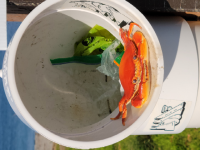

Those are likely the burrows of beach hoppers. They are semi-terrestrial amphipods (relatives of isopods, the roly-polies in your garden). Beach hoppers (several species) scavenge drift algae carried onto the sandy beach by the tide or waves from the rocky intertidal or subtidal. Each individual adult crustacean is about 1/4' to 1/2" long depending on species. The females hold eggs is a pouch under their thorax (like isopods and mysids) and release miniature adults when the offspring have completed development (no planktonic stage). Beach hoppers hide in the burrows (or under wood at the high tide line) by day and come out at night. If you do find a clump of drift algae and pick it up, you will often find them springing away from underneath it (hence the common name "hopper"). While most crustaceans are aquatic, beach hoppers breath air and would drown if submerged. They probably aren't much of a food source for fish, but shorebirds will probe for them in their burrows.I was walking the beach at PointNo-Point today and came across these small mounds in the sand. Each about 1 1/4" in diameter and above the high water line. Any idea what they are?
View attachment 87841View attachment 87842
Steve


Last edited:
Are those the same little bastards that will bite you when wading barefoot in beach tidepools?Those are likely the burrows of beach hoppers. They are semi-terrestrial amphipods (relatives of isopods, the roly-polies in your garden). Beach hoppers (several species) scavenge drift algae carried onto the sandy beach by the tide or waves from the rocky intertidal or subtidal. Each individual adult crustacean is about 1/4' to 1/2" long depending on species. The females hold eggs is a pouch under their thorax (like isopods and mysids) and release miniature adults when the offspring have completed development (no planktonic stage). Beach hoppers hide in the burrows (or under wood at the high tide line) by day and come out at night. If you do find a clump of drift algae and pick it up, you will often find them springing away from underneath it (hence the common name "hopper"). While most crustaceans are aquatic, beach hoppers breath air and would drown if submerged. They probably aren't much of a food source for fish, but shorebirds will probe for them in their burrows.
Steve
Hi Silverfly. No, those biting bastards are sandy beach isopods, Excirolana kincaidi. The beach hoppers scavenge plant material, but these beach isopods scavenge animal material washed up into the intertidal of sandy beaches. To them, your feet and ankles are just a potential meal. And yes, they will draw blood and often swarm. It is a good thing that they don't get very big (about 4mm max), otherwise a stroll on the beach might resemble dropping a cow into a river filled with hungry piranhas.Are those the same little bastards that will bite you when wading barefoot in beach tidepools?
Steve
Last edited:

A couple years back now but from where my parents now live they were saying basically this "We got these Excirolana Kincaidi comin' in......"
Flesh eating amphipods

Flesh eating amphipods

Thanks for the explanation! I told my wife I knew a source where I could get the answerThose are likely the burrows of beach hoppers. They are semi-terrestrial amphipods (relatives of isopods, the roly-polies in your garden). Beach hoppers (several species) scavenge drift algae carried onto the sandy beach by the tide or waves from the rocky intertidal or subtidal. Each individual adult crustacean is about 1/4' to 1/2" long depending on species. The females hold eggs is a pouch under their thorax (like isopods and mysids) and release miniature adults when the offspring have completed development (no planktonic stage). Beach hoppers hide in the burrows (or under wood at the high tide line) by day and come out at night. If you do find a clump of drift algae and pick it up, you will often find them springing away from underneath it (hence the common name "hopper"). While most crustaceans are aquatic, beach hoppers breath air and would drown if submerged. They probably aren't much of a food source for fish, but shorebirds will probe for them in their burrows.
Steve


Apparently this beach is being haunted by the Blair Witch this halloween

Last edited:
I like it.

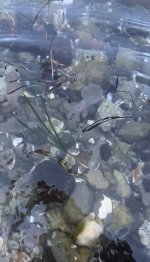
Tons of these jelly fish things floating around yesterday in the water. Doing some internet sleuthing and still can’t figure out what they are. Anyone know?
That is Melibe leonina (lion nudibranch or hooded nudibranch), one of the coolest nudibranchs (sea slugs, shell-less snails) in the PNW. In your image, the animal is upside down and you are seeing the underside of its foot as it is "walking" along the underside of the surface on the surface tension. Its large oral hood (head) is at the top left of the animal. The flat plates off its dorsal side are called cerata; they may increase surface area for respiration.View attachment 90741
Tons of these jelly fish things floating around yesterday in the water. Doing some internet sleuthing and still can’t figure out what they are. Anyone know?
Unlike other gastropods that use a file-like radula to feed, this species feeds on small crustaceans that it traps in its oral hood (the front 40% of the animal). It can expand the volume of the hood and then drop it down on a rocky surface or kelp blade or just the water column (see this cool video from the Monterey Bay Aquarium). The hood is then tightened up like a purse seine. As the edges of the hood scrape along the surface, small crustaceans like copepods or amphipods are disturbed and try to escape. As they bounce into the inside of the hood, the nudibranch accelerates compression of the water out of the hood and decreasing the internal volume. Fine fringes on the edges of the hood prevent the small crustaceans from escaping. The prey is then forced into the mouth where peristalsis carries the food into the stomach. I did some research on them 20ish years ago when I was testing their response to encountering chemically-defended amphipods. [They would eat the chemically-defended amphipods, especially when hungry. But they would spit them out and hold the hood open so that the chemically-defended amphipods could swim away. And then they would sulk and stop feeding for a while.]
Like other nudibranchs, they are chemically-defended against most predators. When handled, a lion nudibranch smells faintly of watermelon. They can reach about 5" in length.
Steve
Last edited:
Wow thanks so much! They were super cool to watch and the first time I’ve seen them at this location.That is Melibe leonina (lion nudibranch or hooded nudibranch), one of the coolest nudibranchs (sea slugs, shell-less snails) in the PNW. In your image, the animal is upside down and you are seeing the underside of its foot as it is "walking" along the underside of the surface on the surface tension. Its large oral hood (head) is at the top left of the animal. The flat plates off its dorsal side are called cerata; they may increase surface area for respiration.
Unlike other gastropods that use a file-like radula to feed, this species feeds on small crustaceans that it traps in its oral hood (the front 40% of the animal). It can expand the volume of the hood and then drop it down on a rocky surface or kelp blade or just the water column (see this cool video from the Monterey Bay Aquarium). The hood is then tightened up like a purse seine. As the edges of the hood scrape along the surface, small crustaceans like copepods or amphipods are disturbed and try to escape. As they bounce into the inside of the hood, the nudibranch accelerates compression of the water out of the hood and decreasing the internal volume. Fine fringes on the edges of the hood prevent the small crustaceans from escaping. The prey is then forced into the mouth where peristalsis carries the food into the stomach. I did some research on them 20ish years ago when I was testing their response to encountering chemically-defended amphipods. [They would eat the chemically-defended amphipods, especially when hungry. But they would spit them out and hold the hood open so that the chemically-defended amphipods could swim away. And then they would sulk and stop feeding for a while.]
Like other nudibranchs, they are chemically-defended against most predators. When handled, a lion nudibranch smells faintly of watermelon. They can reach about 5" in length.
Steve
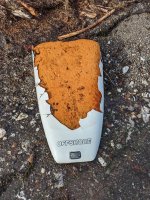
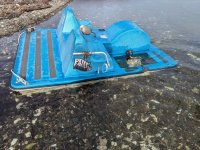
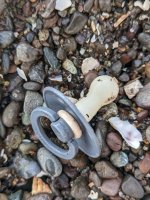

Man, that pedal boat just needs a little buffing out, it comes with a casting deck!God only knows what happened here. All items found within 20 feet of each other.
and a live well.Man, that pedal boat just needs a little buffing out, it comes with a casting deck!
pics or it didn't happen!I seem to find an old Asian man sleeping with a cigar in his mouth and a corndog in each hand.. spooky! He wakes up when you say "I see a fish!" ... and then beats me down to the water..


I have pictures going back 10 years or more..pics or it didn't happen!
This is a little late but one time diving on Hood Canal we came upon a big concentration of Melibe. They are very cool and it was fun watching so many of them undulating.