Speckled Sea Trout Trilogy

Mike Cline

Life of the Party
Forum Supporter
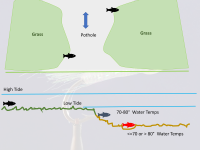
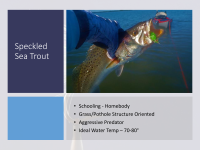
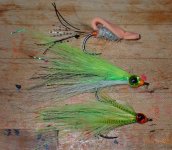
One of the most commonly sought after targets on the inshore grass flats along the Gulf of America shoreline is the Speckled Sea Trout. They are ambush predators that aggressively attack baitfish and crustaceans that venture into their path. Although the largest specimens are usually solitary, most speckled trout are found in schooling situations along the edges of eel grass flats, potholes and channels. They are not (except for the very large ones) tough fighters, but they will wack a fly with gusto. I was introduced to Speckled Sea Trout in the 1990s during visits to the Tampa region and have caught them on a wide variety of different patterns over the years. But experience has proven three patterns to be the most effective, reliable and easy to fish. I call it my Speckled Sea Trout Trilogy. Color schemes do vary but chartreuse is usually very effective.
1783520959753.png

P7081323.jpeg
1783522077691.png
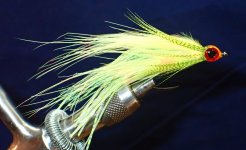
#1 - Bucktail Deceiver
Tied with silicon legs and barred marabou.
P7081325.jpeg
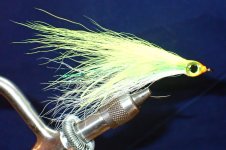
#2 Gartside Softhackle Streamer
Tied with silicon legs and barred marabou
P7081324.jpeg
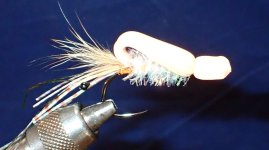
#3 Gartside Shrimp Gurgler
My favorite and most effective top water fly. Tied with and internal rattle. When trout are keying on shrimp, especially at dawn or in the evening, the Shrimp Gurgler is a killer fly.
P7081326.jpeg
VB300147.JPG
 
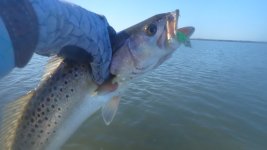
Camouflage. Spots against a contrasting background, in this case dark spots against a silvery skin is one way Specks survive hiding in the eel grass. We are lucky they are prolific breeders as they get hammered by #1-dolphins, #2-cormorants and #3-sharks. A speck caught out in the open is dead meat when dolphins and cormorants are around. Despite catch and release, at least half of undersized trout released get snatched by cormorants before they can make back into the eel grass.
 
Do shrimp reside near the surface? I'm curious why you think they track a surface presentation representing a shrimp?
Certain species of gulf shrimp don’t reside near the surface but do reside in extremely shallow conditions inside eel grass flats. On outgoing tides during low light conditions, especially in the evening, they will leave the security of the eel grass and move into the tidal water column to feed and can routinely reach the surface. Unlike shrimp in the Puget Sound, shrimp around the inshore Gulf grass flats live in very shallow water. Tides average around 3’ total from extreme lows to extreme highs. Even at high tide, shrimp are living at times in just a few feet of water. The shrimp gurgler just represents a shrimp thats operating or floating at the surface. In the clear waters of the gulf a Speckled Trout hunkered down in the grass is still only 3-5’ below the surface.
IMG_1196.jpeg
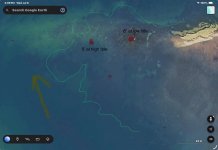
This is just one example where you might find a shrimp gurgler effective. The thin green line represents the outside edge of eel grass. The closer you get to the sand bar, the shallower the grass. The yellow arrow represents an outgoing tidal flow. The red dot on the right is a spot that at typical low tide is only about 6” deep. The red dot on the left represents the outer most edge of the eel grass that is about 5’ deep at typical high tide. A shrimp gurgler cast any where along the outer edge of the grass and anywhere inside that will likely bring up a Speckled Trout.
 
Back
Top