
“Silex” Creek, Montana, early July. About a decade ago, friends of mine bought a cabin twentyish miles up of a famous Montana creek. Let’s call it “Silex” Creek. They have been very generous in inviting me and others to use their cabin as a base for exploring the fishing opportunities of this creek. While totally off the grid, between solar panels and storage batteries, and Starlink connectivity, the cabin is very comfortable with all the modern conveniences (albeit too far for door-dash or Domino’s delivery).
With low water levels forecast, I moved up my visit to “Silex” Creek to early July. I was anticipating easier wading conditions and hoping for regular morning insect hatches. I experienced the former (about 400 cfs/s), but a heat wave during my visit drove off any significant daytime hatches. Water temperatures rose steadily through the week with daily peaks at 60oF at the start of my visit and reaching almost 70oF when I left. At this time, Montana had imposed “hoot-owl” restrictions on some watersheds, but not “Silex” Creek yet. Regardless, I was extra careful to fight the fish quickly and take the time to revive them before release.
I love the change of scenery in this part of the Mountain West: open Ponderosa and lodgepole pine forests, steep talus slopes - such a contrast from the Wet Side. I am beginning to learn more about this famous creek, but my success is still uneven, especially in the absence of a clear hatch.
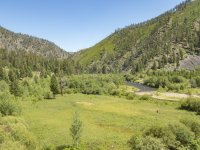
The best hatches peaked at dusk, typically an initial wave of caddis followed by emerging PMDs.
The first evening, I snagged one of my favorite stretches of water, called by my friends as the Little St. Joe Hole because it reminds them of water on that familiar river. In this stretch, you need to wade across knee-deep water to an elevated spine of boulders midstream. These boulders shelter the caster from the creek flow and the quiet water in their lee is a convenient place to net a nice trout. From this location, you can cast to the large boulders that line the far bank, a popular location for larger trout, especially browns, but you must also avoid overhanging branches. The fish in this run have spent most of the day higher in the run, in the faster, deeper water. However, in the evening, they drift back to this stretch of softer water. Here, they don’t have to work as hard to ambush any passing insects. Flights of caddis oscillated over the water’s surface
My initial offering, a classic elkhair caddis, found no takers. I switched to a cdc caddis pattern, one of my favorites, and had some initial success, landing a few westslope cutts
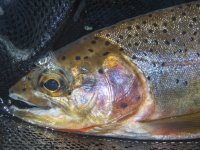
and rainbows. When interest in the cdc caddis cooled off, I switched to a parachute PMD. That was the hot ticket. I hooked and landed several nicer cutts (11-13” range)
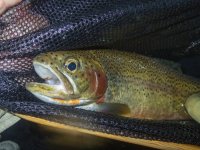
and one nice brown (about 13”).
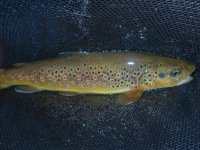
A nice evening.
The next day, I explored an area where I had some success fishing in the evening. But this was mid-morning through early afternoon on a bright, warm day. The summary is simple: no runs, no hits, no errors, a perfect game by the creek.
On the morning of my last day, I found one of my favorite evening sites (and a popular site with others, let’s call it “Microburst”) to be available and decided to see how I could do by day.
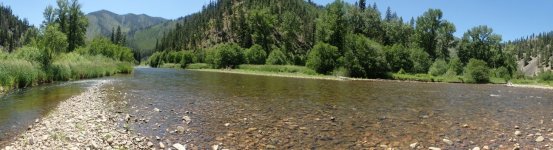
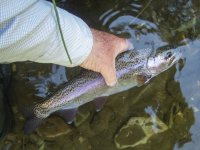
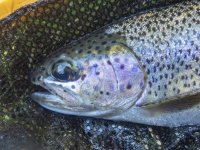
There were caddis dancing around the softer water just above the tailout. A few smaller trout were even leaping out of the water to grab them. I tied on the cdc caddis pattern and methodically worked over this wide tailout. I missed a few fish early on because the fish were turning downstream on the fly to strike and I wasn’t tight to the leader. But I was able to hook and land several nicer rainbows
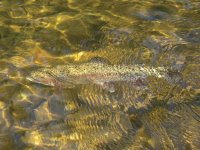
But as the temperatures and the sun climbed, the caddis disappeared and so did any surface action. I waded up to the head of the run and tied on a golden stimulator in the hope that somebody would take a chance on a big snack opportunity. But no one was interested and it was back to the cabin for a siesta on the hammock.
After dinner, I headed out again and managed to find “Microburst” available again. There were a few yellow sallies emerging and I tied a yellow sally fly to my tippet. But they didn’t appear to be on the trout menu this evening. Back to the parachute PMD. I have had amazing evenings at this location, but tonight would best be described as lukewarm. After a day in the upper 80’s, the hatch was weak and there weren’t many fish rising consistently. I really love working over a fish that is rising consistently; your cast has to be accurate and sharp. Instead, I was prospecting near and then far for the random fish that might be looking up. Still, I did find some willing cutts
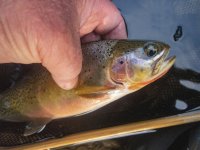
and a rising brown with the light fading.
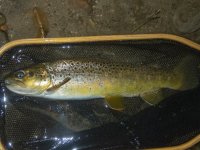
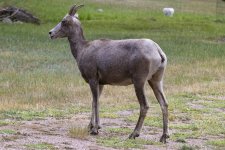
Of course, fishing (and visiting friends) is only part of my interests on these adventures. On the drive in, I encountered a herd on bighorn sheep grazing down on the lower stretches of the creek.
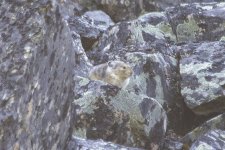
The cabin backs onto a steep scree slope, classic pika habitat. Periodically, you would hear their high-pitched alarm calls. And several of the cute little guys scampered around the boulders.
 They weren’t the only mammals to use the scree slope. Both ground squirrels and yellow pine chipmunks
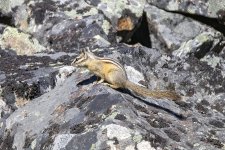
used the scree slope as a short-cut between patches of forest..
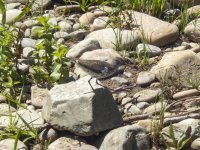
During the unsuccessful second day, I must have been near a spotted sandpiper nest at one site as this bird was quite vocal and stayed close to me.
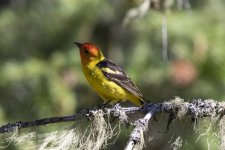
During a hike through the Ponderosa pines one morning, I found a very cooperative Western tanager male that allowed me to approach closely while it was hawking insects.
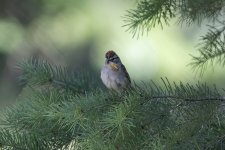
And a chipping sparrow showed of a prized catch, a fat grasshopper.
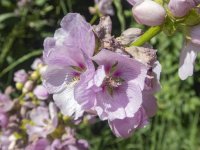
There was a good diversity of flowers in bloom, including streamside globemallows
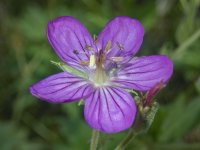
and sticky purple geranium.
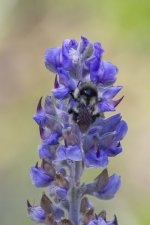
And when there are flowers in bloom, there are pollinators, such as this Western bumblebee on a silky lupine
or this fritillary butterfly on a long-stemmed clover bloom.
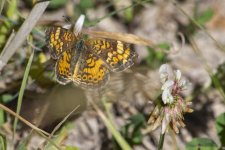
The edge of the right wing looks pretty ragged...
Steve
With low water levels forecast, I moved up my visit to “Silex” Creek to early July. I was anticipating easier wading conditions and hoping for regular morning insect hatches. I experienced the former (about 400 cfs/s), but a heat wave during my visit drove off any significant daytime hatches. Water temperatures rose steadily through the week with daily peaks at 60oF at the start of my visit and reaching almost 70oF when I left. At this time, Montana had imposed “hoot-owl” restrictions on some watersheds, but not “Silex” Creek yet. Regardless, I was extra careful to fight the fish quickly and take the time to revive them before release.
I love the change of scenery in this part of the Mountain West: open Ponderosa and lodgepole pine forests, steep talus slopes - such a contrast from the Wet Side. I am beginning to learn more about this famous creek, but my success is still uneven, especially in the absence of a clear hatch.
The best hatches peaked at dusk, typically an initial wave of caddis followed by emerging PMDs.
The first evening, I snagged one of my favorite stretches of water, called by my friends as the Little St. Joe Hole because it reminds them of water on that familiar river. In this stretch, you need to wade across knee-deep water to an elevated spine of boulders midstream. These boulders shelter the caster from the creek flow and the quiet water in their lee is a convenient place to net a nice trout. From this location, you can cast to the large boulders that line the far bank, a popular location for larger trout, especially browns, but you must also avoid overhanging branches. The fish in this run have spent most of the day higher in the run, in the faster, deeper water. However, in the evening, they drift back to this stretch of softer water. Here, they don’t have to work as hard to ambush any passing insects. Flights of caddis oscillated over the water’s surface
My initial offering, a classic elkhair caddis, found no takers. I switched to a cdc caddis pattern, one of my favorites, and had some initial success, landing a few westslope cutts
and rainbows. When interest in the cdc caddis cooled off, I switched to a parachute PMD. That was the hot ticket. I hooked and landed several nicer cutts (11-13” range)
and one nice brown (about 13”).
A nice evening.
The next day, I explored an area where I had some success fishing in the evening. But this was mid-morning through early afternoon on a bright, warm day. The summary is simple: no runs, no hits, no errors, a perfect game by the creek.
On the morning of my last day, I found one of my favorite evening sites (and a popular site with others, let’s call it “Microburst”) to be available and decided to see how I could do by day.
There were caddis dancing around the softer water just above the tailout. A few smaller trout were even leaping out of the water to grab them. I tied on the cdc caddis pattern and methodically worked over this wide tailout. I missed a few fish early on because the fish were turning downstream on the fly to strike and I wasn’t tight to the leader. But I was able to hook and land several nicer rainbows
But as the temperatures and the sun climbed, the caddis disappeared and so did any surface action. I waded up to the head of the run and tied on a golden stimulator in the hope that somebody would take a chance on a big snack opportunity. But no one was interested and it was back to the cabin for a siesta on the hammock.
After dinner, I headed out again and managed to find “Microburst” available again. There were a few yellow sallies emerging and I tied a yellow sally fly to my tippet. But they didn’t appear to be on the trout menu this evening. Back to the parachute PMD. I have had amazing evenings at this location, but tonight would best be described as lukewarm. After a day in the upper 80’s, the hatch was weak and there weren’t many fish rising consistently. I really love working over a fish that is rising consistently; your cast has to be accurate and sharp. Instead, I was prospecting near and then far for the random fish that might be looking up. Still, I did find some willing cutts
and a rising brown with the light fading.
Of course, fishing (and visiting friends) is only part of my interests on these adventures. On the drive in, I encountered a herd on bighorn sheep grazing down on the lower stretches of the creek.
The cabin backs onto a steep scree slope, classic pika habitat. Periodically, you would hear their high-pitched alarm calls. And several of the cute little guys scampered around the boulders.
They weren’t the only mammals to use the scree slope. Both ground squirrels and yellow pine chipmunksused the scree slope as a short-cut between patches of forest..
During the unsuccessful second day, I must have been near a spotted sandpiper nest at one site as this bird was quite vocal and stayed close to me.
During a hike through the Ponderosa pines one morning, I found a very cooperative Western tanager male that allowed me to approach closely while it was hawking insects.
And a chipping sparrow showed of a prized catch, a fat grasshopper.
There was a good diversity of flowers in bloom, including streamside globemallows
and sticky purple geranium.
And when there are flowers in bloom, there are pollinators, such as this Western bumblebee on a silky lupine
or this fritillary butterfly on a long-stemmed clover bloom.
The edge of the right wing looks pretty ragged...
Steve


