First of all, welcome to the forum congratulations on catching the rainbow on a fly rod! More will surely come. I echo what
@Tom Butler and others have mentioned earlier about
fly shops,
clubs, and a Gazetteer (
local maps - Google maps with offline maps works pretty well. I have a subscription to Gaia and keep offline maps on my phone).
You haven't mentioned here whether you are brand new to fishing streams or are experienced using gear or bait.
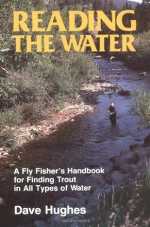
In case you are new to fishing altogether, fish have instinctive behavior patterns to satisfy their needs to take in more calories than they expend to eat, and protection from predators. That causes them to seek out specific places in a stretch of water. Once you learn about where those places would be under various circumstances, the surface of the water on many-most streams will "tell" you where those places are, and as a result there's a high likelihood the fish are there. So learning to "read the water" is important. It's kinda like reading a map. But you need to know how to interpret what you see; the
legend if you will. This book helped me
a lot...
View attachment 85627Amazon product ASIN 0811722635Also a video like this...
Besides the issues you mentioned, one of the problems I've found with larger streams like the MF or the Yakima is the amount of information the stream provides within your field of view that you have to interpret. Smaller streams provide all the same information, but there is less of it I have to digest in one field of view, so they are a good place to learn the craft. That said, the MF and Yakima have been good to me after I learned how to focus on smaller sections and read them like small streams. But I have to admit, I love the intimacy of smaller streams. *
adding And it doesn't require the casting expertise that larger streams (and saltwater) often require.*
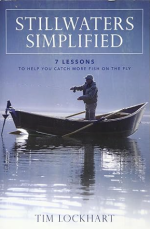
Fish in lakes have the same needs as fish in streams and use the "bathymetry" - structure of the lake in a similar fashion. But the "legend" for reading the surface of a lake is obviously different than moving water in streams. The forum's esteemed
@Tim L wrote the book "Stillwaters Simplified". It has been a
great resource for me to get back into stillwater fishing after a several year hiatus. He will even answer a PM with an additional question or few.
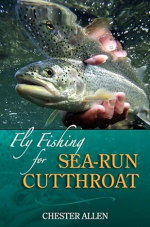
View attachment 85625 Amazon product ASIN 0811719642As the conversation turned to saltwater, right or wrong this is my observation - in the salt the fish aren't confined to the small area within two streambanks. They have regular migration patterns near their home (natal) streams. It's learning what beaches they hunt for food, when - what they eat is at that beach, and the structure and tides where they find the food. So when I catch fish in the salt it gives me a nice sense of accomplishment. A book that I don't want to downplay or say is a "beginner's" book, but helped me a lot as a beginner to learn about fishing for SRC in Puget Sound after he spoke at a club meeting is Chester Allen's Book, "Fly Fishing for Sea-Run Cutthroat"
View attachment 85624 Amazon product ASIN 0811701867I also picked up a used newer edition of the
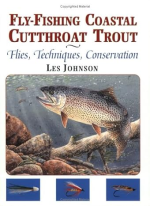
classic Les Johnson book mentioned above by
@flybill ; "Fly-Fishing for Coastal Cutthroat Trout: Flies, Techniques, Conservation (2004), at a Fly Fisher's International club (FFI) silent auction or raffle for just a few bucks and it has provided me ton of knowledge including a couple of my
goto saltwater fly patterns.
View attachment 85623 Amazon product ASIN 1571883339