
Thanks to @Buzzy for prompting me to post this SBS.
The Pine Squirrel Bugger is a versatile streamer representing a leech, sculpin or large salmon fly nymph. It can be tied with just about any color combinations depending on availability of material. It is unweighted and intended to be fished on long sinks tips and short (3-4'), stout (OX) tippets.
Materials:
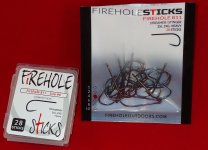
Hook: #2 - #6 Streamer Hook Barbless preferred. This SBS uses a #4 Firehole 811 barbless streamer hook.
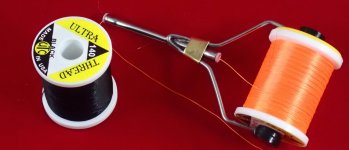
Thread: UTC 140 or equivalent.
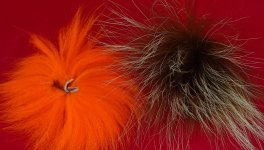
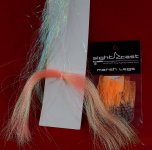
Tailing: Finn Raccoon fur or Arctic Fox fur. Finn Raccoon is preferred as it is more supple with long under fur and longer guard hairs.
Flash: Any suitable flash material such as Polar Flash or Crystal Flash. Silicon legs can be used for flash as well as they add additional movement to the tailing.
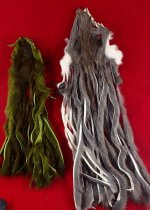
Body: Zonked N. American Pine Squirrel or Euro Pine Squirrel. Euro Pine Squirrel has slightly longer hair than the N. American squirrels and works well with larger hook sizes.
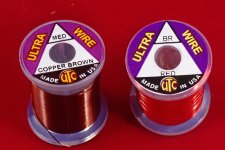
Rib: UTC BR or Med wire
Tying Process:
Create a thread base from the hook bend to approximately 1/8” behind the hook eye. The bare hook shank behind the hook eye is a marker to leave sufficient space to secure the zonked pine squirrel strip and wire ribbing.
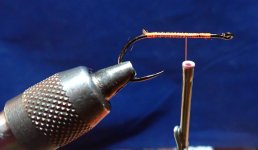
Select of clump of Finn Raccoon Fur or Arctic Fox fur and remove any fluff from the base. Measure the length of the clump from the spot behind the hook eye and trim to a length that extends approximately a hook shank length behind the hook bend. Secure with wraps from the spot behind the hook eye to the hook bend. This begins to create a uniform base for the zonked pine squirrel strip.
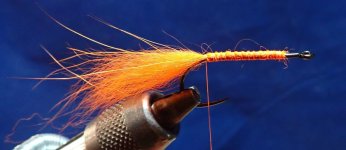
Add a few strands of flash on top of the first clump of tailing fur.
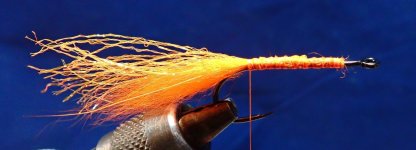
Add a second clump of tailing fur tying it in at the spot behind the hook eye to create a smooth base.
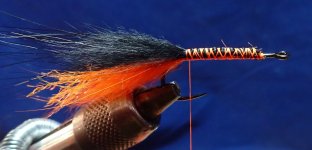
Tie in a length of ribbing wire secured at the hook bend.
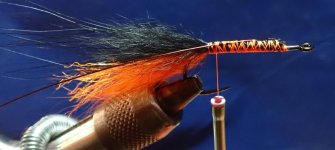 Tie in securely a length of zonked pine squirrel at the hook bend. The skin side should be up with the fur flowing backwards. Move the thread to the spot behind the hook eye.
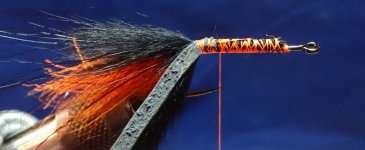
Wrap the pine squirrel strip over the tie in point and then forward around the hook shank while continually using your fingers to hold the fur backwards. The edges should not overlap. The zonked fur strip may stretch a bit and should be wrapped tautly around the hook shank.
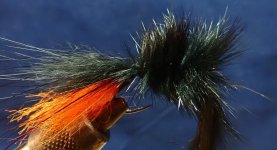 When you reach the spot behind the hook eye, take several tight wraps around the strip and trim. Cover the end of the strip with tight thread wraps without capturing much errant strands of fur.
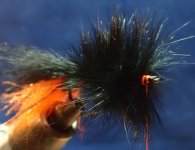 Take the ribbing wire and counter wrap it around the fur wiggling it a bit to prevent binding down clumps of fur. Wraps should be approximately 1/8” apart.
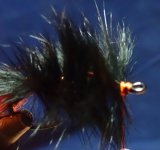
At the hook eye, take two wraps of wire before folding the wire back parallel to the hook shank. This keeps the wire from floating in subsequent thread wraps. Do not trim at this point. Continue with thread wraps to completely cover the wire and create a smooth head. Finish with double half-hitches or whip finish. Do not trim thread at this point.
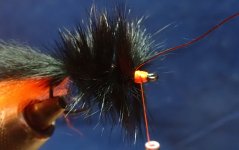
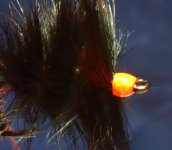
While hold the pine squirrel fur back with your fingers, coat the top of the thread head with UV resin and cure. Trim the wire and thread at this point. Coat the underside of the thread head with UV resin and cure. Coat the cured head with head cement.
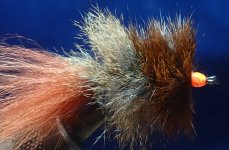
A variation that is useful for sculpin imitations is truncating the first color of pine squirrel wraps and adding a contrasting color of fur.
The Pine Squirrel Bugger is a versatile streamer representing a leech, sculpin or large salmon fly nymph. It can be tied with just about any color combinations depending on availability of material. It is unweighted and intended to be fished on long sinks tips and short (3-4'), stout (OX) tippets.
Materials:
Hook: #2 - #6 Streamer Hook Barbless preferred. This SBS uses a #4 Firehole 811 barbless streamer hook.
Thread: UTC 140 or equivalent.
Tailing: Finn Raccoon fur or Arctic Fox fur. Finn Raccoon is preferred as it is more supple with long under fur and longer guard hairs.
Flash: Any suitable flash material such as Polar Flash or Crystal Flash. Silicon legs can be used for flash as well as they add additional movement to the tailing.
Body: Zonked N. American Pine Squirrel or Euro Pine Squirrel. Euro Pine Squirrel has slightly longer hair than the N. American squirrels and works well with larger hook sizes.
Rib: UTC BR or Med wire
Tying Process:
Create a thread base from the hook bend to approximately 1/8” behind the hook eye. The bare hook shank behind the hook eye is a marker to leave sufficient space to secure the zonked pine squirrel strip and wire ribbing.
Select of clump of Finn Raccoon Fur or Arctic Fox fur and remove any fluff from the base. Measure the length of the clump from the spot behind the hook eye and trim to a length that extends approximately a hook shank length behind the hook bend. Secure with wraps from the spot behind the hook eye to the hook bend. This begins to create a uniform base for the zonked pine squirrel strip.
Add a few strands of flash on top of the first clump of tailing fur.
Add a second clump of tailing fur tying it in at the spot behind the hook eye to create a smooth base.
Tie in a length of ribbing wire secured at the hook bend.
Tie in securely a length of zonked pine squirrel at the hook bend. The skin side should be up with the fur flowing backwards. Move the thread to the spot behind the hook eye.Wrap the pine squirrel strip over the tie in point and then forward around the hook shank while continually using your fingers to hold the fur backwards. The edges should not overlap. The zonked fur strip may stretch a bit and should be wrapped tautly around the hook shank.
When you reach the spot behind the hook eye, take several tight wraps around the strip and trim. Cover the end of the strip with tight thread wraps without capturing much errant strands of fur. Take the ribbing wire and counter wrap it around the fur wiggling it a bit to prevent binding down clumps of fur. Wraps should be approximately 1/8” apart.At the hook eye, take two wraps of wire before folding the wire back parallel to the hook shank. This keeps the wire from floating in subsequent thread wraps. Do not trim at this point. Continue with thread wraps to completely cover the wire and create a smooth head. Finish with double half-hitches or whip finish. Do not trim thread at this point.
While hold the pine squirrel fur back with your fingers, coat the top of the thread head with UV resin and cure. Trim the wire and thread at this point. Coat the underside of the thread head with UV resin and cure. Coat the cured head with head cement.
A variation that is useful for sculpin imitations is truncating the first color of pine squirrel wraps and adding a contrasting color of fur.


