Rockhounding 101

I know a little about opal. Even though it is soft, its sheer beauty qualifies it to be a "precious gem stone". Opal gemstones are essentially made up of tiny "bubbles". Just like soap bubbles, they play tricks on light. Mexican fire opal, Australian Black opal, Honduras opal, Mojave dessert opal etc.. all are magical stones. Most of these stones will fluoresce under short wave and long wave fluorescent light.

I wish we had more precious opal material around here. The common opal we are finding is cool but has no real value.
 
"Rockhounding" around Anacortes has been challenging, compared to the Southwest. I did find the Blue Candy Agate deposit and got a nice jar full of highly polishable blue material. I should go back there one day. I also chased down a fossil deposit that was exposed from a landslide, very nice "leaf fossils". I've got a jar full of "beach agates" which are honey colored Chalcedony. And I found a very nice, apple green, translucent jade stone on Whidbey Island.
 
I was introduced to the world of fluorescent minerals long ago. These rocks "glow" like crazy when hit with UV light. Some stones will glow blue under long wave UV and red under short wave UV. Some stones such as Kunzite crystals will Phos fluoresce. Meaning... that after you hit them with UV light they will glow in the dark, appearing like a hot coal for some time. Rubies, Saphires, Diamonds, Opals ( and my blue agate) all fluoresce under UV light.
 
And some of the most impressive fluorescent rocks come from Franklin New Jersey. In daylight they appear as just a rock. Under UV light ..simply breathtaking. This is a common theme with fluorescent rocks...they often look boring until a UV light is used.
 
Most of my other rock hounding is just finding stuff randomly.
I was hoping other people might contribute their knowledge as well.
On a quest for strippers north of Bodega Bay, north of San Francisco bay, I came across a huge chunk of beautiful dark green and black Jade...too big to move back up cliffs...probably still there. Boulder was easily 200 pounds....not sure it was gem quality but portions of it might have been. More interested in fishing at the time...great stripper fishing off the north end of the G.G. Bridge.... (early seventies).
 
I'd like to add...that the science involved, regarding fluorescents, is quite fascinating. It will take you on a journey involving the mechanics of the atom. I can hold a Kunzite crystal next to a UV light for a few minutes. Then turn out all the lights. That crystal will be glowing bright red for several minutes. It freaks people out.
 
And some of the most impressive fluorescent rocks come from Franklin New Jersey. In daylight they appear as just a rock. Under UV light ..simply breathtaking. This is a common theme with fluorescent rocks...they often look boring until a UV light is used.
Shelite is the mother ore of Tungsten...it also fluoreses under a UV light...Quantities could make you a fortune if the deposit is reasonalbly extensive. ( Often found in 'tailings' piles from decomposing granite )
 
I've collected Shelite in the Laguna Mountains of California. Large crystals... invisible until the UV light was applied. Apparently lots of folks did well prospecting Shelite with UV lights decades ago.
 
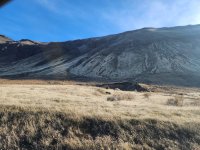
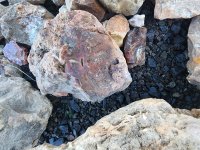
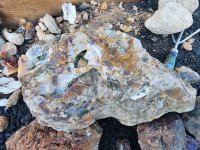
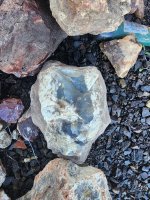
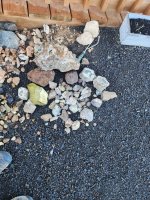
In the Saddle mountains today in an area familiar with many here. Found lots of petrified wood mostly agatized. Steep country and the further up the hillside the better it got.... pictures of rocks tomorrow.. in Sunnyside having sushi.... should I be scared?
1000001337.jpg
 
I had a battery operated prospecting UV light. Both long wave and short wave. It was simple.. wait until dark, hike around the mine tailings, mineral deposits or dessert floor..looking for something fluorescent. I was very surprised to find out how prevalent fluorescent minerals are. Oh,, and I learned that scorpions are highly fluorescent.
 
Back
Top