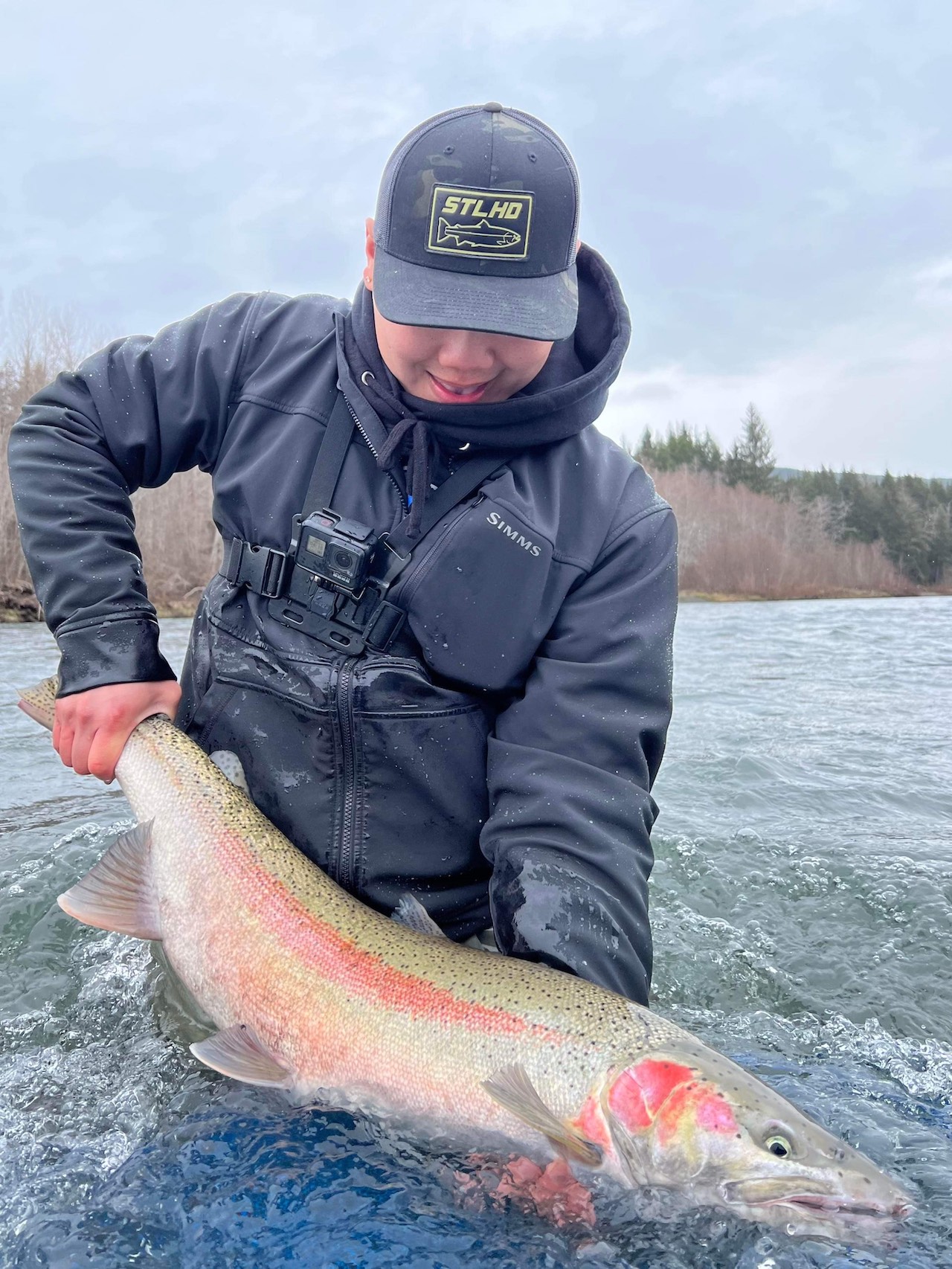
OP Steelhead are not Endangered

doublespey

Let.It.Swing
Forum Supporter
I know it’s highly controversial to say, but I think we can’t open these rivers until we find a way to curtail guiding in some way. After seeing how guides set up shop on the Skagit in the recent seasons (my local river I grew up fishing so I’m a bit ornery about it) it does bother me a lot. They came from as far as Montana. It used to be that we fought over if we could kill a wild steelhead or not, now I think it should be can we guide for them. People making a living off of a fish that may or may not be endangered is moronic IMO. Limited recreational fishing just for the fun of it could probably work.
 
This finding is by no means an exoneration, but rather a wakeup call.

"Based on the foregoing information, we determine OP steelhead do not warrant listing at this time. Primary factors leading to this conclusion include: habitat quality and connectivity are generally good within the DPS and are benefitting from ongoing restoration efforts; spatial distribution is good; State and Tribal comanagers have implemented improved harvest and hatchery practices and reduced harvest significantly in recent years; abundance trends suggest declining populations, but the response to recent management actions has yet to be seen; and while environmental variation is expected to have some negative impacts on the DPS, there could also be positive impacts while the precise localized effects are unclear. Additionally, we did not identify any portions of the DPS that were both significant and facing a higher level of extinction risk than the DPS rangewide. Therefore, we determine listing is not warranted. NMFS intends to continue to
monitor the status of the OP steelhead DPS and work closely with the State and Tribal co-managers.
"
 
Last edited:
Well if they're not endangered, can we go back to harvesting them ?
😁🤣
 
I know it’s highly controversial to say, but I think we can’t open these rivers until we find a way to curtail guiding in some way. After seeing how guides set up shop on the Skagit in the recent seasons (my local river I grew up fishing so I’m a bit ornery about it) it does bother me a lot. They came from as far as Montana. It used to be that we fought over if we could kill a wild steelhead or not, now I think it should be can we guide for them. People making a living off of a fish that may or may not be endangered is moronic IMO. Limited recreational fishing just for the fun of it could probably work.
I'm overall not anti-guide, but I agree there needs to be limitations, especially on certain fisheries. I doubt much will ever happen, though, as the lobbying groups that get anything done on any of these fisheries are largely supported by guides.
 
Guiding is hard for me. I've known and utilized some really great guides who care passionately about the resource and traffic more in appreciation than exploitation. However at a certain density, even all the guides having the best of intentions is still harming the resource. I don't know what that density is or if it happened on the skagit/sauk last year, but i can confirm that I saw at least two guides every single day i fished last season. They were polite and didn't do the shifty things guides do but they were always there.

I think in general only having one or two systems open in Feb is death to those systems. It was even worse in 22 or 23 on the nooksack. Skagit closed Jan 31, OP was doing it's weird partial closure/no boat thing, and the poor sack was seeing 20 drift boats a day until it closed on the 15th. All for the 6 fish that show up before mid march .
 
I guess I don't know enough to know all the ramifications. Seems an ESA listing in principal is great, but then later there can be subsequent unintended consequences that make management of the subject species or other public interests difficult. This is one of those topics that I just don't have a feel for what's best.
 
Not my idea (I first heard it listening to some podcasts from Wet Fly Swing) but the notion of a system simmilar to big game lottery tags but for say 3-4 days of fishing for highly renowned rivers or sections of rivers seems to make alot of sense to me in theory. I'll be the first to admit that I have 0 experience guiding or skin the the game but it seemed to make alot of sense the way it was explained on that podcast. I think it was George Cook that mentioned it? Seemed like it could (among other things):
  • Provide additional funding for programs to research and protect those fisheries directly
  • Reduce the quantities of anglers while not closing a system entirely
  • Encourage folks who get a tag to go talk to passionate ambassdors of the fishery a la a trip to the local fly shop to gear up when they learn they won a tag
I know it's not an Apples-Apples comparison but its not the worst idea I've heard.
 
An ESA listing for a DPS or population segment that is in trouble, abundance wise, seems logical. The problem, IMO, is that even with a listing, populations don't improve (except for Hood Canal summer chum, where commercial over-harvest was the proximate cause of decline). If listed populations don't recover, then either the fishery management actions taken are the wrong actions, or the proximate cause of decline is not a variable that can be influenced by management action.

For example, Puget Sound Chinook have been listed for over 20 years, and they continue to decline. In order, I think the limiting factors are over-harvest and habitat quality. The management agencies cannot control over-harvest because they have no jurisdiction in Canada, so we cannot even test whether it's over-harvest or habitat that is the principle limiting factor. In the case of Puget Sound steelhead, listed for 17 years, we can pretty well see that fisheries are not a factor affecting population abundance because harvest has been strictly controlled for longer than the fish have been listed. Habitat, in the form of predation by marine mammals, appears to be the proximate limiting factor. If that factor were addressed, we'd very likely find that there are other variables in the marine environment depressing steelhead survival ranging from ocean upwelling, acidification, temperature change, and super abundance of hatchery pink and chum salmon in the North Pacific Ocean.

The question, I think, is that if recovery to 1980s level of abundance is not a viable choice on the menu, then what are our best and preferred management options going forward?
 
even all the guides having the best of intentions is still harming the resource.
I don't think that guides, with the best of intentions, are harming the resource. Under our restrictive regulations, the resource is doing as best it can. Eliminating guiding won't change that. What eliminating guiding will do is increase the opportunity of us non-guided anglers to catch a steelhead. Guides who are on the river every day are more efficient anglers, and their clients end up catching more fish on average than non-guided anglers. So a reduction in competition would improve the opportunity for you and me.
 
Last edited:
I don't think that guides, with the best of intentions, are harming the resource. Under our restrictive regulations, the resource is doing as best it can. Eliminating guiding won't change that. What eliminating guiding will do is increase the opportunity of us non-guided anglers to catch a steelhead. Guides who are on the river every day are more efficient anglers, and their clients end up catching more fish on average that non-guided anglers. So a reduction in competition would improve the opportunity for you and me.
To be clear, I agree they're not currently over the line into harming the resource, but was just speaking to the existence of a line where there are just too many effective guides catching too many fish, too often.
 
This finding is by no means an exoneration, but rather a wakeup call.

"Based on the foregoing information, we determine OP steelhead do not warrant listing at this time. Primary factors leading to this conclusion include: habitat quality and connectivity are generally good within the DPS and are benefitting from ongoing restoration efforts; spatial distribution is good; State and Tribal comanagers have implemented improved harvest and hatchery practices and reduced harvest significantly in recent years; abundance trends suggest declining populations, but the response to recent management actions has yet to be seen; and while environmental variation is expected to have some negative impacts on the DPS, there could also be positive impacts while the precise localized effects are unclear. Additionally, we did not identify any portions of the DPS that were both significant and facing a higher level of extinction risk than the DPS rangewide. Therefore, we determine listing is not warranted. NMFS intends to continue to
monitor the status of the OP steelhead DPS and work closely with the State and Tribal co-managers.
"
That last sentence is another empty promise, @Guy Le Fly. Why would NMFS continue to monitor the status or even more importantly, why and how are they going to work with the state and tribal co-managers when they won't even have any regulatory authority in the DPS? With all of cuts to staff and funding at NMFS and their agency being stretched thin in places where they do work, OP steelhead will become an afterthought for them. Wanna take that bet?

Also, how is this a wake-up call? For whom?!
 
I don't think that guides, with the best of intentions, are harming the resource. Under our restrictive regulations, the resource is doing as best it can. Eliminating guiding won't change that. What eliminating guiding will do is increase the opportunity of us non-guided anglers to catch a steelhead. Guides who are on the river every day are more efficient anglers, and their clients end up catching more fish on average that non-guided anglers. So a reduction in competition would improve the opportunity for you and me.
I mostly agree. I would reason they definitely take a larger share of the impacts, but those are already (mostly) managed and monitored. But on the whole eliminating guides comes down to the quality of the fishery and the experience anglers are looking for as a non-guided angler. Less crowds, more encounters, etc. Would last year's Skagit fishery not have closed early if there was a limit or ban on guides? Probably. But I don't think there is any appetite for WDFW to consider that at all, in any watershed, IMHO.
 
Restricting access to a fishery based on class is a social issue and generally has very little to do with actually protecting the resource. Montana has several watersheds that restricts access to float outfitter and nonresident anglers. And recently there has been big battles over increasing restrictions on the Madison River. As a social issue, there are many different groups of people who either are for restrictions (they think they benefit from the restrictions) or against restrictions (the restrictions adversely impact them). In 2005, MFWP placed significant (and somewhat confusing) restrictions on non-residents and float outfitters on the Beaverhead and Big Hole Rivers. Read it if you dare:


In practice, implementation of these kinds of restrictions adversely impacts economies and merely rearranges river pressure on a day by day basis. Landowners and locals think they are great (unless they are economically impacted) and outfitters and non-locals (including non-residents) are inconvenienced to no end and forced into different daily pressured river sections not restricted.

Arguments that restricting access for a class or classes of anglers to the fishery is a fish management tactic is baseless as class restrictions are usually imposed for social not scientific reasons.
 
Last edited:
I don't think that guides, with the best of intentions, are harming the resource. Under our restrictive regulations, the resource is doing as best it can. Eliminating guiding won't change that. What eliminating guiding will do is increase the opportunity of us non-guided anglers to catch a steelhead. Guides who are on the river every day are more efficient anglers, and their clients end up catching more fish on average that non-guided anglers. So a reduction in competition would improve the opportunity for you and me.

I don’t think guides harm the resource to a significant degree overall, but if you are considering reducing impacts to prevent a listing or allow a fishery to happen, why not start with the people that are professionally targeting the fish? The people who may be from literally anywhere in the world and who are here to make money on the resource?

I don’t get how you write off being for curtailing guiding as being about catching more fish for recreational anglers, like it’s a self serving stance. I know lots of folks that don’t use guides and catch plenty of fish to be satisfied. We all see what it’s like on the few remaining steelhead rivers and how the guides move in and set up shop. In some cases the sense of ownership and entitlement among guides shows how unchecked they are. Sports fishing doesn’t exist for guides and it doesn’t exist to make people money guiding. It exists to have fun and connect with the natural world. It is such a USA thing that something that creates jobs and economy goes nearly unregulated and harms something pure and meaningful like sports fishing. I do think that commercial fishermen and guides will be the last ones fishing (see the post about heavily regulated waters in Montana above), and that is fucked up.
 
I don’t think guides harm the resource to a significant degree overall, but if you are considering reducing impacts to prevent a listing or allow a fishery to happen, why not start with the people that are professionally targeting the fish? The people who may be from literally anywhere in the world and who are here to make money on the resource?

I don’t get how you write off being for curtailing guiding as being about catching more fish for recreational anglers, like it’s a self serving stance. I know lots of folks that don’t use guides and catch plenty of fish to be satisfied. We all see what it’s like on the few remaining steelhead rivers and how the guides move in and set up shop. In some cases the sense of ownership and entitlement among guides shows how unchecked they are. Sports fishing doesn’t exist for guides and it doesn’t exist to make people money guiding. It exists to have fun and connect with the natural world. It is such a USA thing that something that creates jobs and economy goes nearly unregulated and harms something pure and meaningful like sports fishing. I do think that commercial fishermen and guides will be the last ones fishing (see the post about heavily regulated waters in Montana above), and that is fucked up.
There are a number of fishing regulatory measures to select from. What ones to use depends on the fishery management objectives. I think WDFW's Skagit steelhead management objectives go something like this:

1. Least overall hassel to WDFW (Washington Department of Salmon);
2. Stay at or below the allowed ESA take number for the given year;
3. Some opportunity for the greatest number of anglers is preferable to lots of opportunity for fewer anglers.

There are a number of management tools to ensure that ESA take stays within the allowed number.

1. In the best of all possible worlds fish are abundant, so the season is long and fishing restrictions are minimal;
2. In the world of ESA listings, managers consider fishing method and gear restrictions to limit impact on the fish population. That's how we ended up with the Skagit CNR season with the Special Rule and Gear restrictions in the first place back in 1981. Those included:

A. No fishing from a boat equipped with a motor while under power;
B. No bait;
C. Single barbless hook only.

If that doesn't keep "take" within the allowable limit, I think the further considerations are restrictions based on relative effectiveness of fishing methods or a lottery or an auction. In general, boat anglers are more effective than wade anglers; conventional gear anglers are more effective than fly anglers. It's very possible that guided boat anglers are more effective than non-guided boat anglers, but I don't think the Department has data for that breakdown. If it is necessary to further reduce incidental take, a logical management action could be to limit fishing to no fishing from a boat and fly fishing only. And since most steelhead fly fishers use 2-handed rods these days, it could be further limited to maximum rod length of 9'. Of course these more restrictive measures don't satisfy WDFW's management objectives #1 or 3, so the preferred choice is to simply close the river to fishing.

 
Not my idea (I first heard it listening to some podcasts from Wet Fly Swing) but the notion of a system simmilar to big game lottery tags but for say 3-4 days of fishing for highly renowned rivers or sections of rivers seems to make alot of sense to me in theory. I'll be the first to admit that I have 0 experience guiding or skin the the game but it seemed to make alot of sense the way it was explained on that podcast. I think it was George Cook that mentioned it? Seemed like it could (among other things):
  • Provide additional funding for programs to research and protect those fisheries directly
  • Reduce the quantities of anglers while not closing a system entirely
  • Encourage folks who get a tag to go talk to passionate ambassdors of the fishery a la a trip to the local fly shop to gear up when they learn they won a tag
I know it's not an Apples-Apples comparison but its not the worst idea I've heard.

Just not a fan of this idea. How about just opening up some other rivers rather than needing special tags and further limiting angler participation.
The way things are now, everyone is concentrated on the few rivers that are actually open. If closing rivers to sport fishing really helped bring the fish back, shouldn’t we be fishing some of them by now? I mean, the Nisqually has been closed to winter steelhead fishing for 32 years and we still aren’t fishing it. I’d love to fish my home rivers like the Puyallup, Green and Nisqually again when you’d actually like to fish them, which would be February and March rather then some ceremonial season where no fish are around because nothing gets planted. It’s sad to see what steelhead fishing has become in this state.
SF
 
Last edited:

I know you like to stir the pot so I don’t know if it’s worth replying since you might not be serious but don’t you think it’s weird that anyone from anywhere can come to WA and guide for $1000 a year? Many commercial fisheries have a finite number of licenses that can be transferred but that’s it. As far as I know guiding sports fishing has no such thing and as many as want can come here to operate.
 
Back
Top