
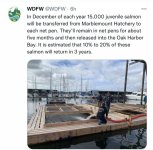
I like programs like these but is a 10-20% return rate possible nowadays? I don’t believe the south sound net pens get close to that number.
SF

SF

Follow along with the video below to see how to install our site as a web app on your home screen.
Note: This feature may not be available in some browsers.


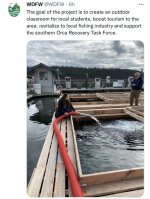
Is this essentially what they do in the south sound net pen operations? Will these fish residualize?

My guess is transferring the fish into the pens.So, running fire hoses ? aereating the pens?

I know a spot that might benefit from that project.I believe that would be one of the goals though it isn’t stated, to provide resident coho angling opportunities.
SF
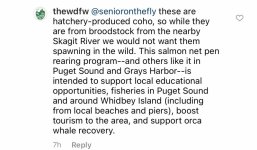
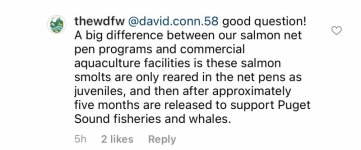
Is it reasonable to assume that the mature surviving fish would return to the vicinity of the net pens instead of heading up the Skagit to the hatchery of origin?

Boston Whalers.So which whales are being supported with coho releases?
It’s my understanding that the southern killer whales will eat coho and chum, but prefer chinook. I’m not sure 5 lb or less resident net pen coho are going to do much for them.
Maybe @adamcu280 or @Cabezon can chime in on whether these fish would be beneficial to whales or if it is just PR hype.
SF


Here's the latest on winter and summer prey of SRKW. I helped with the data collection that resulted in the 2010 summer prey paper.It’s my understanding that the southern killer whales will eat coho and chum, but prefer chinook. I’m not sure 5 lb or less resident net pen coho are going to do much for them.
Maybe @adamcu280 or @Cabezon can chime in on whether these fish would be beneficial to whales or if it is just PR hype.
SF
![88_07_349_02[3105].jpg](https://pnwflyfishing.com/forum/data/attachments/7/7024-a16624df8f8ed74545c84c9486dbf8b4.jpg?hash=oWYk34-O10 "88_07_349_02[3105].jpg")

They do have very good data, so either they are pulling that return rate out of thin air or at least out of history when marine survival rates were many times greater than in recent years. That's one of the things that really bugs me about WDFW. They have the technical talent to give honest answers and be transparent to the public, but somebody there just can't resist making shit up and not think it damages the agency's credibility.I would be surprised if WDFW was just pulling the return rate number out of thin air, t
