With temperatures in the low 90’s forecast for the lowlands, a friend and I decided to head to the mountains, to “Icewater” Lake.

We had our pontoon boats on the water by 10:30AM, apparently the first folks on the lake. It was setting up to a placid mountain-lake experience. But other folks decided to beat the heat in this mountain lake and we were serenaded by the joyful sounds of screaming children swimming in the outlet stream, one moron playing his recorder, and badly-behaved barking dogs = municipal swimming pool. Flotillas of kayaks and paddle boards passed us. It wasn’t quite the quiet, relaxing mountain experience that we were anticipating. Fortunately, the fishing was quite good.
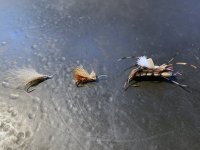
I rigged three rods: a) a Sage 5wt. with a sink-tip line (and a few small split-shots because I forgot my full-sink line) and a seal leach and a damsel nymph imitation, b) a Sage 4 wt. with a floating line and a light parachute PMD fly, and c) a Reddington 3 wt. with a floating line and a green hopper pattern. Below you can see the size 14 CDC caddis, the size 16 brown EHC, and the final hopper pattern that I used.
The day started out calm, but before we had even finned out way the vicinity of the island, we began to feel a breeze from the west-southwest (from the outlet basically). At times, the wind would gust into the low double digits and then subside. The view of mountain was partially obscured by dust clouds carried up from the mountain flank by these gusts. As is often the case, by late afternoon the winds had calmed down again to a mill pond.
As is my preference, I immediately trolled with the sink-tip line over to the outlet shelf at the mouth of the outlet stream. I didn’t even have a nibble. At the start of the shelf, I started casting the green grasshopper fly to the edge of the dropoff. It seems that the trout like to cruise this edge and ambush food that drifts off the flats. I had some strikes on the hopper by smaller fish early on but they were too small to really ingest it. About 1/3rdof the way along the shelf a big trout just inhaled the fly and then broke me off. Damn…
I decided to replace the hopper fly with a size 14 cdc caddis pattern. I was hoping that this would improve my hook-up percentage. While fish love to attack the hopper pattern, they often mouth it without being hooked. I picked the cdc pattern because I like the way it lies flat on the surface film. And I was seeing some fish hitting the surface for a brown midge, a bit smaller than a size 16. This hatch was strong enough to draw in some swallows to cruise over the lake for a period. I did pick up a fish or two by casting the cdc pattern, but it wasn’t red hot.
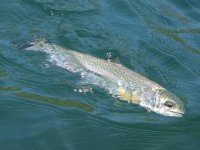
So, I switched it out for a size 16 brown elk-hair caddis. The color and size was a reasonable match to the natural even if the design of the pattern wasn’t that close. In the end, I’m not the final judge and the fish really did like this fly. I had several explosive strikes on it.
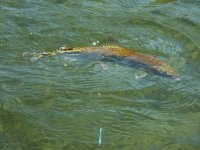
The fish continued to search for these brown midges even after the hatch had largely ended. Several times, I watched a single trout moving in a line cleaning up cripples (or something) at the surface. If I dropped my fly in its anticipated path, I was often rewarded with a strike and hook-up. Even smaller rainbows at this lake put up a great fight, often jumping into the air. One 14” fish even pulled off quite a bit of fly line before I could palm enough resistance to the reel to slow its run.
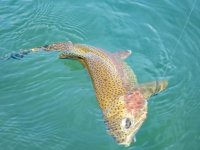
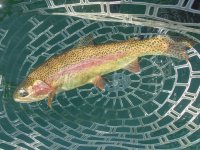
In light of the warm conditions, I spent whatever time was required to ensure that each fish had recuperated before its release.
I spent the balance of the afternoon circulating between the underwater boulder hummock near the main channel and the outer edge of the shelf, occasionally straying into some of flats just visible off the shelf. It was out there that I experienced what my friend and I had been hoping to see – a hopper fall. At this time of year, male grasshoppers will fly up and “sing” by rubbing their hind legs against the fore-wings (stridulation). These mating flights and sounds attract females. But when there are gusty winds, like today, the hoppers can be carried up the grassy slopes and be deposited with a plop on the lake. When this happens, the hoppers are relatively helpless. They may try in vain to kick their way toward shore, but mostly they drift like tiny sailboats downwind. The presence of such a large opportunistic meal can induce even the largest trout to look up in this otherwise oligotrophic lake (= low productivity). The feeble movements of the floating hoppers trigger explosive strikes by the trout. Some trout appear to initially try to sink the hopper by rising over it and then coming back for the actual strike.
So, I wasn’t surprised when I saw something large in my peripheral vision splat on the lake.
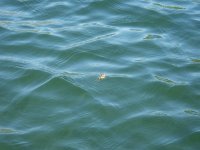
I finned my way over and netted it out of the water for a closer look and pictures. I gave it the opportunity to relax on my pontoon boat, but it hopped off while I was casting and was carried down the lake to its fate.
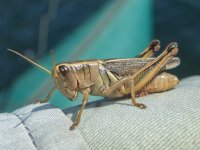
Unlike the green-abdomen hopper that I started out with, this hopper, possibly a red-legged grasshopper, had a tan/cream abdomen with red-trailing legs.
 I clipped off the elk-hair caddis and tied on the best match that I had in my hopper box. Per usual, I had several smaller fish try to engulf it, but they were not hooked. Finally, a bigger trout (12”ish) rocketed up to attack the fly and it was game on. There were a few more misses and a few more catch and releases. After a long successful day, it was time to head home. My friend had also done well, especially on an X-caddis.
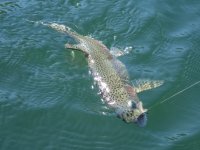
As we slow-trolled our way back to the ramp, I trolled with the hopper pattern dangling behind. I periodically twitched it to imitate the movement of struggling hopper. And over the deepest section of the lake, a really nice trout just hammered the fly. It put up a great fight, but I was able to slip it into the net, revive it, and then release it.
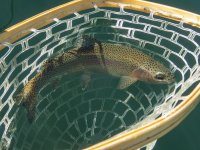
We had a blast.

Steve
We had our pontoon boats on the water by 10:30AM, apparently the first folks on the lake. It was setting up to a placid mountain-lake experience. But other folks decided to beat the heat in this mountain lake and we were serenaded by the joyful sounds of screaming children swimming in the outlet stream, one moron playing his recorder, and badly-behaved barking dogs = municipal swimming pool. Flotillas of kayaks and paddle boards passed us. It wasn’t quite the quiet, relaxing mountain experience that we were anticipating. Fortunately, the fishing was quite good.
I rigged three rods: a) a Sage 5wt. with a sink-tip line (and a few small split-shots because I forgot my full-sink line) and a seal leach and a damsel nymph imitation, b) a Sage 4 wt. with a floating line and a light parachute PMD fly, and c) a Reddington 3 wt. with a floating line and a green hopper pattern. Below you can see the size 14 CDC caddis, the size 16 brown EHC, and the final hopper pattern that I used.
The day started out calm, but before we had even finned out way the vicinity of the island, we began to feel a breeze from the west-southwest (from the outlet basically). At times, the wind would gust into the low double digits and then subside. The view of mountain was partially obscured by dust clouds carried up from the mountain flank by these gusts. As is often the case, by late afternoon the winds had calmed down again to a mill pond.
As is my preference, I immediately trolled with the sink-tip line over to the outlet shelf at the mouth of the outlet stream. I didn’t even have a nibble. At the start of the shelf, I started casting the green grasshopper fly to the edge of the dropoff. It seems that the trout like to cruise this edge and ambush food that drifts off the flats. I had some strikes on the hopper by smaller fish early on but they were too small to really ingest it. About 1/3rdof the way along the shelf a big trout just inhaled the fly and then broke me off. Damn…
I decided to replace the hopper fly with a size 14 cdc caddis pattern. I was hoping that this would improve my hook-up percentage. While fish love to attack the hopper pattern, they often mouth it without being hooked. I picked the cdc pattern because I like the way it lies flat on the surface film. And I was seeing some fish hitting the surface for a brown midge, a bit smaller than a size 16. This hatch was strong enough to draw in some swallows to cruise over the lake for a period. I did pick up a fish or two by casting the cdc pattern, but it wasn’t red hot.
So, I switched it out for a size 16 brown elk-hair caddis. The color and size was a reasonable match to the natural even if the design of the pattern wasn’t that close. In the end, I’m not the final judge and the fish really did like this fly. I had several explosive strikes on it.
The fish continued to search for these brown midges even after the hatch had largely ended. Several times, I watched a single trout moving in a line cleaning up cripples (or something) at the surface. If I dropped my fly in its anticipated path, I was often rewarded with a strike and hook-up. Even smaller rainbows at this lake put up a great fight, often jumping into the air. One 14” fish even pulled off quite a bit of fly line before I could palm enough resistance to the reel to slow its run.
In light of the warm conditions, I spent whatever time was required to ensure that each fish had recuperated before its release.
I spent the balance of the afternoon circulating between the underwater boulder hummock near the main channel and the outer edge of the shelf, occasionally straying into some of flats just visible off the shelf. It was out there that I experienced what my friend and I had been hoping to see – a hopper fall. At this time of year, male grasshoppers will fly up and “sing” by rubbing their hind legs against the fore-wings (stridulation). These mating flights and sounds attract females. But when there are gusty winds, like today, the hoppers can be carried up the grassy slopes and be deposited with a plop on the lake. When this happens, the hoppers are relatively helpless. They may try in vain to kick their way toward shore, but mostly they drift like tiny sailboats downwind. The presence of such a large opportunistic meal can induce even the largest trout to look up in this otherwise oligotrophic lake (= low productivity). The feeble movements of the floating hoppers trigger explosive strikes by the trout. Some trout appear to initially try to sink the hopper by rising over it and then coming back for the actual strike.
So, I wasn’t surprised when I saw something large in my peripheral vision splat on the lake.
I finned my way over and netted it out of the water for a closer look and pictures. I gave it the opportunity to relax on my pontoon boat, but it hopped off while I was casting and was carried down the lake to its fate.
Unlike the green-abdomen hopper that I started out with, this hopper, possibly a red-legged grasshopper, had a tan/cream abdomen with red-trailing legs.
I clipped off the elk-hair caddis and tied on the best match that I had in my hopper box. Per usual, I had several smaller fish try to engulf it, but they were not hooked. Finally, a bigger trout (12”ish) rocketed up to attack the fly and it was game on. There were a few more misses and a few more catch and releases. After a long successful day, it was time to head home. My friend had also done well, especially on an X-caddis.As we slow-trolled our way back to the ramp, I trolled with the hopper pattern dangling behind. I periodically twitched it to imitate the movement of struggling hopper. And over the deepest section of the lake, a really nice trout just hammered the fly. It put up a great fight, but I was able to slip it into the net, revive it, and then release it.
We had a blast.
Steve