

Mark Melton
Life of the Party
These caddisfly larvae change their cases from redwood needles and other debris found in the stream to small pieces of twigs which are hollowed out. The cases are lined with silk and the rear end is plugged with a small stone or piece of wood secured with silk. They will also use Nerophilus californicus cases on occasion, adding small pieces of wood to the front of the case and plugging the rear of the case with stones. The specimens below are all from Mill Creek (a tributary to the Russian River). They're usually found in calm water near the edge of the streams.
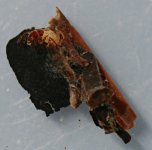
Immature lava and case. Larva 8mm.
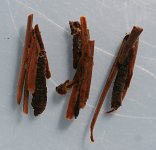
Immature larvae and cases. Cases 8-14mm. Larvae 6-8mm.
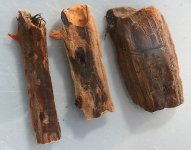
Mature larvae with cases. Cases 29, 26 and 20mm. Larvae from left to right 21,19 and 17mm.
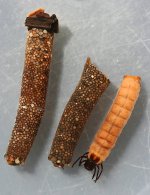
This Heteroplectron californicum larvae took over this Nerophilus californicus case.
Nerophilus californicus case and larva
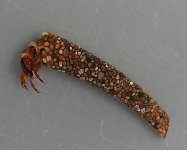
Nerophilus californicus larva
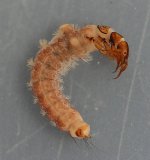
Immature lava and case. Larva 8mm.
Immature larvae and cases. Cases 8-14mm. Larvae 6-8mm.
Mature larvae with cases. Cases 29, 26 and 20mm. Larvae from left to right 21,19 and 17mm.
This Heteroplectron californicum larvae took over this Nerophilus californicus case.
Nerophilus californicus case and larva
Nerophilus californicus larva
