Very nice, Riseform.

Navigation
Install the app
How to install the app on iOS
Follow along with the video below to see how to install our site as a web app on your home screen.
Note: This feature may not be available in some browsers.
More options
Style variation
You are using an out of date browser. It may not display this or other websites correctly.
You should upgrade or use an alternative browser.
You should upgrade or use an alternative browser.
Got any bird pics?
- Thread starter Wadin' Boot
- Start date

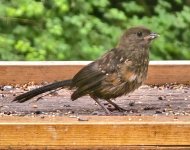
Haven't seen this little guy before. He was very accommodating by posing for a close-up this morning. Clearly hungry and looking a bit bedraggled (maybe just got in from a long flight). Only guess I have is a Lincoln's Sparrow, but iffy. Most distinctive features I see are the long tail and overall dark color.

Bonefish Jack
Steelhead
Looks to be an immature Spotted TowheeHaven't seen this little guy before. He was very accommodating by posing for a close-up this morning. Clearly hungry and looking a bit bedraggled (maybe just got in from a long flight). Only guess I have is a Lincoln's Sparrow, but iffy. Most distinctive features I see are the long tail and overall dark color.


Wow those are really good photos!Thanks, Scott.
Spent some time watching a few Cedar Waxwings by the Couer d'Alene river last week on my way back from Montana. I've always seen them eat berries in the past, but these were flycatching.


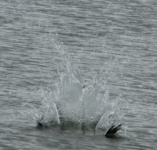
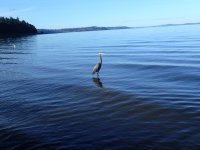
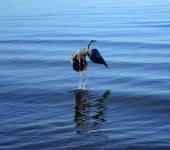
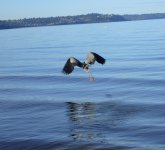
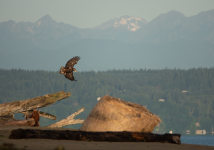
Think I interrupted it's shore lunch. Took off with something hanging off it's beak. Huge.
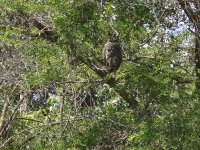

All Ospreys...
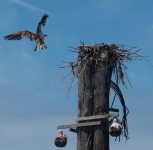
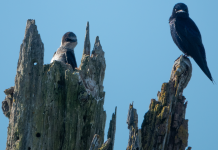
the martins are bummed.
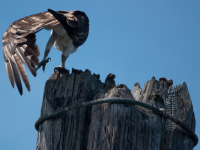
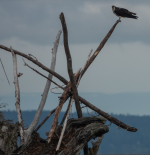
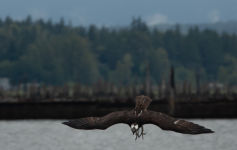
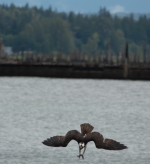
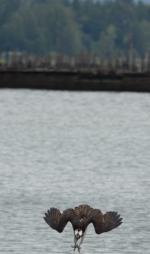
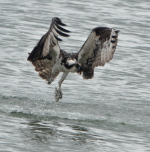
the martins are bummed.
Last edited:

SpeyrodGB
Life of the Party
Excellent osprey pics.

Thanks, Boot!

Thought I’d pay it forward….this kid made me smile, maybe it’ll do the same for you

 www.yahoo.com
12-year-old’s bird calls at Oklahoma school talent show have people’s jaws on the floor
A 12-year-old from Oklahoma has gained millions of people's attention with his incredible ability to mimic bird calls.

Simply amazing, and totally heartwarming.
You're the Man, Samuel!
Thanks for the heads-up,
Kenneth
You're the Man, Samuel!
Thanks for the heads-up,
Kenneth
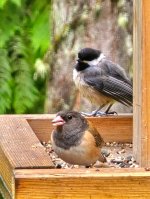
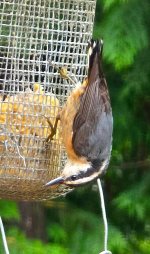
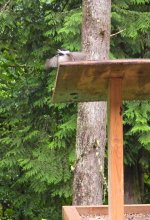

any ideas to keep the blue jays out of the bird boxes attached to the side of my house? i am in the city, so cant do much to scare the jays away.
Hole size?
Are they trying to nest or getting the young?
Are they trying to nest or getting the young?

the hole size is 1 3/8" dia.Hole size?
Are they trying to nest or getting the young?
and when i spotted the jay or jays it appeared that they were trying to get their beaks in and raid the nest. havent seen little ones since.



Western flycatcher. Identification of Epidonax flycatchers are always considered among the hardest birds to identify, especially in the absence of vocal cues. Merlin has identified Western wood-pewees, Hammond’s flycatchers, and Western flycatchers in my backyard. Seeing them is more of a challenge as they prefer to forage within the Douglas fir canopy versus from open perches. With Epidonax flycatchers, even if you have the bird in hand, identification is a challenge and researchers who are tagging birds captured in mist nests have to use ratios of body parts for accurate identifications.
A few days ago, out the kitchen window I noticed a small flycatcher perched on an arm of my the bird feeder support.
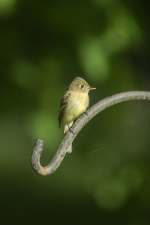
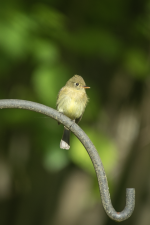
I rushed back to my office to grab my telephoto setup and it was still there. The flycatcher took several forays from that perch to grab insects and typically returned to the support arm each time. A few times it perched on a shaded Douglas fir branch, a more typical perch location than in the open sun.
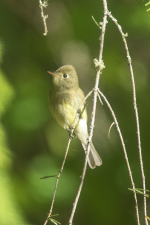
After examining the pictures, I determined that this was a Western flycatcher. This was based on several factors: a peaked crown, olive feathers on the head and yellowish feathers on the neck and breast, the suggestion of a darker “vest”, and a tear-drop shaped eye ring. This species has had an interesting taxonomic history. From 1989 until 2023, it had been split into the Pacific-slope flycatcher along coastal North America and the Cordilleran flycatcher in the Rockies. In 2023, the American Ornithologist’s Union lumped both together as the Western flycatcher due to hybridization, lack of consistent vocal differences, and similar morphologies.
Steve
A few days ago, out the kitchen window I noticed a small flycatcher perched on an arm of my the bird feeder support.
I rushed back to my office to grab my telephoto setup and it was still there. The flycatcher took several forays from that perch to grab insects and typically returned to the support arm each time. A few times it perched on a shaded Douglas fir branch, a more typical perch location than in the open sun.
After examining the pictures, I determined that this was a Western flycatcher. This was based on several factors: a peaked crown, olive feathers on the head and yellowish feathers on the neck and breast, the suggestion of a darker “vest”, and a tear-drop shaped eye ring. This species has had an interesting taxonomic history. From 1989 until 2023, it had been split into the Pacific-slope flycatcher along coastal North America and the Cordilleran flycatcher in the Rockies. In 2023, the American Ornithologist’s Union lumped both together as the Western flycatcher due to hybridization, lack of consistent vocal differences, and similar morphologies.
Steve
Martins were out in force today
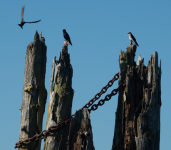
The male purple martin is hard to make out as much other than a silhouette. With the beak lit, turns out they look sorta grumpy...
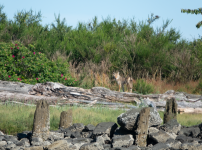
The hay bale is slowly decomposing

there's a starling in this shot
The male purple martin is hard to make out as much other than a silhouette. With the beak lit, turns out they look sorta grumpy...
The hay bale is slowly decomposing
there's a starling in this shot