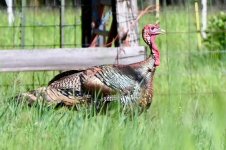
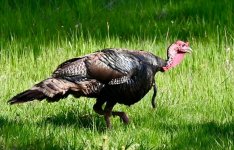
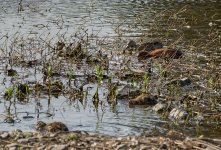
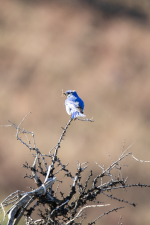
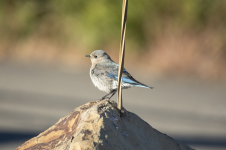
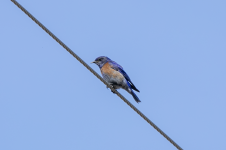
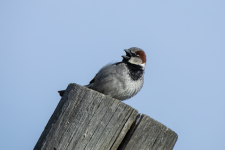
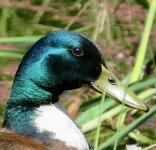
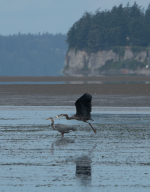
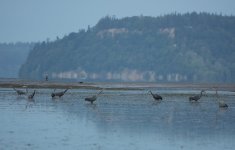
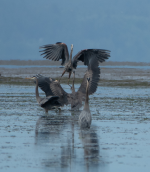
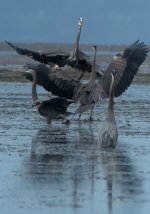
Got any bird pics?

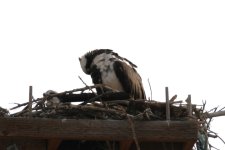
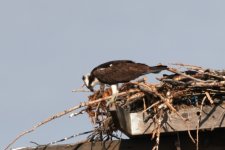
2 different Ospreys
DSC01199.JPGDSC01208.JPG
 
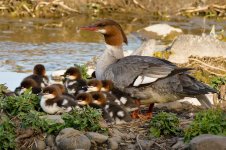
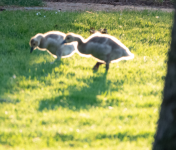
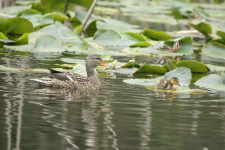
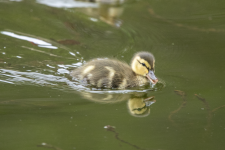
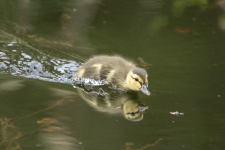
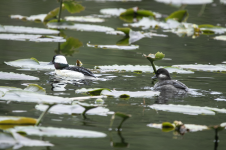
I love baby mergs. The distinct markings make them seem more sophisticated than your average duckling.
0008-BY-Birds-052026.jpg

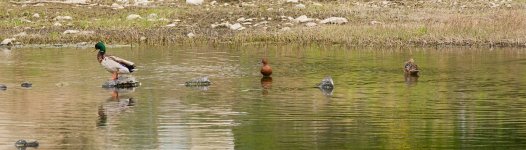
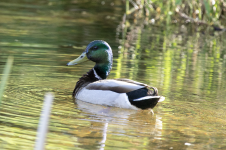
A pair of Cinnamon Teals were here this morning, and then still here in the afternoon. Their small size isn't quite as obvious out of context, but next to a mallard it really jumps out.
0049-BY-Birds-052826.jpg0054-BY-Birds-052826-2.jpg

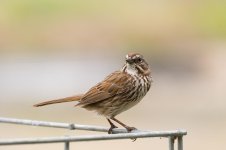
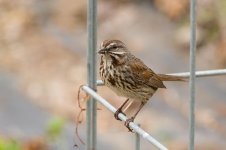
My handsome backyard resident has taken to getting very close to me and chirping. I have no idea what it's trying to communicate. In this instance he hopped off the cage to snag a _______________. (It doesn't quite look right for an Antlion, but I haven't seen any damselflies yet, he picked this up on/near the ground, the color doesn't seem right for a Damsel.)
0061-BY-Birds-052826.jpg0074-BY-Birds-052826-2.jpg
 
Great images! The little Mergs do look distinguished.
 
The Bluebird Trail, Upper Umptanum Road to the North Wenas Rd.. Last year, my wife and I discovered the amazing spring wildflowers and fauna in the eastern Cascade foothills.
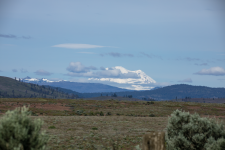
A01MountRainierView2C2A2296.pngWith a good forecast and free time, we decided to revisit the area last week.
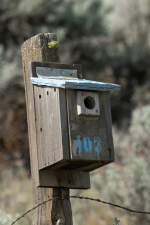
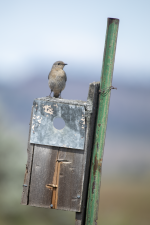
A highlight was exploring the Yakima Valley Audubon Society’s Vredenburgh Bluebird Trail. The trail provides 132 managed nest boxes for bluebirds (and other birds) in an area where nesting locations can otherwise be limited.
B01BluebirdNestBox2C2A2279.png
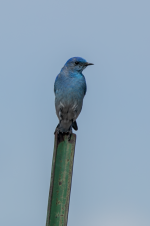
B02MountainBluebirdMaleByBirdHouse2C2A2346.png
B06MountainBluebirdFemaleOnNestBox2C2A2367.png
The trail runs along 16 miles of unpaved roads, with a nest box about every eighth of a mile. Last year, the birds inhabiting these nest boxes fledged 254 mountain bluebirds (a record) and 426 Western bluebirds, plus a few house wrens, tree swallows, and white-breasted nuthatches. So, our plan was to cruise slowly and scan for bluebirds on nest boxes, on shrubs, or power lines.
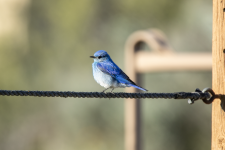
The bluebirds were quite abundant. We saw far more males out and about, especially mountain bluebirds
B03aMountainBluebirdMale2C2A2353.png
B04MountainBluebirdMale2C2A2214.png
B05MountainBluebirddMaleWInsects2C2A2197.png
than females.
B07MountainBluebirdFemale2C2A2222.png
I suspect that most females are incubating their eggs in the nest boxes. We also saw quite a few western bluebirds.
B08WesternBluebirdMale2C2A2298.png
One reason that so much effort has been put into restoring bluebirds is their populations had been hammered by impacts of introduced house sparrows
C09HouseSparrowMaleSinging2C2A2254.png
and starlings. Both supplant bluebirds from their nest cavities / nest boxes.
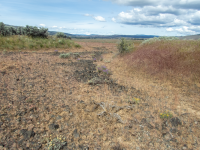
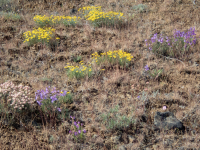
We stopped at the amazing Manastash Mounds to search for amazing wildflowers.
A07RockEdgesCircleMoundsP5180282.png
A06MixedWildflowersP5170091.png
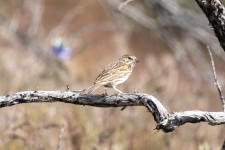
As we wandered around the mounds, we were serenaded all around us by the whistle-like calls of vesper sparrows
C10VesperSparrow2C2A2330.png
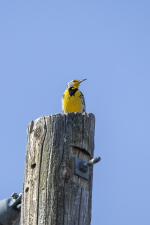
and western meadowlarks.
C11WesternMeadowlark2C2A2247.png
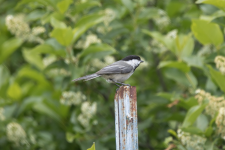
The riparian habitat around the trail down Umptanum Creek was filled with birds, drawn by swarms of mayflies. Merlin pumped out long lists of birds, some of which we could see through the thick, regrowing willows and cottonwoods. This included black-capped chickadees,
C12BlackCappedChickadee2C2A2467.png
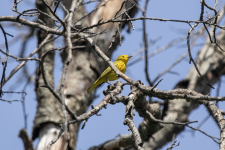
Northern yellow warblers,
C14NYellowWarbler2C2A2435.png
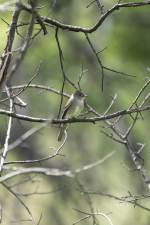
and western wood pewees.
C16WesternWoodPewee2C2A2424.png
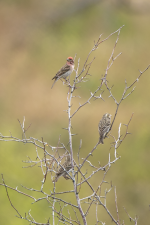
Later, in the Ponderosa pine forests near Ellensburg Pass, we encountered several flocks of Cassin’s finches.
Z13CassinsFinches2C2A2546.png
Steve
 
Last edited:
The Bluebird Trail, Upper Umptanum Road to the North Wenas Rd.. Last year, my wife and I discovered the amazing spring wildflowers and fauna in the eastern Cascade foothills.
View attachment 185176With a good forecast and free time, we decided to revisit the area last week.
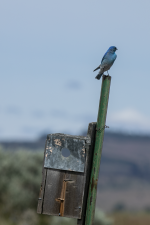
A highlight was exploring the Yakima Valley Audubon Society’s Vredenburgh Bluebird Trail. The trail provides 132 managed nest boxes for bluebirds (and other birds) in an area where nesting locations can otherwise be limited.
View attachment 185177
View attachment 185178
View attachment 185179
The trail runs along 16 miles of unpaved roads, with a nest box about every eighth of a mile. Last year, the birds inhabiting these nest boxes fledged 254 mountain bluebirds (a record) and 426 Western bluebirds, plus a few house wrens, tree swallows, and white-breasted nuthatches. So, our plan was to cruise slowly and scan for bluebirds on nest boxes, on shrubs, or power lines.
The bluebirds were quite abundant. We saw far more males out and about, especially mountain bluebirds
View attachment 185180
View attachment 185181
View attachment 185182
than females.
View attachment 185183
I suspect that most females are incubating their eggs in the nest boxes. We also saw quite a few western bluebirds.
View attachment 185184
One reason that so much effort has been put into restoring bluebirds is their populations had been hammered by impacts of introduced house sparrows
View attachment 185185
and starlings. Both supplant bluebirds from their nest cavities / nest boxes.
We stopped at the amazing Manastash Mounds to search for amazing wildflowers.
View attachment 185186
View attachment 185187
As we wandered around the mounds, we were serenaded all around us by the whistle-like calls of vesper sparrows
View attachment 185188
and western meadowlarks.
View attachment 185189
The riparian habitat around the trail down Umptanum Creek was filled with birds, drawn by swarms of mayflies. Merlin pumped out long lists of birds, some of which we could see through the thick, regrowing willows and cottonwoods. This included black-capped chickadees,
View attachment 185190
Northern yellow warblers,
View attachment 185191
and western wood pewees.
View attachment 185192
Later, in the Ponderosa pine forests near Ellensburg Pass, we encountered several flocks of Cassin’s finches.
View attachment 185193
Steve
I look forward each late winter or early spring to see and hear meadowlarks. I love the photo you captured, I never seem to get close enough to appreciate their beauty.
 
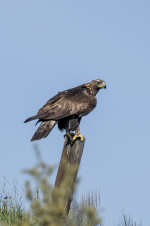
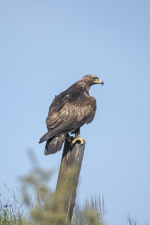
Predatory birds: Upper Umptanum Road to the North Wenas Rd. While our primary focus was seeing bluebirds, we also had great looks at several predatory birds (and their potential targets). As we were slowly driving, I spotted a massive bird flash up from behind a line of shrubs just off the road. It was a juvenile golden eagle, always a nice surprise. I suspect that it had been munching on a kill as it didn’t fly far and perched on a post not far off the road. I snapped a few pictures
D00GoldenEagleJuvenile2C2A2241.png
D01GoldenEagleJuvenile2C2A2236.png
and drove off so it could continue its day.
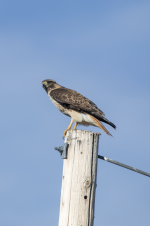
The same power lines and power poles that provide great perches for bluebirds and meadowlarks offer great perspectives for an adult red-tailed hawk
D02RedTailedHawkAdult2C2A2184.png
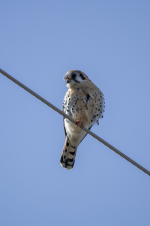
and for a male American kestrel.
D03AmericanKestrelMale2C2A2276.png

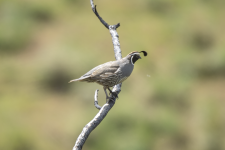
As we drove along, we encountered a covey of California quail.
D04CaliforniaQuailMale2C2A2484.png
An adult California quail is too large a meal for a kestrel, but an unwary quail would provide an opportunistic snack for a red-tailed hawk. But the cooperative vigilance of the covey, their tendency to keep tight to cover, and their speed make quail a challenge for a red-tailed hawk.


Steve
 
WOW - great raptor day!
 
Cute spring ducks and geese. McLane Creek Nature Trail & Billie Frank Jr. Nisqually NWR Diverted by other adventures, I’ve had time to come back to some sweet duck and goose pictures that I took a little over a month ago. We’ll start with mallards. At the main beaver pond at McLane, this handsome drake
A01MallardDrake2C2A8295.png
shadowed this hen and her very young brood.
A02MallardHenWDucklings2C2A0072.png
As ducks only breed once per season, I don’t know exactly what he had in mind, but she kept her body between him and her ducklings. The ducklings kept up a frenetic, drunken-walk pace as they ranged around the beaver pond slurping anything that looked edible off the surface.
A03MallardDuckling2C2A0100.png
When stimulated, a duckling really can zoom around the pond like a hyperactive wind-up toy. The duckling can kick into high gear and elevate its body out of the water to reduce drag, “getting on plane”, like a high-end bass boat.
A04MallardDucklingInMotorboatMode2C2A0104.png
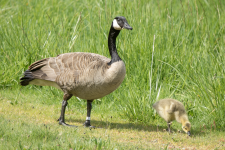
At Nisqually NWR, the first young of the year to arrive were goslings of the resident Canada geese. Unlike ducks where drakes play no role in protecting / guiding ducklings, both adult Canada geese kept a close eye over their goslings.
B05CanadaGoose&Gosling2C2A0536.png
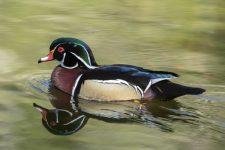
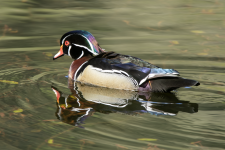
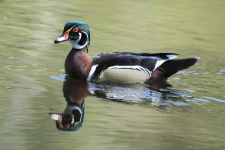
At the time that I visited the beaver ponds at McLane Creek, there were no hen wood ducks evident. They were probably incubating eggs that would soon hatch (based on more recent eBird reports). But the drakes were hanging around in their most photogenic plumages.
C07WoodDuckDrake2C2A0229.png
C08WoodDuckDrake2C2A0244.png
C09WoodDuckDrake2C2A0309.png
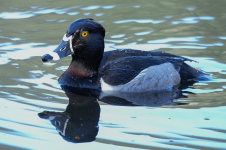
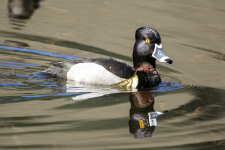
In late April, a pair of ring-necked ducks were still hanging around the beaver pond. Typically, ring-necked ducks at McLane keep a healthy distance from humans, but on an early-morning trip, both the drake and the hen stayed quite close to an observation platform and in some great light. In both drake images, you can see the cinnamon band that is responsible for the ring-neck common name.
D10RingNeckedDrake2C2A8288.png
D11RingNeckedDrake2C2A8409.png
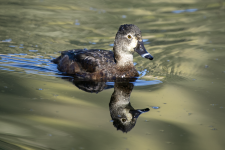
As is typically the case in ducks, the hen's plumage was drabber, but she is still quite an elegant duck.
D12RingNeckedHen2C2A8250.png
D13RIngNeckedHen2C2A8277.png
Several buffleheads overwintered at the beaver pond. They were even more skittish than the ring-necks. They spent most of their time, at least when people were present, at the far end of the beaver pond. But this pair had moved into the lily pads close to a boardwalk. I moved in as stealthily as I could, but as soon as they saw me, they paddled back to the far side of the pond. I managed a picture or two
E14BuffleheadPair2C2A0016.png
before all I could see were duck butts…
Steve
 
Back
Top