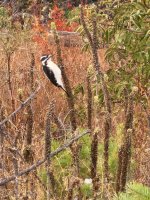
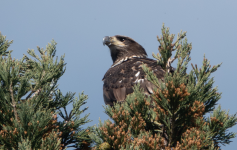
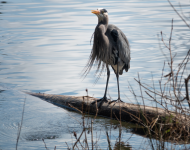
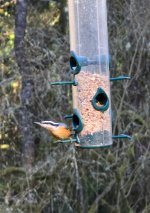
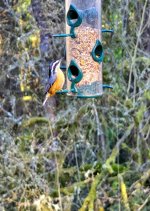
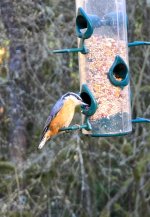
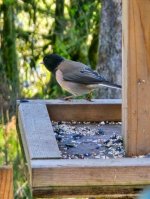
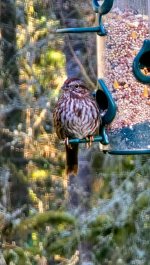
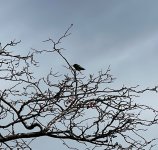
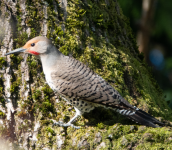
Hummer taking a break while I was out on my walk this morning.
SF
SF

Follow along with the video below to see how to install our site as a web app on your home screen.
Note: This feature may not be available in some browsers.


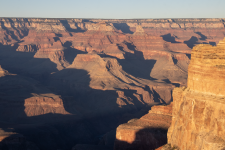

For the Antarctic cruise, I upgraded from a Canon 80D mirrored camera to a Canon 5D Mark IV. My major bird lens is a Sigma 150-600mm zoom. The combo of 5D and zoom lens is hella heavy... The 80D often has a 70-300mm zoom to shoot butterflies or flowers (closer minimum focal distance) or for landscapes (like the Grand Canyon sunset above). I don't use filters in the field. I may tweak an image's exposure (and crop) in Photoshop.Wow! Amazing photo's and great explanation of everything! I'll do some research on the condor. I knew that there weren't many of them and it's nice to see a case where the general population is doing better and recovering, despite the inbreeding!
The penguins are amazing too! I've met a few that have worked down at McMurdo in Antarctica and hope to go down there someday! Plenty of other places I want to go first, but the adventure cruise down there is somewhere in the future!
Out of curiosity, what camera(s) and lenses are you using? Filters? I recently got a Fuji Pro 3 with a fixed lens and have have an old Canon EOS film camera I'm going to start using again! It has a wide angle zoom on it and while it is a bit bigger, I love the feel and weight of it!
I got to play with a Canon R1 with a big assed lens that Jake had and it was amazing to reach out and touch something so far away!
Thanks for sharing! I've done a little birding with my aunt and uncle in MT and seen a lot of different birds that they would spot and identify or do so with the sounds they make. Beyond my current abilities, but I'll get there eventually!
I still act like a little kid when I see eagles and other raptors! One amazing experience that I had at WSU years ago, while my dog was in surgery and during his recovery from a major operation was visiting the Raptor Rescue that they do! Despite the fact I'm a DAWG and make coug jokes, WSU's facilities are amazing! They didn't offer the program that I originally went to for aeronautical engineering, but going to WSU would have been a different experience than a city school like the UW! Go DAWGS!!
Oh, last story, years ago while driving in Western MT, I had an eagle take flight as I drove by on the I90 and had it's wings fully extended as I came around a curve. It probably had a nine or ten foot wingspan from wing tip to wing tip! It's one wing was just feet from my passenger side of my Toyota Tacoma 4x4! I had no way to photograph it but can still picture it like it was yesterday! I hope I never forget as I get older!

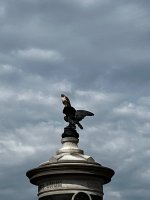
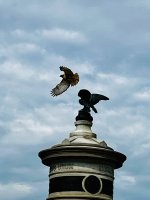
Yes, a red tail. You can see the red tail of an adult in the second image.Can’t identify this rascal, maybe a Red Tail, due to being backlit by a gray sky but I like the fact he/she was roosting on the eagle atop the Excelsior Brigade Monument dedicated to NY V/I in Sickles Division.
7/2/1863 was a very tough day for them. This is one of many nearby but it’s mate always seems to be in neighborhood. My Apple/Brownie may need the lens cleaned at some point.
View attachment 180638View attachment 180639

Look at those hackles on that heron, wouldja'!
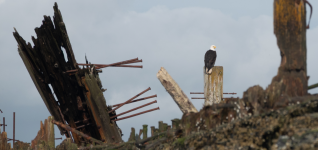
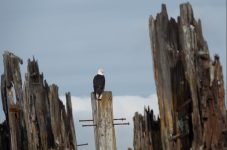
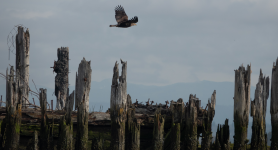

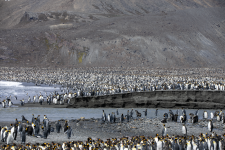
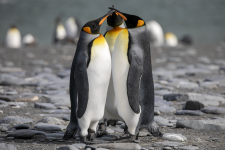
Yes, I haven’t been posting in this thread very much since the new year. Some of you may be concerned that I busted my trigger finger. But the reality is far more exciting. I’ve been VERY backlogged in processing my pictures. The largest cause of this backlog is the 14,000+ pictures and videos that I took on an amazing 18-day expeditionary cruise with my wife to the Antarctic Peninsula, South Georgia, and the Falklands (plus Tierra del Fuego National Park and a major ecological reserve in Buenos Aires). These pictures are OUTSTANDING, but I don’t think you want to see all 14,000; some ruthless selection will be required… [But the cream will rise.]. Here is a taste. This image shows some of the 26,000 king penguins that breed on the beach at Gold Harbour, South Georgia.
View attachment 180569
King penguins are the second-largest penguin (after their congener, the Emperor Penguin) at 3’ tall and up to 35lb.
View attachment 180570
Since our return from that cruise, I’ve been focused on that trip, but that doesn’t mean that I haven’t been out exploring my favorite Washington hot spots, such as Nisqually NWR. But processing images from these trips has taken the back burner.
And processing the local images is likely to be pushed back even further as my wife (whose winter-quarter sabbatical ends at the end of March) and I are halfway through visiting Red Rocks / Sedona, the South Rim of the Grand Canyon, Zion NP, and Death Valley NP (hopefully in time to catch the current super bloom). We spent the last two and a half days at the Grand Canyon, hiking along the Rim Trail.
View attachment 180571
We were hopeful that we might find California condors in the park, but we only saw a two turkey vultures. A ranger told us that the California condors hadn’t been seen in this section of Grand Canyon so far this year, but that they were expected to make a showing “any day”. She did suggest that we explore the Navajo Bridge over the Colorado River in Glen Canyon. It was on our way to Zion anyway today and so we stopped. So glad that we did as we both picked up lifers. I’ve been chasing California condors since the early 80’s and now I have this species checked off.
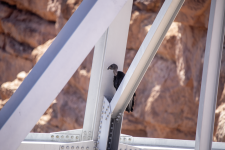
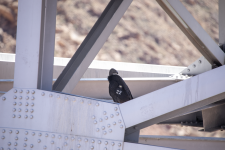
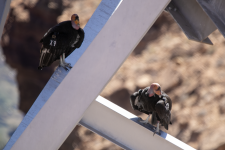
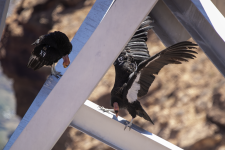
We had just gotten out of the rental sedan when a passing ranger told us that there were California condors roosting on the steel supports of the new 1995 Navajo Bridge. [The original 1929 bridge is now used a parallel footbridge from which we viewed the condors.]. We rushed out and found two juvenile condors perched on cross-beams. That they were juveniles is reflected in the presence of a dark head and neck. A condor transitions to its adult appearance after 3-4 years. Like all other individual condors, these two carried number tags and radio receivers. The parentage of all released condors (and captive birds) is carefully recorded to minimize inbreeding in such a small population (as low as 22 individuals in 1987 at which time all remaining wild birds were captured and placed in captive breeding programs). There are now over 275 free-flying condors in three locations: California, Arizona/Utah, and Baja California. Another 160 birds form the captive breeding populations in multiple breeding facilities.
When a California condor is tagged, a blood sample is taken to determine the sex of the bird and to guide the choice of mating partners in captive breeding programs. If high lead level s(from eating carcasses with lead shot fragments) are recorded in a condor’s blood sample, the bird is treated with chelation therapy in order that the lead can be excreted through the bird’s kidneys (see here).
California Condor #32 is a 4-year-old juvenile male who was raised at the World Center for Birds of Prey, a facility of the Peregrine Fund in Boise, ID.
View attachment 180572
The other juvenile is #22, a 3-year-old juvenile male who was also raised at the World Center.
View attachment 180573
These two birds are part of a current population of 82 condors in Northern Arizona / Southern Utah. California condors were reintroduced to the Vermillion Cliffs National Monument starting in 1996, the first condors in Arizona since the 1930’s.
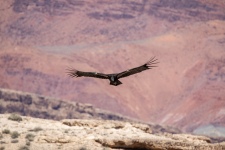
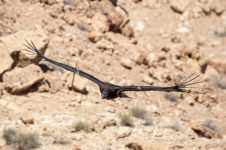
After taking many pictures of these two juveniles, I turned around to look at Glen Canyon itself and saw another condor perched on a rocky cliff overlooking the Colorado River. It immediately took flight right at me. I managed to capture a few pictures of this bird (#2, a 2-year-old female raised at the Oregon Zoo) on the wing.
View attachment 180574
View attachment 180575
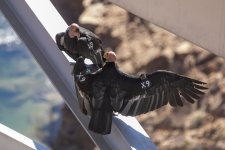
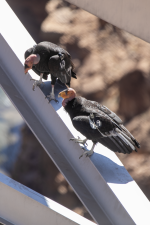
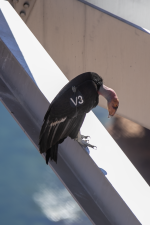
When we turned our attention back to the new bridge, two adult condors (pinkish-orange head and neck) were perched near each other on steel trusses on the new bridge.
View attachment 180576
View attachment 180577
View attachment 180578
View attachment 180579
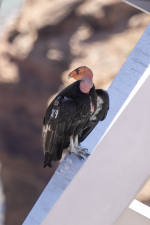
These condors were X9 and V3. X9 is a 8-year-old male condor who hatched at the Center of Birds of Prey in Boise, ID.
View attachment 180580
In the image above, the pink area on the bird's chest is the location of the crop, an extensible part of their esophagus that can store up to 3 pounds of meat.
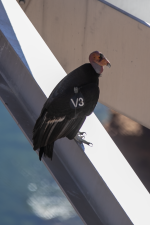
V3 is a 9-year-old male condor originally bred at the Oregon Zoo and released in 2018.
View attachment 180581
View attachment 180582
A very cool find in several months of amazing wildlife adventures.
Steve
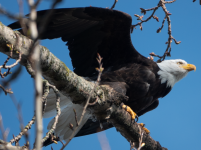
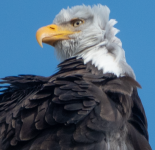
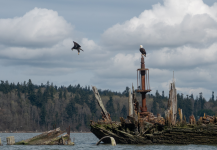
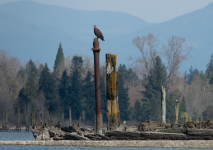
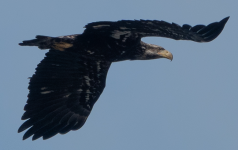
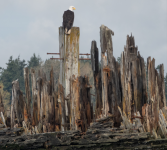
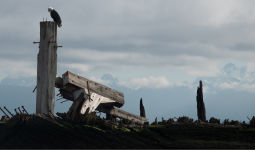
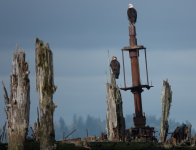
Have been battling the crud for three weekends in a row so double dosed some loratadine, ate some naprosyn, chugged some coffee and resolved to get out and do something, anything. Today had an AM low wind, partly sunny, a promise of flat clouds later and dull tides. Decided to paddle out, check if any Eagles were hanging out. Normally spring and early summer is a good time for shooting here. Glad I did. A pair of Eagles were willing studies.
View attachment 180877
In the way back I think there's probably another eagle.
View attachment 180879
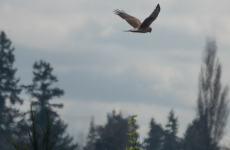
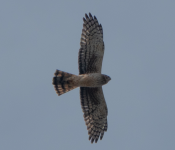
Saw this guy too, I think this is a northern harrier, they are super shy and hard to shoot but have a sorta predictable survey schedule of looping similar course every 30 minutes of so. A pair were hunting, which was neat to see...
View attachment 180881View attachment 180883
Anyway it turned out pretty fun, highlight of the day for sure, just getting out.
View attachment 180882
View attachment 180885View attachment 180886
View attachment 180887View attachment 180888
View attachment 180889
View attachment 180890
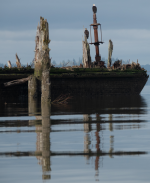
I think that might be part of a crab trap, but sorta looks also like a dream catcher...
View attachment 180884