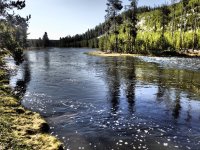
It was 53 years ago in June 1972 that I caught my first Firehole trout—a modest 12” rainbow on a swinging Leadwing Coachman near the second Iron Bridge. My Fenwick FF70 proved the task with a cheap Cortland floating line and probably a worn leader. At the time, I must admit that I didn’t really know what I was doing and the Firehole, Gibbon and Madison in Yellowstone were a big challenge for me. Throughout my years in the Air Force I returned to the Firehole whenever I could, especially on those CONUS leaves between overseas tours in the 1980s. Over the years I learned how to fish that storied river—the Firehole. Tomorrow, May 24th, 2025 the YNP general season begins again and the Firehole—a unique 14 mile stretch of water--will take centerstage. I’ll be there taking advantage of the decades of experience on this unique river.
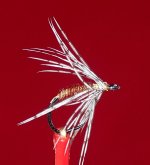
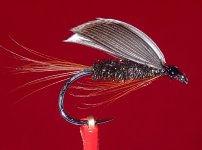
My first Firehole trout fell prey to a simple Leadwing Coachman
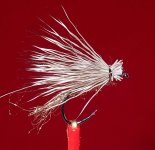
Despite the YNP general season running from late May to the end of October, the Firehole really has just two seasons—May/June post runoff and September/October Fall low water. July and August finds the river much too warm and most decent fish seek refuge in crystal clear, difficult cold water tributaries. Over the years I’ve really simplified my approach to the Firehole. In the early season it is streamers in the four or five really deep stretches of river and bugger/soft-hackles in the wide grassy runs most of the time. Although mayfly and caddis hatches are routine, if I am inclined to float a dry fly, I limit my choice to an Elk Hair or X Caddis. They never fail.
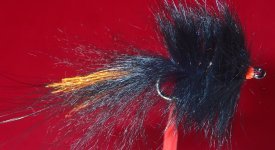
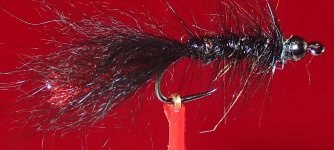
The largest trout are usually found in one of two locations—deep runs (up to 12’) or deep undercut banks. My largest I can recall was a 19” brown. In May/June they are very susceptible to large streamers—my go to streamer being a large Pine Squirrel bugger on a long sink tip. However the bulk of the fish in river (excluding the section below Firehole Falls) average about 10-12” and can be found throughout the long, weedy stream sections. In my opinion, they are best targeted with a bugger/soft-hackle trailer on a floating line that does an excellent job in the caddis rich waters. Although terrestrials come into play during the fall season, the bugger/soft-hackle trailer is still a big producer.
Early on in my Firehole experience I learned the traditional indicator/nymphing techniques were not very useful. The Firehole has a solid volcanic bedrock bottom that is extremely uneven. Long, slow sections are peppered with weed hummocks that defy any kind of decent drift. Any fly that manages to bounce off the bottom usually get snagged up by the rough volcanic bedrock. And, as the water warms during the day, the fish are usually looking up.
So tomorrow I’ll venture 110 miles south to visit the Firehole at dawn and hopefully connect with some decent fish—they almost never disappoint. If I meet other angler along the river, especially those that appear to be struggling, I’ll share some of my experience and some of my flies to help them out as I’ve done every time I get to fish the Firehole. It is a river that is unique in so many ways it's been worth a lifetime of learning how to fish it.