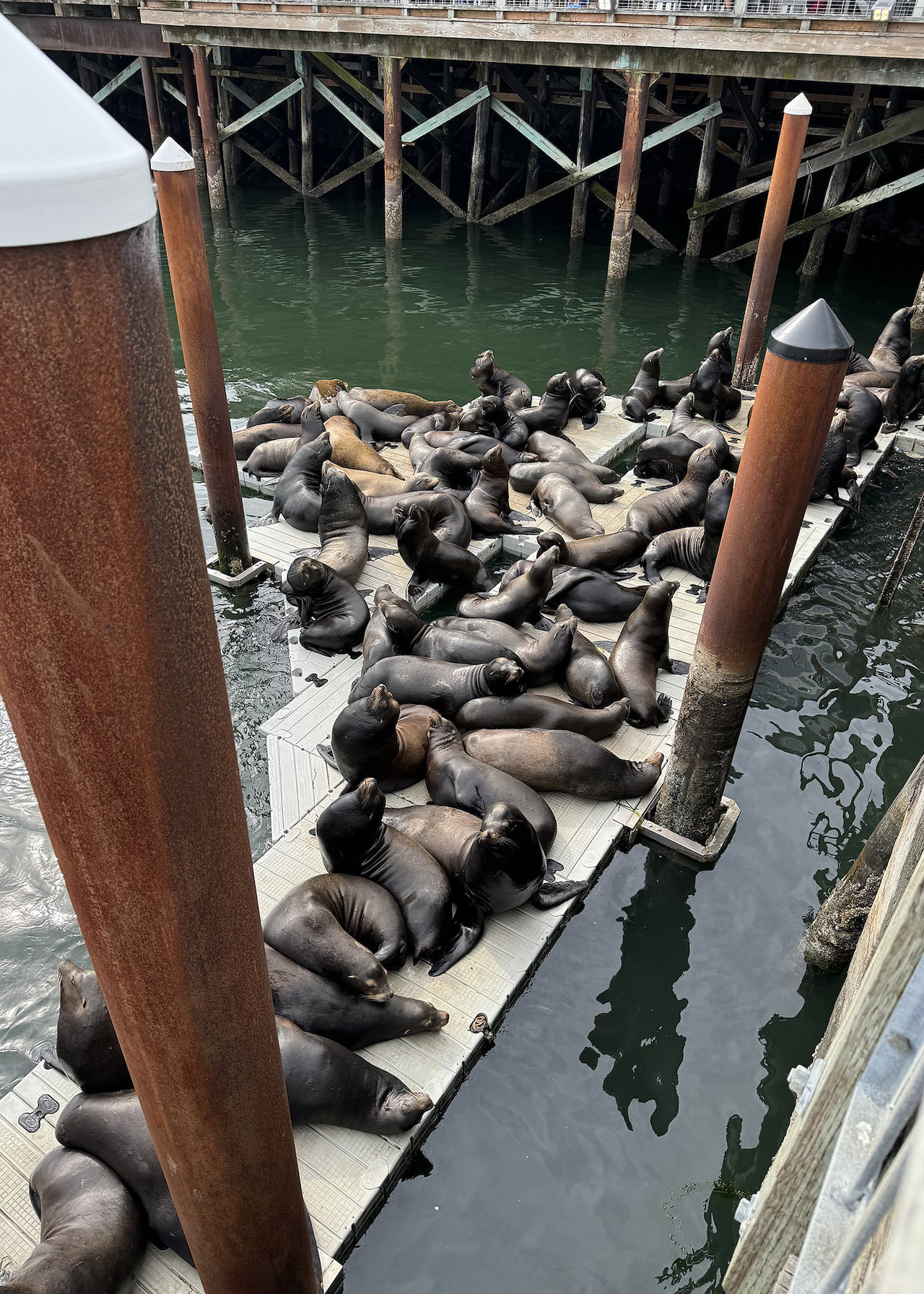
The culprit are indirect effects as simulated with the modeling approach that diminishes the direct impact of predators such as seals, sea lions and seabird removal. The simulations suggest that removing hake, jack mackerel (salmon are not a huge part of their per-capita diet but hake biomass is massive so it's some juvenile predation plus competition with adults) and pyrosomes (via competition and indirect food web impacts, not predation) would have a larger impact on salmon. Back to indirect effects, removing massive amounts of hake would come with its own issues such as salmon bycatch so kind of a Catch-22 problem.
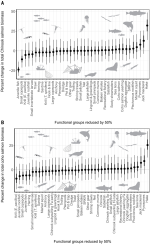
An importat caveat is that simulation work focuses on "at sea" impacts, not on impacts of removals on bottlenecks such as near dams, river mouths, etc. Below one of paper Figures, Panel A for Chinook, Panel B for coho, showing the % simulated change in salmon biomass by reducing 50% of the groups in the horizontal axis. There's also another figure on the paper breaking down the expected impact of reducing commercial and recreational fisheries, both minimal impacts. Authors suggest more focus on addressing competition from abundant fish predators, restoring prey availability, and mitigating climate-driven change, all of which come with their own logistical challenges.
I wonder if simmilar studies have been done for the northern pikeminnow bounty program, including potential risk/impact of removals on increase of invasive predators such as bass, walleye, etc and other indirect effects.
Below the actual research paper and another press release on the work:
Widespread marine mammal and seabird reductions are unlikely to benefit salmon due to indirect ecosystem effects | Science
https://www.science.org/doi/10.1126/science.aeb1122
BY ANDY WALGAMOTT, NORTHWEST SPORTSMAN MAGAZINE “In marine environments.” Those are three key words from the abstract of a new study by federal and university researchers who say that culling sea lions, seals and seabirds is “unlikely to benefit salmon” and that three other factors have larger...
nwsportsmanmag.com