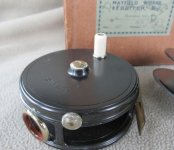
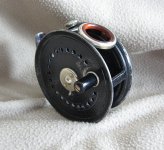
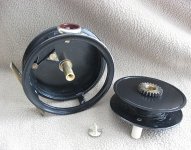
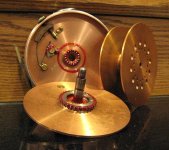
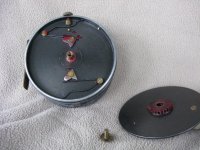
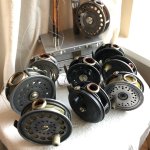
Let's start at the beginning. First off, click pawl is a misnomer for a spring and pawl fly reel. I say misnomer because there is no "click" on a spring and pawl reel. Go ahead; look for it. You can't find a "click" on that reel because there isn't one. Inside the reel frame there is a spring and a pawl. No click. On the reel spool you'll see a gear wheel, but no click. So now we have a fly fishing industry populated by juveniles who make up definitions for what they don't know instead of asking around to see if the parts or item has already been named through tradition and logic.
Now, what is the draw? Simple. For most fly fishing, you could stuff your fly line in your pocket. You don't usually even need a reel. However, most of us find pocket storage counter-productive because the fly line just becomes a tangled mess. So a functional line holder of some kind is desired. When I took up fly fishing the preponderance of fly reels on the market were of the spring and pawl design. You want a fly reel, so you buy from the available offerings. And there weren't many disc drag reels until the last 30 years. I have no idea how you conclude that they aren't the best tool for the job. If best means highly functional and user friendly, then spring and pawl reels easily pass that test. Spring and pawl reels have withstood the test of time for a century and a half at this point.
Anglers farm fish all the time. Often the cause is user error, not a deficiency of the equipment. The rest of the time, fish just throw the hook. It happens. BTW, fish don't "spit" the hook for the logical reason that fish can't spit. A spring and pawl reel can't have "ratchety drag syndrome" because there is no drag for starters, even though the spring and pawl and gear wheel combination do act kind of in the fashion of a ratchet. The purpose of the spring and pawl is to check the rotation and counter-rotation of the spool. Should you hook a fish that is capable of pulling line from the reel, the reel maker assumes the angler has at least half a brain and will supply additional tension with his hand or fingers. Unlike a disc drag, hand or fingers provide instantly and infinitely adjustable tension to the reel spool. And anglers lacking half a brain or better don't deserve to land a fish anyway.
So with alternatives like disc drag reels being abundantly available, I think the features I described above, along with originally being the predominate reel available, are sufficient to draw the interest of anglers. They continue to be manufactured, and we continue to purchase them. Because the work and last more or less forever, making them a pretty good investment in fishing gear.