
Clear fly line....

Frenchie

Just Hatched
Hello all, glad I was able to jump over to this forum =)

I just picked up a mono-core clear tip line and there is no loop, I have been reading horror stories of nailknots slipping off.

What's everyone's go to method with mono core lines to connect a leader?

Braided loop?
Albright knot?
Fold over and nail knot a loop?

Its a 10' ghost tip, I'd like to avoid bulk if possible

Jon
 
Hello all, glad I was able to jump over to this forum =)

I just picked up a mono-core clear tip line and there is no loop, I have been reading horror stories of nailknots slipping off.

What's everyone's go to method with mono core lines to connect a leader?

Braided loop?
Albright knot?
Fold over and nail knot a loop?

Its a 10' ghost tip, I'd like to avoid bulk if possible

Jon
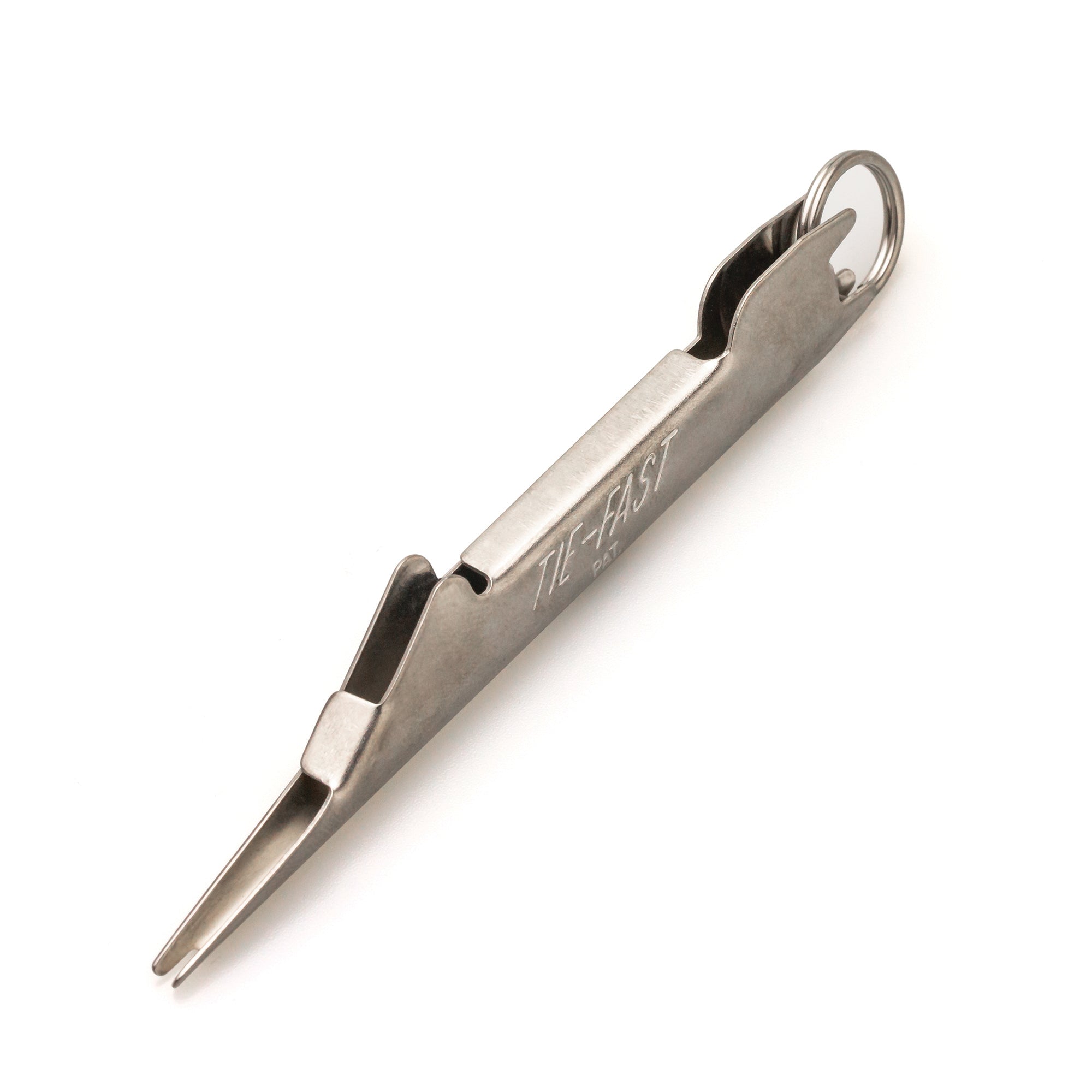
I use your option #3 for all my non loop lines…regardless of core. Maybe that is a mistake but have not had any line fail me as of yet. What line did you get?
 
I've gone to using an RP knot (basically an Albright) to knot about 18" of heavy mono with a loop on the end of that for all my lines that don't come with a loop. Can't say I've ever had any issue with mono core lines and knots, which up until the last year or so has been nail knots.

I like how clean the double over and nail knot routine seems, I just haven't tried it yet.
 
I've gone to using an RP knot (basically an Albright) to knot about 18" of heavy mono with a loop on the end of that for all my lines that don't come with a loop. Can't say I've ever had any issue with mono core lines and knots, which up until the last year or so has been nail knots.

I like how clean the double over and nail knot routine seems, I just haven't tried it yet.
Thanks I'll check it out

Jon
 
.

I thought that Flip Pallot’s snell knot looked pretty good. I have all just just used a nail knot but I am going to try this next.

I think, when all the fun rhetoric is done, Flip's snell is really a needle V nail knot. I find Flip's method of tying the "nail/needle" knot far easier (for me) than using the tool shown above. And, I'm using 12 lb Maxima as the butt section.
 
I am using the Frodin ( Atlantic salmon guru) method on a few lines I have. Basically a nail knot sorta thing only with a loop & butt section all done at the same time. So far so good.
 
Old school here-the trusty nail knot. I have never had one fail in 71 years of fishing so if it ain't broke, don't.......(Actually been fishing for 76 years but only 71 of those have been fly fishing)

I tried the loop to loop thing years ago, since then I have cut off every loop, both on fly lines and leaders.
 
Old school here-the trusty nail knot. I have never had one fail in 71 years of fishing so if it ain't broke, don't.......(Actually been fishing for 76 years but only 71 of those have been fly fishing)

I tried the loop to loop thing years ago, since then I have cut off every loop, both on fly lines and leaders.
What is it about the loops that you dont like? It's one thing to not bother with adding them on, but another to cut them off!

Honest question, my stupid fingers love loops and I'm wondering what the advantage is to the nail knot.
 
What is it about the loops that you dont like? It's one thing to not bother with adding them on, but another to cut them off!

Honest question, my stupid fingers love loops and I'm wondering what the advantage is to the nail knot.
Loop to loop isn't smooth, it's bulky, it catches weeds readily and it doesn't turn over as well as a smoother joint does. It can damage or break off a guide in the wrong situation and feels like a chain is going through the guides instead of a slick line. If you believe in the old adage that any thing that can happen will-it's easy to see that more things can happen with 2 loops and 2 knots than with a single smooth knot.
 
Last edited:
I cut them off too, and have been using a nail knot for decades. It's not like a nail knot is some exotic beast to tie. There's literally dozens of nail knot tools out there....but you could use a twig off a bush just as well. In olden days I'd encase the junction with a bead of Pliobond, but nowadays use Loon UV....though a plain nail knot works just fine.

I tried the loop to loop method when welded loops first became available....it mates an elegant flyline to a nicely tapered leader using an ungainly hinged connection.
 
Nail knots for me are bad on sinking poly leaders. The nail knot just strips the outer coating right off the poly leader. Good reason not to use poly leaders I guess.
 
The Albright doubles over the fly line so it serves as a reinforcement. I think the concern is the leader stripping the coating from the core. Albright will not allow this
 
What is it about the loops that you dont like? It's one thing to not bother with adding them on, but another to cut them off!

Honest question, my stupid fingers love loops and I'm wondering what the advantage is to the nail knot.
See what Ive and Krusty posted above and add these concerns with loop to loop connections; loops add weight to the end of your fly line and leader, loops lose energy in turning the line and leader over. Like Ive and Krusty, I cut them off and knot a leader on, I too use Loon UV on the knot for added smoothness. Besides, loops are eeeevillll.
 
Considering this was posted in the salt forum, and this is no doubt a sub surface line, there's really not many scenarios where one would want to fish a leader long enough where the loop is ever really entering the tip of the rod to cause any issues.

Same kinda goes for worrying about a loop causing any turnover or presentation issues. Just not really a concern for any of our saltwater fishing where one would be fishing sub surface.

As far as loops durability....I've never seen any issue. (With the exception of a few infamous lines that were known to fail in general). I've caught countless albacore on factory loops and have yet to have a single issue.

At the end of the day it's personal preference no doubt, but there's a big different between fishing long leaders and turning over indicators and such on stillwaters, and casting and retrieving flies for aggressive fish in the salt when it comes to these details.
 
Back
Top