Nice write up. This covers a lot of what you need to know. One critical take away that John Montana always emphasizes is that you need to know your forage.
Carp will adapt to feed on whatever food source is abundant in the waters they are in. Where I fish for them on the Columbia River we believe the primary food source is clams. Clams don't move, so our primary presentation is the "drag and drop". Once the fly hits the bottom we rarely move it. We hope the drop gets the carps attention and then we watch for its reaction to the fly. If it does anything different than what it was doing, we set. And the set is a hard trout set, not a strip set. If the carp doesn't appear to have seen the fly we don't strip. Stripping often spooks them. We typically will pick up and drop it on them again until they eat or spook.
The fly we use 95% of the time is the John Montana Hybrid. Clam neck tail, soft hackle body. Covers all the bases.
View attachment 53936
But I know in other places, like the great lakes, they primarily eat minnows and the water is very clear. So, in that fishery they throw big streamers that imitate gobeys and strip them aggressively. The carp will move several feet to chase them. I have never done it but it sounds like fun.
Sounds like Banks Lake has crayfish in the rocky areas. Different forage in the muddy areas. I caught carp in Lake Las Vegas stripping a swimming nymph on a medium fast retrieve. Wherever you plan to chase carp you need to know your forage.
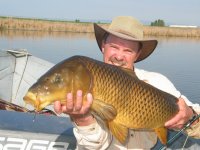
Here are a few decent ones my wife and I caught. The last one weighed in at 20lbs.
View attachment 53937
View attachment 53938
View attachment 53939