Can I just add a new coat of epoxy to old thread wraps?

Mike Ediger

Steelhead
Forum Supporter
Friends,
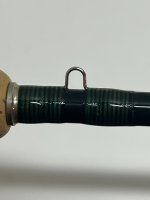
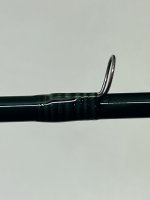
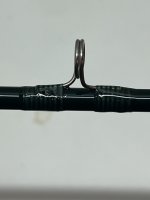
I pulled one of my first rod builds out of its case last night after maybe 15 years, because I want to use it more this summer, and laughed at how bad the thread wraps were. They aren't bad enough to cut off and rewrap, but I kind of want to refresh it a bit. What would happen if I cleaned the epoxy with acetone and recovered with a very thin coat of new epoxy? Would it spread evenly, stick, and cure? Or do I just fish it as is and at some point cut everything off, rewrap and recoat?
Thanks for your thoughts.
Mike
 

Attachments

  • IMG_7845.jpeg
    IMG_7845.jpeg
    322 KB · Views: 20
  • IMG_7846.jpeg
    IMG_7846.jpeg
    327.2 KB · Views: 20
  • IMG_7847.jpeg
    IMG_7847.jpeg
    339.7 KB · Views: 20
Friends,
I pulled one of my first rod builds out of its case last night after maybe 15 years, because I want to use it more this summer, and laughed at how bad the thread wraps were. They aren't bad enough to cut off and rewrap, but I kind of want to refresh it a bit. What would happen if I cleaned the epoxy with acetone and recovered with a very thin coat of new epoxy? Would it spread evenly, stick, and cure? Or do I just fish it as is and at some point cut everything off, rewrap and recoat?
Thanks for your thoughts.
Mike
If you were to do the re-cover of epoxy, you should scuff up the epoxy with some fine sand paper first I would think. And don't forget that you will be making your threadwraps thicker by adding more epoxy. But you should go for it and show us before and after pics.
 
If you were to do the re-cover of epoxy, you should scuff up the epoxy with some fine sand paper first I would think. And don't forget that you will be making your threadwraps thicker by adding more epoxy. But you should go for it and show us before and after pics.
Yeah I certainly don't want the football look due to epoxy buildup, but on most of the wraps the thread grooves are visible where the epoxy fully soaked into the thread. It is just hard to see that detail in the pictures. That buildup is one reason why I would potentially choose to cut off, rewrap, and recoat.
 
I’d just fish it as is and decide if l really even like it enough to bother. The guides will stay put. If you do like it, then you have a great Winter project..
 
I would chemically clean it but be very wary of trying to rough up the surface with abrasive. Should you go through the epoxy into the thread you will have tiny filaments sticking out that will present another whole set of problems. Sounds like a simple fix, just go real light on the coating, it won't take much to fill in the thread grooves.
 
Thanks everyone. I will ponder a bit, but am leaning toward fishing it this summer (if I ever get out) and rewrapping next winter. I will report with before and after pics if I recoat.
Mike
 
Mike, I had good success adding another coat of polymer to some rod wraps, when I wasn’t happy with the original work I had done. I used a very fine grey 3M Scotch-Brite pad to scuff the original surface. Then, I probably used 99% isopropanol to clean and remove dust, before applying a thin coat of polymer.
I like those 3M pads, because they’re soft and flexible, avoiding the risk of damage that edges and grits sandpaper might give.
I also really like iso for surface prep on most surfaces, since it’s a very mild solvent, and totally evaporates. Using a strong solvent like acetone is too risky for me, on many materials or coatings.
3M pads: https://www.3m.com/3M/en_US/metalworking-us/products/flat-stock/hand-pads/
 
Herkileez and i both like low heat to help level epoxies, I prefer a heat gun on low to open flames. Harbor freight has a cheap one.

But I quit smoking a while ago, and lighters bring back memories...........
 
Mike, I had good success adding another coat of polymer to some rod wraps, when I wasn’t happy with the original work I had done. I used a very fine grey 3M Scotch-Brite pad to scuff the original surface. Then, I probably used 99% isopropanol to clean and remove dust, before applying a thin coat of polymer.
I like those 3M pads, because they’re soft and flexible, avoiding the risk of damage that edges and grits sandpaper might give.
I also really like iso for surface prep on most surfaces, since it’s a very mild solvent, and totally evaporates. Using a strong solvent like acetone is too risky for me, on many materials or coatings.
3M pads: https://www.3m.com/3M/en_US/metalworking-us/products/flat-stock/hand-pads/
Thanks!
 
Back
Top