Ahhh, many people are saying (even though no one in the know is talking about it)

. I don't see asking for a source is in any way an effort to stifle discussion.
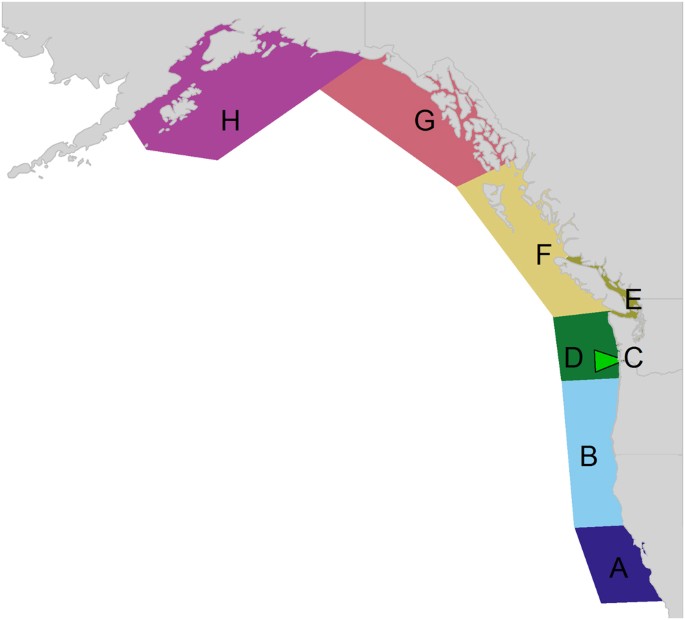
"Pinniped consumption of juvenile Chinook salmon was a substantial component of predation mortality coastwide, but particularly in the Salish Sea. Of the estimated 27.4 million Chinook salmon consumed coastwide by harbor seals in 2015 (Fig.
3),
23.2 million were smolts consumed in the Salish Sea. The percentage of the total coastwide smolt production consumed by harbor seals increased from 1.5% (3.5 million consumed out of 236.8 million estimated total production) in 1975 to 6.5% (27.4 million consumed out of 423.4 million estimated total production) in 2015. Harbor seals in the Salish Sea (i.e. Puget Sound, Strait of Georgia, and Strait of San Juan de Fuca) accounted for 86.4% of the total coast wide smolt consumption in 2015, due to large increases in the harbor seal abundance in this region between 1975 and 2015 (8,600 to 77,800), as well as a large diet fraction of Chinook salmon smolts relative to other regions (see supplemental material)." (my bold)
Many marine mammal predators, particularly pinnipeds, have increased in abundance in recent decades, generating new challenges for balancing human uses with recovery goals via ecosystem-based management. We used a spatio-temporal bioenergetics model of the Northeast Pacific Ocean to quantify how...

www.nature.com
Note: These results were based on bioenergetic and chinook salmon lifecycle modeling, not direct measures.
"Hassen found that the harbor seals present during spring in the Big Qualicum Estuary could be grouped into 4 types of foragers. While about half of the seals fed in the estuary where smolts were present, only a small portion (18%) of these seals were actually salmon smolt specialists. While these “smolt-specialist” seals appeared to target the coho smolts in the river mouth, they apparently ignored the Chinook smolts, which left the river just a few days later. However, there was a second group of seals (18%) that seemed to target larger species of fish preying on the out-migrating Chinook smolts. The two other seal groups did not feed at the river mouth in association with the concentrated numbers of smolts, but either fed near their main haul-out sites away from the river (52%), or were transient and left the estuary area all together (12%)."
into-the-field-harbor-seals-prey-on-salmon-smolts
Predation of smolts is more difficult to discern than predation on adult salmon because smolt earned dissolve in the gut and may not be present in pinniped fecal samples and pinnipeds can consume smolts underwater whereas adults are often seen being eaten on the surface.
Pinniped and Seabird Predation: Implications for Recovery of ...Oregon State Universityhttps://ir.library.oregonstate.edu › downloads
There seems to be more evidence for pinniped predation on steelhead smolts than salmon smolts.
It's just not that hard to be courteous, but I guess this is coming from someone who as a matter of course always provides sources when making "authoritative" statements, part of the rigor of academic training.

Though I don't have a dog in this fight, I too would be very interested in
@Dustin Chromers sources, the more evidence and confirming studies, the stronger the argument. On the other hand, if anyone has contradictory evidence, it would be useful to see that.
Cheers