
Navigation
Install the app
How to install the app on iOS
Follow along with the video below to see how to install our site as a web app on your home screen.
Note: This feature may not be available in some browsers.
More options
Style variation
You are using an out of date browser. It may not display this or other websites correctly.
You should upgrade or use an alternative browser.
You should upgrade or use an alternative browser.
Butterflies and Moths
- Thread starter RRSmith
- Start date


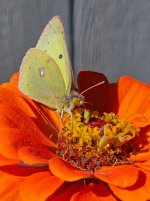

Mt. Rainier NP pollinators. One of the highlights of living in the PNW is the summer flush of wildflowers in the subalpine and alpine meadows of Mt. Rainier National Park
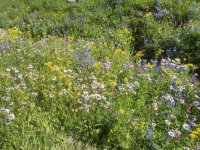
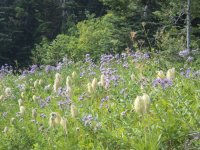
These include one of my favorite groups of plants, the louseworts in the genus Pedicularis, such as this bird’s beak lousewort.
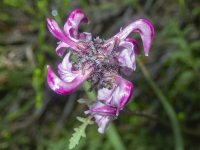
Plants in this genus are hemi-parasites. While they will synthesize their own organic molecules via photosynthesis, they can “steal” water and some nutrients from the roots of neighboring plants, such as conifers or other wildflowers.
These wildflower meadows support a diverse suite of pollinators. The plants provide nectar (= sugars) and pollen (= protein) to the pollinators. The pollinators carry pollen from flower to flower, facilitating fertilization of the flowers, a classic case of symbiosis.
Butterflies are among the most spectacular of these pollinators. One of the most prominent species, albeit one of the smallest, is Anna’s blue. This species ranges along the West Coast, from Southern B.C. through California. Their caterpillars prefer huckleberries, lupines, and heaths. Males are powder-blue with brown and white edges.
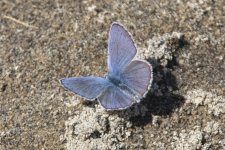
Females are dark brown with orange crescents along the edges of the wings and a white fringe.
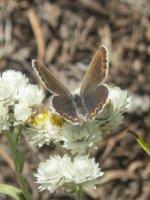
Anicia’s checkerspot are a striking butterfly.
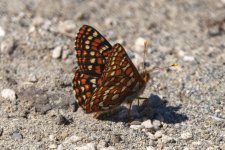
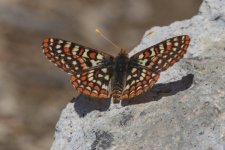
This species is found in Western North America in a wide range of habitats. The caterpillars of this butterfly concentrate iridoid glycosides from their host plants. These compounds are bitter to potential mammalian herbivores (of the plants) or predators (of the butterflies). To advertise their chemical defense, the Anicia’s checkerspot are brightly-colored (aposematic or warning coloration).
Edith’s checkerspot is similar to Anicia’s checkerspot.
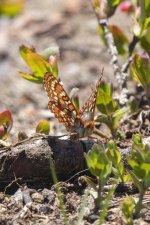
By late summer, the dense clusters of flowering montane asters are covered with fritillary butterflies, especially Mormon fritillaries.
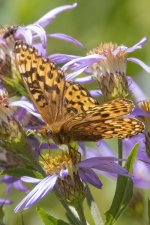
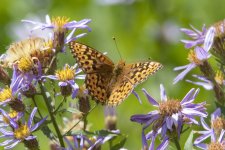
This is another Western North American butterfly species. Their caterpillars specialize on violets. Eggs hatch in the late summer; the early-stage caterpillars overwinter on their host plants or under debris. Continuing to grow in the late spring and early summer, the caterpillars will pupate after 18 days (temperature-dependent) before emerging as adults. Males emerge two-weeks before females, skewing the sex ratio.
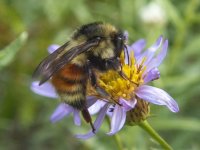
Native bumblebees are also important pollinators of montane wildflowers. Among the most common is the black-tailed bumble. This species widespread in Western North America from the lowlands to alpine meadows. They are relatively easy to identify by the orange patches at the front of the abdomen and black on the last few abdominal segments.
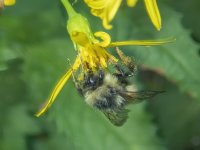
There are other types of bees, such as mason bees, that also act as pollinators.
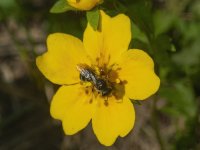
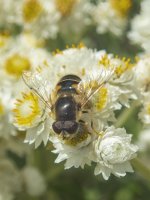
And not all insects that look like bees are bees. Most true flies, Diptera, lack the hairy bodies of true bees, have only two wings (versus four in bees), lack pollen sacks, and have larger eyes. This common drone fly looks like a honeybee, but is not.
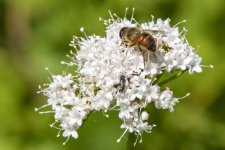
This is a form of Batesian mimicry where a non-protected species converges on the coloration of a protected species (e.g., with a stinger). Predators that have had prior negative experiences with the protected species avoid the mimic as well.
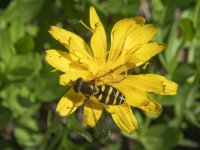
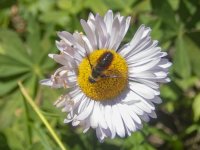
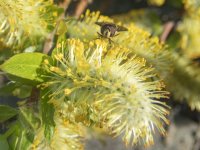
Hoverflies are probably even more important / common pollinators of Mt. Rainier wildflowers than are either butterflies or bees.
Steve
These include one of my favorite groups of plants, the louseworts in the genus Pedicularis, such as this bird’s beak lousewort.
Plants in this genus are hemi-parasites. While they will synthesize their own organic molecules via photosynthesis, they can “steal” water and some nutrients from the roots of neighboring plants, such as conifers or other wildflowers.
These wildflower meadows support a diverse suite of pollinators. The plants provide nectar (= sugars) and pollen (= protein) to the pollinators. The pollinators carry pollen from flower to flower, facilitating fertilization of the flowers, a classic case of symbiosis.
Butterflies are among the most spectacular of these pollinators. One of the most prominent species, albeit one of the smallest, is Anna’s blue. This species ranges along the West Coast, from Southern B.C. through California. Their caterpillars prefer huckleberries, lupines, and heaths. Males are powder-blue with brown and white edges.
Females are dark brown with orange crescents along the edges of the wings and a white fringe.
Anicia’s checkerspot are a striking butterfly.
This species is found in Western North America in a wide range of habitats. The caterpillars of this butterfly concentrate iridoid glycosides from their host plants. These compounds are bitter to potential mammalian herbivores (of the plants) or predators (of the butterflies). To advertise their chemical defense, the Anicia’s checkerspot are brightly-colored (aposematic or warning coloration).
Edith’s checkerspot is similar to Anicia’s checkerspot.
By late summer, the dense clusters of flowering montane asters are covered with fritillary butterflies, especially Mormon fritillaries.
This is another Western North American butterfly species. Their caterpillars specialize on violets. Eggs hatch in the late summer; the early-stage caterpillars overwinter on their host plants or under debris. Continuing to grow in the late spring and early summer, the caterpillars will pupate after 18 days (temperature-dependent) before emerging as adults. Males emerge two-weeks before females, skewing the sex ratio.
Native bumblebees are also important pollinators of montane wildflowers. Among the most common is the black-tailed bumble. This species widespread in Western North America from the lowlands to alpine meadows. They are relatively easy to identify by the orange patches at the front of the abdomen and black on the last few abdominal segments.
There are other types of bees, such as mason bees, that also act as pollinators.
And not all insects that look like bees are bees. Most true flies, Diptera, lack the hairy bodies of true bees, have only two wings (versus four in bees), lack pollen sacks, and have larger eyes. This common drone fly looks like a honeybee, but is not.
This is a form of Batesian mimicry where a non-protected species converges on the coloration of a protected species (e.g., with a stinger). Predators that have had prior negative experiences with the protected species avoid the mimic as well.
Hoverflies are probably even more important / common pollinators of Mt. Rainier wildflowers than are either butterflies or bees.
Steve

Gyrfalcon22
Legend
I guess this is as close to a Bee pics forum as I could find, and I see Steve has added some great bee-type critters shots above!
Went out to check on a smaller two-story barn here and get it ready for Winter when I looked up and saw this ! It might go under the ceiling tile on the other side. It is incredibly deep at the peak of the roof. It is about 4 feet long. That thing has to be 100 pounds!
Couldn't get any answer on Facebook bee forum but I know it is best to leave them alone. 4 active hives on our farm that I am aware of.
Will let them bee : )
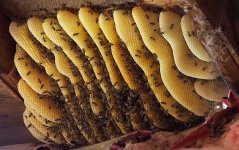
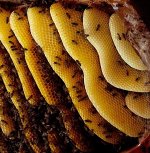
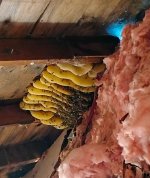
Went out to check on a smaller two-story barn here and get it ready for Winter when I looked up and saw this ! It might go under the ceiling tile on the other side. It is incredibly deep at the peak of the roof. It is about 4 feet long. That thing has to be 100 pounds!
Couldn't get any answer on Facebook bee forum but I know it is best to leave them alone. 4 active hives on our farm that I am aware of.
Will let them bee : )
Last edited:

August 2025.
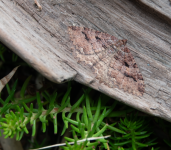
So there I was taking a walk in Yanchep National Park, Western Australia, gawking at all the native Australian birds, native Australian mammals, native Australian reptiles, when I saw this native Australian...Monarch Butterfly? On a native Eucalyptus tree. Hmm.
Google to the rescue: The Monarch Butterfly in Australia

Learn something new everyday. Really.
Kenneth
So there I was taking a walk in Yanchep National Park, Western Australia, gawking at all the native Australian birds, native Australian mammals, native Australian reptiles, when I saw this native Australian...Monarch Butterfly? On a native Eucalyptus tree. Hmm.
Google to the rescue: The Monarch Butterfly in Australia
Learn something new everyday. Really.
Kenneth


Coach Potter
Legend
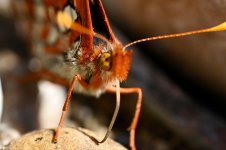
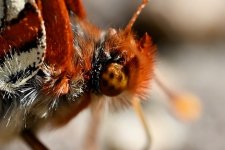
A mid day moth, butterflies were numerous and plentiful 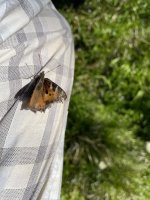
It kept trying to get nectar out of my shirt!
It kept trying to get nectar out of my shirt!

A mid day moth, butterflies were numerous and plentiful
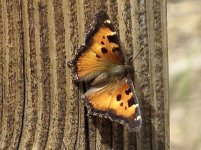
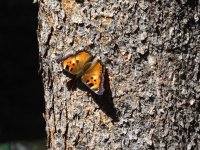
That looks like a rather tired California tortoiseshell!

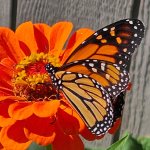
A bunch of these beauties around now...
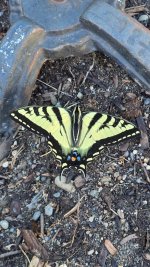
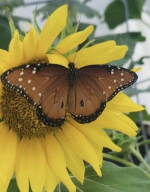

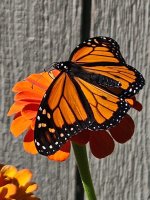
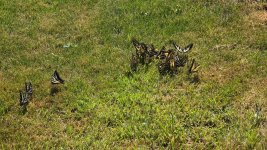
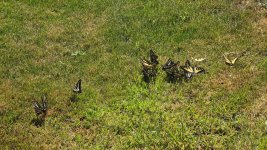
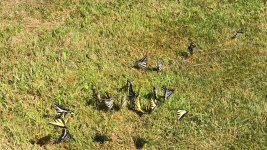
Got them swarming this morning!

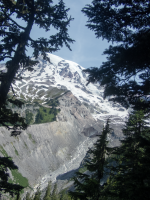
Mt. Rainier 23 June 2026. A few weeks ago, my wife and I hiked several areas in the Paradise area of Mt. Rainier. Our wanderings included the Nisqually Glacier Overlook Trail,
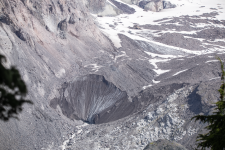
a section of the Skyline Trail,
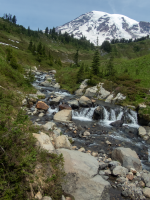
and the verge along then road to Reflection Lake.
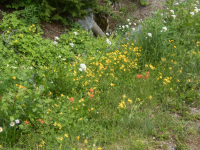
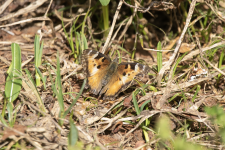
In addition to the stunning landscapes, we saw amazing wildflowers, mountains birds, and mountain butterflies and moths. The swallowtails proved to be too fast for pictures, but several California tortoiseshell butterflies paused for long enough while sunning
or sipping nectar from sitka valerian
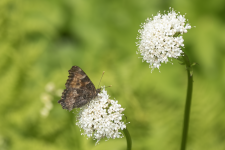
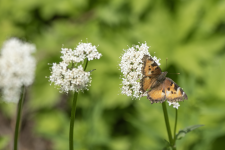
or barberry
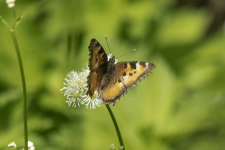
for some nice pictures.
The flowering plants were dominated by early summer species, such as avalanche lilies,
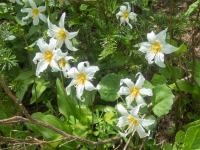
Jeffreys’ shooting star,
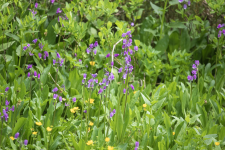
and elephant’s head louseworts.
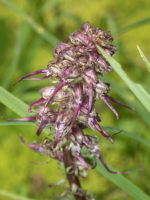
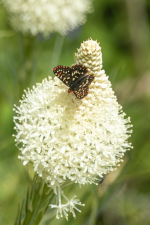
There were only a few aster clumps, major energy sources for butterflies in late summer. But this Edith's checkerspot sipped nectar from a bear grass inflorescence.
In one picture, I captured what I thought was a skipper, a type of butterfly that does not completely fold its wings, but angles its wings when at rest.
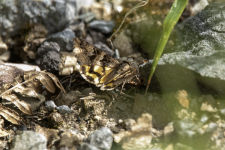
However, the wing coloration did not match anything in my butterfly field guide (Butterflies of the Pacific Northwest by Pyle and LaBar. After uploading the picture to Google, the organism was identified as a moth, Drasteria divergens. The caterpillars of this species are specialists on elderberry.
Steve
a section of the Skyline Trail,
and the verge along then road to Reflection Lake.
In addition to the stunning landscapes, we saw amazing wildflowers, mountains birds, and mountain butterflies and moths. The swallowtails proved to be too fast for pictures, but several California tortoiseshell butterflies paused for long enough while sunning
or sipping nectar from sitka valerian
or barberry
for some nice pictures.
The flowering plants were dominated by early summer species, such as avalanche lilies,
Jeffreys’ shooting star,
and elephant’s head louseworts.
There were only a few aster clumps, major energy sources for butterflies in late summer. But this Edith's checkerspot sipped nectar from a bear grass inflorescence.
In one picture, I captured what I thought was a skipper, a type of butterfly that does not completely fold its wings, but angles its wings when at rest.
However, the wing coloration did not match anything in my butterfly field guide (Butterflies of the Pacific Northwest by Pyle and LaBar. After uploading the picture to Google, the organism was identified as a moth, Drasteria divergens. The caterpillars of this species are specialists on elderberry.
Steve

tkww
Life of the Party
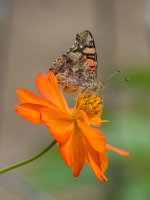
I haven't paid that much attention in the past, but I think I've had two different ladies flitting around. What I think is a West Coast Lady:
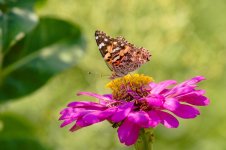
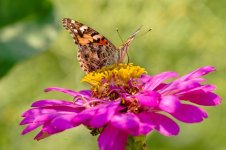
And a Painted Lady. I never tire of how goofy/surprised they seem to look.
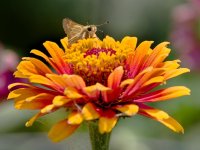
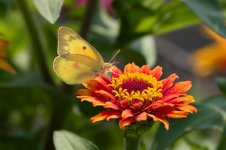
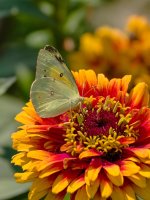
A Skipper of some kind and a Sulfur (Clouded?)
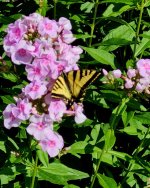
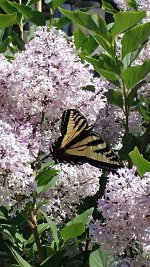
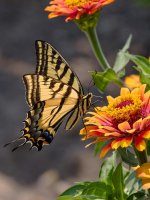
Two-tailed Tiger Swallowtails, one very clean and one very ragged.
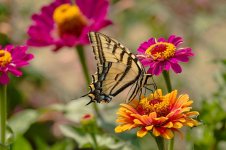
About to have some wasp harassment, and I'm impressed with how hairy the wings are.
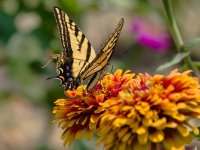
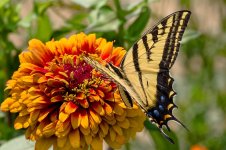
And a Painted Lady. I never tire of how goofy/surprised they seem to look.
A Skipper of some kind and a Sulfur (Clouded?)
Two-tailed Tiger Swallowtails, one very clean and one very ragged.
About to have some wasp harassment, and I'm impressed with how hairy the wings are.

