Navigation
Install the app
How to install the app on iOS
Follow along with the video below to see how to install our site as a web app on your home screen.
Note: This feature may not be available in some browsers.
More options
Style variation
You are using an out of date browser. It may not display this or other websites correctly.
You should upgrade or use an alternative browser.
You should upgrade or use an alternative browser.
Bees
- Thread starter Coach Potter
- Start date
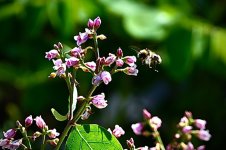
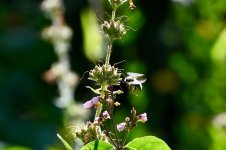
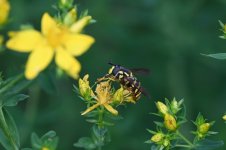
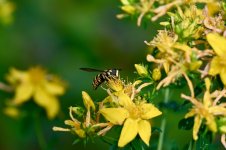
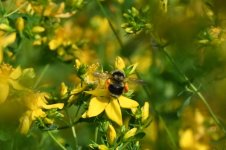
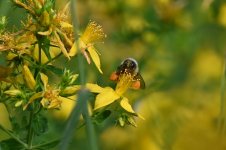
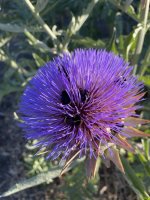
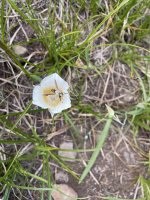

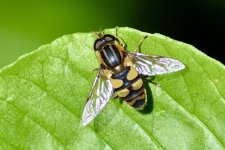
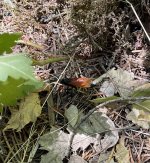
Tarantula hawk?
About 1200’ elevation along the North Umpqua.

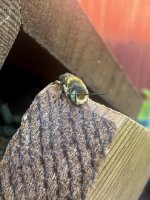
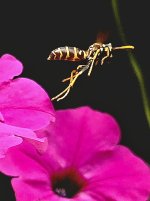
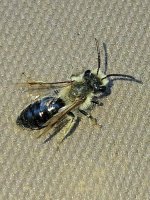

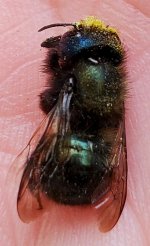
It looks like a mining bee, mason bees look more stocky, blueish black color and have different hair patterns on thorax and legs. See picture below for one of the mason bees in out garden.
Last edited:


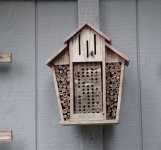
Not sure what type of bee or wasp that is on top of the structure, but it was fun watching the masons work yesterday at my friends house.
SF
SF
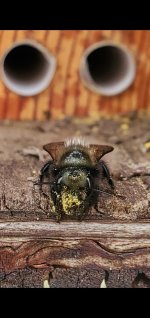
Interesting. Good closeup.
Is the yellowish residue on the head from recent pollination trips?
The background looks like your palm. Family pet?
Thanks, yes, the yellow stuff is pollen. Mason bees are messy pollinators, they just belly flop and roll on flowers to load on pollen all over their bodies, to the point that returning from harvest they look more yellow than green/blue/black when leaving their tubes. Messy but highly efficient, they are said to be 95% efficient as pollinators as opposed to around 5% efficiency of honey bees (which carry their pollen on hind legs). A few hundred mason bees equates to several tens of thousands honey bees. Guess I am more their landlord than pet owner, we have several bee units around the garden.
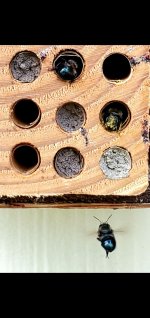
Not sure what type of bee or wasp that is on top of the structure, but it was fun watching the masons work yesterday at my friends house.
SF
[ATTACH type="full"
It's truly mesmerizing to watch them work relentlessly bringing pollen, building mud balls and doing their mason work to create the walls between the sections of their tubes after they fill them with pollen and lay an egg on each. Each bee visits thousands of flowers a day on about on block radius, so it's a buzz of activity (no pun intended). They don't sting, so they are easy to handle and are a kid favorite too.
Hard to ID on the picture @Stonedfish, given size and maybe some white patches on head and abdomen maybe a bald-face hornet? There are also some parasitic wasp that attack mason bee nests, along with much smaller pesky Houdini flies (similar to fruit flies in size) that try to lay their own eggs in the short period between mason bee harvest trips.
Last edited:
I been out every day watering my back lawn which I top seeded. I’ve never had the amount of bumblebees I’ve have this year. There are always some hanging around back there, which is great to see. They are really liking my heather and jasmine. The jasmine smells great.
SF
SF


'Murder hornets' may have been eradicated, but WA now faces new hornet threat in Vancouver - MyNorthwest.com
Washington agriculture officials are warning Vancouver-area residents to keep an eye out for a yellow-legged hornet.
 mynorthwest.com
Washington now faces new hornet threat in Vancouver
Last edited:

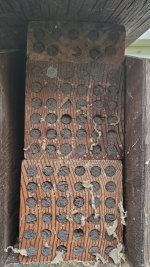
I’m fairly new to this…why the liners in your bee blocks?Thanks, yes, the yellow stuff is pollen. Mason bees are messy pollinators, they just belly flop and roll on flowers to load on pollen all over their bodies, to the point that returning from harvest they look more yellow than green/blue/black when leaving their tubes. Messy but highly efficient, they are said to be 95% efficient as pollinators as opposed to around 5% efficiency of honey bees (which carry their pollen on hind legs). A few hundred mason bees equates to several tens of thousands honey bees. Guess I am more their landlord than pet owner, we have several bee units around the garden.
View attachment 182701
View attachment 182703
It's truly mesmerizing to watch them work relentlessly bringing pollen, building mud balls and doing their mason work to create the walls between the sections of their tubes after they fill them with pollen and lay an egg on each. Each bee visits thousands of flowers a day on about on block radius, so it's a buzz of activity (no pun intended). They don't sting, so they are easy to handle and are a kid favorite too.
Hard to ID on the picture @Stonedfish, given size and maybe some white patches on head and abdomen maybe a bald-face hornet? There are also some parasitic wasp that attack mason bee nests, along with much smaller pesky Houdini flies (similar to fruit flies in size) that try to lay their own eggs in the short period between mason bee harvest trips.
View attachment 182702
and what ARE the liners ?
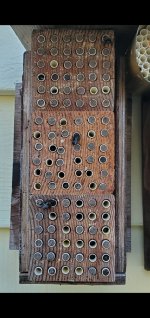
Mason bees are solitary in the wild, it is best practice to manage the nests between years to avoid/manage bee parasites such as pollen mites, Houdini flies and others that take advantage of the higher artificial densities in man made bee blocks/nests. I reuse the blocks year after year after cleaning them and drying them in a low oven to kill anything. I use paper liners made of non wax parchment paper so I can take the liners during winter, unwrap them, tale the bee eggs and discard anything that is not a proper mason bee cocoon. I also wash and air dry the eggs. This method keeps parasites to a minimum. Unmanaged bee blocks lead to parasite bee infestations in a heart beat. For more info into how to make the liners and overall management of the bees check out the following PDF, I think it is one of the best beginner guides. Happy to answer any questions you may have. This year mine are done, all tubes filled, the paper "strings" you see is because some bees like to chew and remove some of the liners edges, best to use a guillotine or sharp paper cutter to prevent that.