Bamboo in Heirman Country

Dave Westburg

Fish the classics
Forum Supporter
IMG_4480.JPG
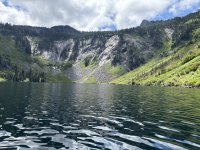
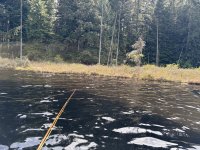
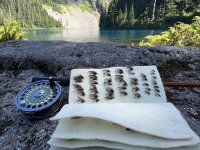
I've been visiting the high lakes Bob Hierman talks about in Snohomish My Beloved Country. This lake with maybe the clearest water I've ever seen is approximately 7 miles one way and at 3,700 feet. I carried in a phillipson 8'6" 5 weight bamboo rod and some classic wets.
IMG_4487.JPG

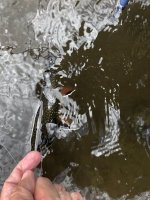
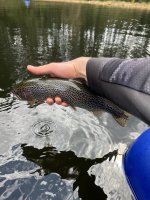
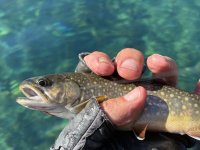
Heirman talks about lunkers but the only fish I found were small brookies. I did well with a #12-14 greenwells glory or a #16 mallard and claret or black and blae The view from our campsite.
IMG_4482.JPG

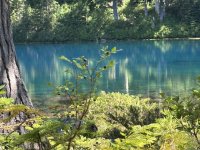
And blueberries for breakfast.

IMG_4488.JPG

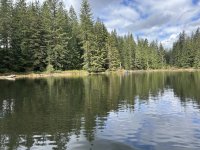
The scenery was great and we were the only people at the lake Friday and Saturday but I don't think I'll be back. I know plenty of lakes which are better fishing and are a shorter hike.
IMG_4490.JPG
 
Last edited:
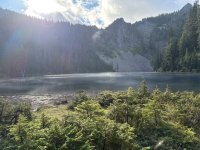
There once was a small plane wreck on the ridge above the lake but time and nature have done a good job of hiding the evidence.
 
Dave -
Pretty consistently the longer self-sustaining brook trout are in a lake the small the seem to become. Essentially their abundance over comes the lake's ability to produce food.

The best examples I can give are several Whatcom County lakes where the initial planting of trout (in this case brook trout) produced fish after a few years reach 5 or more pounds. When I visited the same lakes 40 years later the fish were much smaller. The best of the lot had decent numbers of fish in that 10-to-14-inch range. At the other end of the spectrum were lakes that had an abundance of brookies that typically had large heads and thin bodies. In one case more than 1/2 of the adult fish (had develop gonads) were less than 6 inches and the largest fish might reach 9 inches if stretched. Yet lakes in the same area that did not have a self-reproducing population and were planted infrequently still produce fish that could be measured in pounds.

Curt
 
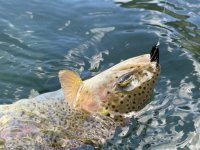
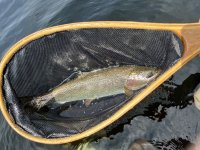
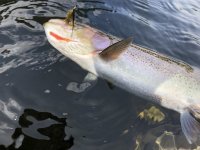
i figured this lake had a self sustaining population because it was last stocked in 2006. I also saw fry around the shoreline. Agree with you that brookies usually stunt. I can think of one rich central cascades lake at about 3,000 feet where they don’t and another central cascades high lake at about 3,000 feet where the brookies seem to have been kept in check by the browns and rainbows. Eastern wa high lakes also seem to produce nice brookies. This fish came from an eastern wa lake above 6,000 feet. There were plenty of 11-12” fish.IMG_1010.jpeg
 
Last edited:
Do you think that periodic plantings of tiger trout into lakes where Brook Trout populations are naturally reproducing would improve the size structure in those populations?
 
The most promising management activity to control stunted brook trout populations is being tested and seems to hold great promise is to use genetically altered brook trout that produce all males. With multiple introductions of those only males within a couple generations the wild population collapse and once the male only fish die out within a year or two the aquatic invertebrate population will rebound to the point that a new introduction of a more suitable fish the lake will produce larger fish (especially at low planting density).

Curt
 
Do you think that periodic plantings of tiger trout into lakes where Brook Trout populations are naturally reproducing would improve the size structure in those populations?
Very rarely has this seemed to work out in high lakes from all of the research I've seen through the Trailblazers. There's been a few lakes where the introduction of Lake Trout has improved the conditions but Browns, Tiger Trout, even Tiger Musky, hasn't really panned out that well.
 
Back
Top