
Navigation
Install the app
How to install the app on iOS
Follow along with the video below to see how to install our site as a web app on your home screen.
Note: This feature may not be available in some browsers.
More options
Style variation
You are using an out of date browser. It may not display this or other websites correctly.
You should upgrade or use an alternative browser.
You should upgrade or use an alternative browser.
Backyard Wildlife
- Thread starter Canuck from Kansas
- Start date

Gyrfalcon22
Legend
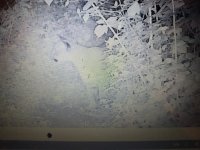
Me thinking I am blending in at a hard rock concert wearing a white t-shirt because I forgot my black one
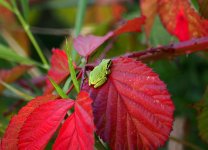

No wonder you look so jumpy . . .Me thinking I am blending in at a hard rock concert wearing a white t-shirt because I forgot my black one

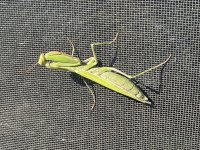

I was out with my wife enjoying a sunny afternoon at Nisqually this afternoon. And I identified a fruiting tree/shrub as Russian olives. She, a much better botanist who had been studying their identification because Pacific crabapples can be used to identify inland Native American garden sites, indicated that they were Pacific crabapple. I even showed her the specific tree that the cedar waxwings were feeding. Certainly Pacific crabapple. And they certainly look like the fruits in @Gyrfalcon22's post and that @SteelHeadDave had identified as Pacific crabapple. Mea culpa...Within an apple’s throw indeed. Looks like he’s enjoying some low hanging Pacific Crabapple. Great pics as usual!
Steve

No worries Steve. I only learned about our native crabapple a few years ago. It’s interesting how after you learn to identify a new flower, plant, tree etc. all of the sudden you see them everywhere (within their habitat of course). There was a Pacific Crabapple tree behind my campsite at TH on my tuna trip weekend and I got a chance to further study them up close. I even sampled a nearly ripe fruit which was well, crabapple like. I can see why bears, birds and other wildlife would be attracted to them. I can envision bears going in for the late season boozy fruit as well. Russian olive is something that I haven’t identified in the wild yet. I think they might be more of a dry side invasive but I could be wrong on that.I was out with my wife enjoying a sunny afternoon at Nisqually this afternoon. And I identified a fruiting tree/shrub as Russian olives. She, a much better botanist who had been studying their identification because Pacific crabapples can be used to identify inland Native American garden sites, indicated that they were Pacific crabapple. I even showed her the specific tree that the cedar waxwings were feeding. Certainly Pacific crabapple. And they certainly look like the fruits in @Gyrfalcon22's post and that @SteelHeadDave had identified as Pacific crabapple. Mea culpa...
Steve

Russian olive are very common over here on the dry side but they love water so you'll find them along many of the Basin lakes, creeks and rivers. I believe upland game birds roost in them (and feed on the fruit). The Lenice/Nunnally chain has lots of Russian olive trees. In the spring (tick season) the trees flower and the scent is quite sweet.No worries Steve. I only learned about our native crabapple a few years ago. It’s interesting how after you learn to identify a new flower, plant, tree etc. all of the sudden you see them everywhere (within their habitat of course). There was a Pacific Crabapple tree behind my campsite at TH on my tuna trip weekend and I got a chance to further study them up close. I even sampled a nearly ripe fruit which was well, crabapple like. I can see why bears, birds and other wildlife would be attracted to them. I can envision bears going in for the late season boozy fruit as well. Russian olive is something that I haven’t identified in the wild yet. I think they might be more of a dry side invasive but I could be wrong on that.
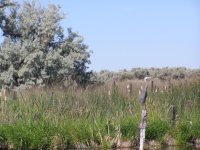
They're very pale "olive" in color and thorny as all get out. Sprry for the crummy Russian olive tree picture but it sort of gives you a hint.
Near Kamloops, BC, on the way to one of the more popular lakes up there (which I probably shouldn't name, eh @Mark Yoshida), there's a farm house where the owner planted Russian olive trees on both sides of his long driveway. It's quite the tunnel he has to drive through now and given their thorns, no one's going to cross his driveway.
Russian olives are not your friend..... They take over riparian habitat and are basically useless.....in my opinion.
Or, a pontoon boat.....
I am very fortunate to watch a great big black lab that lives in the perfect place for a dog. Ruby is now approaching 13 years old, doing well, but not what she used to be.
There are does around the yard regularly, they are used to Ruby and human activity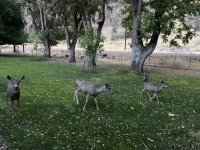
Two evenings ago Ruby chased of a buck, fortunately he obliged.
This morning she gave 1 alarm bark, the buck is back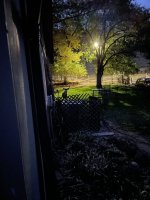
He moved to here and stared at us for 15 minutes
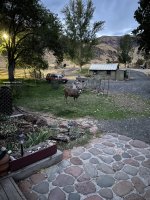
After about 5 minutes I talked to him a bit, and moved around - he didn’t move, just kept his eyes on me. I got the impression he didn’t want anyone to interfere with his intentions. He finally turned and walked away. Came back every half hour a couple more times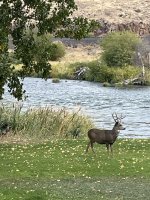
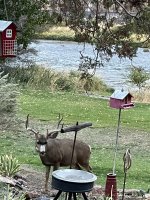
I was on the other side of the tree, he came up on me, waited to get a pic until I was as at the door.l
There are does around the yard regularly, they are used to Ruby and human activity
Two evenings ago Ruby chased of a buck, fortunately he obliged.
This morning she gave 1 alarm bark, the buck is back
He moved to here and stared at us for 15 minutes
After about 5 minutes I talked to him a bit, and moved around - he didn’t move, just kept his eyes on me. I got the impression he didn’t want anyone to interfere with his intentions. He finally turned and walked away. Came back every half hour a couple more times
I was on the other side of the tree, he came up on me, waited to get a pic until I was as at the door.l
Attachments
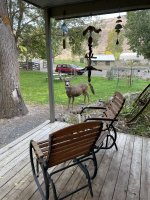
Not quite my backyard but within my general stomping grounds.
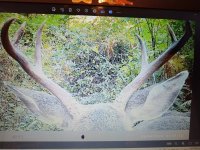
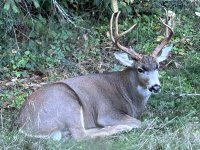
I came home Tuesday afternoon from a very successful wildlife visit to Ridgefield NWR to find this magnificent buck resting 15 feet from the back door of my house. He was very chill as he rested in this quiet spot.
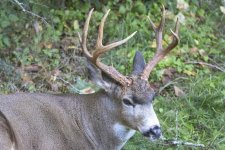
He kept an eye on me as I repositioned myself for a better angle, but he went back to dozing very quickly.
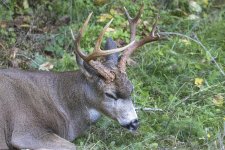
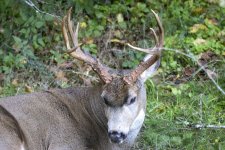
He’s probably been a busy boy interacting with the local herd of does.
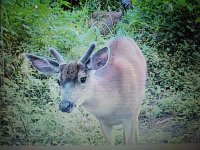
The rut has clearly started. Early yesterday morning, the local does and their offspring bolted by my window. The trigger was the unwanted attention of a spike buck; this youngster literally has a pair of 2” spike antlers. The ladies were unimpressed by his presence. A short time later, a nicer, more-serious buck with forked antlers came by hot on the heels of a doe. He was flicking his tongue repeatedly to sense her status. She was on her own mission but did not run away from his attentions.
Steve
He kept an eye on me as I repositioned myself for a better angle, but he went back to dozing very quickly.
He’s probably been a busy boy interacting with the local herd of does.
The rut has clearly started. Early yesterday morning, the local does and their offspring bolted by my window. The trigger was the unwanted attention of a spike buck; this youngster literally has a pair of 2” spike antlers. The ladies were unimpressed by his presence. A short time later, a nicer, more-serious buck with forked antlers came by hot on the heels of a doe. He was flicking his tongue repeatedly to sense her status. She was on her own mission but did not run away from his attentions.
Steve

the_chemist
Life of the Party
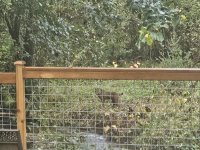
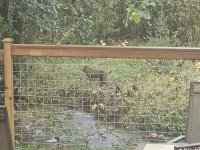
Friendly kittie is back.

Piece of rhubarb???Not quite my backyard but within my general stomping grounds.
View attachment 130248

Never seen such a thing….what is it?
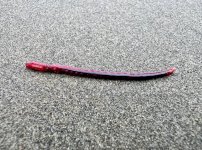
It’s some kind of worm, not sure what. Found while razor clamming on the beach far from vegetation. Maybe @Cabezon knows? It was about 2 1/2 - 3 inches long or so and slowly moving across the sand. The deep red and purple hue had me curious.Piece of rhubarb???
Never seen such a thing….what is it?
Yes, it is a Pacific lugworm, Abarenicola pacifica. I am not sure why it is just sitting at the surface. This is is a deposit-feeding sedentary polychaete worm that normally lives under the sand in a J-shaped tube. Head is at the left edge of the J (and at the left side of your image) and the anus is by the top of the J. They evert their esophagus to ingest sand mixed with organic debris. They absorb nutrients from the sand and defecate the processed sand in characteristic coils at the surface. If you look carefully on a sandy beach, you will find a depression within an inch or two of these coils. The ingestion of sand creates a cavity and the surface sand slumps into the cavity. The head is below the cavity several inches below the surface. Periodically, the worm backs up in its tube such that its anus reaches the surface. At that point, they are vulnerable to predators like flounders or staghorn sculpins. The predator grabs the butt segments but typically can't remove the whole worm which is anchored in the sand walls of its tube. These end segments are often torn off and have to be regenerated by the worm (partial predation). The red color comes from extracellular hemoglobin that helps circulate oxygen from their gills (just behind the head and not visible in the image) to the tissues.It’s some kind of worm, not sure what. Found while razor clamming on the beach far from vegetation. Maybe @Cabezon knows? It was about 2 1/2 - 3 inches long or so and slowly moving across the sand. The deep red and purple hue had me curious.
Steve
Thank you for the detailed info Steve. I hope it’s not bothersome to always be getting asked these questions. The Pacific lugworm did seem out of place on top of the sand. The tide was pretty far out from where it was located and it didn’t seem like it belonged there.Yes, it is a Pacific lugworm, Abarenicola pacifica. I am not sure why it is just sitting at the surface. This is is a deposit-feeding sedentary polychaete worm that normally lives under the sand in a J-shaped tube. Head is at the left edge of the J (and at the left side of your image) and the anus is by the top of the J. They evert their esophagus to ingest sand mixed with organic debris. They absorb nutrients from the sand and defecate the processed sand in characteristic coils at the surface. If you look carefully on a sandy beach, you will find a depression within an inch or two of these coils. The ingestion of sand creates a cavity and the surface sand slumps into the cavity. The head is below the cavity several inches below the surface. Periodically, the worm backs up in its tube such that its anus reaches the surface. At that point, they are vulnerable to predators like flounders or staghorn sculpins. The predator grabs the butt segments but typically can't remove the whole worm which is anchored in the sand walls of its tube. These end segments are often torn off and have to be regenerated by the worm (partial predation). The red color comes from extracellular hemoglobin that helps circulate oxygen from their gills (just behind the head and not visible in the image) to the tissues.
Steve
On a somewhat related note, do you have any book recommendations on our local marine biology?
Dave
Hi Dave,Thank you for the detailed info Steve. I hope it’s not bothersome to always be getting asked these questions. The Pacific lugworm did seem out of place on top of the sand. The tide was pretty far out from where it was located and it didn’t seem like it belonged there.
On a somewhat related note, do you have any book recommendations on our local marine biology?
Dave
I love sharing my knowledge with the board, once a teacher always a teacher. Had there been folks digging for razor clams on that beach?
I suggest "The New Beachcomber's Guide to the Pacific Northwest" by J. Duane Sept.
Steve
Thank you, I will look for that book. Yes, there were other people digging razor clams that day but only a few where we were. The worm was very far up the beach and away from the digging area so I don’t think it was dug up by a human.Hi Dave,
I love sharing my knowledge with the board, once a teacher always a teacher. Had there been folks digging for razor clams on that beach?
I suggest "The New Beachcomber's Guide to the Pacific Northwest" by J. Duane Sept.
Steve