This is an interesting question. I found out when learning about origins of Tenkara, that many (
extremely high gradient) mountain stream drainages in Japan have always had natural barriers to saltwater, and more recently manmade barriers for small hydropower and flood control. For hundreds of years the mountain villages relied on fish in their local stream reaches for sustenance and
expert, professional fishermen-hunters in the villages made a living providing them.
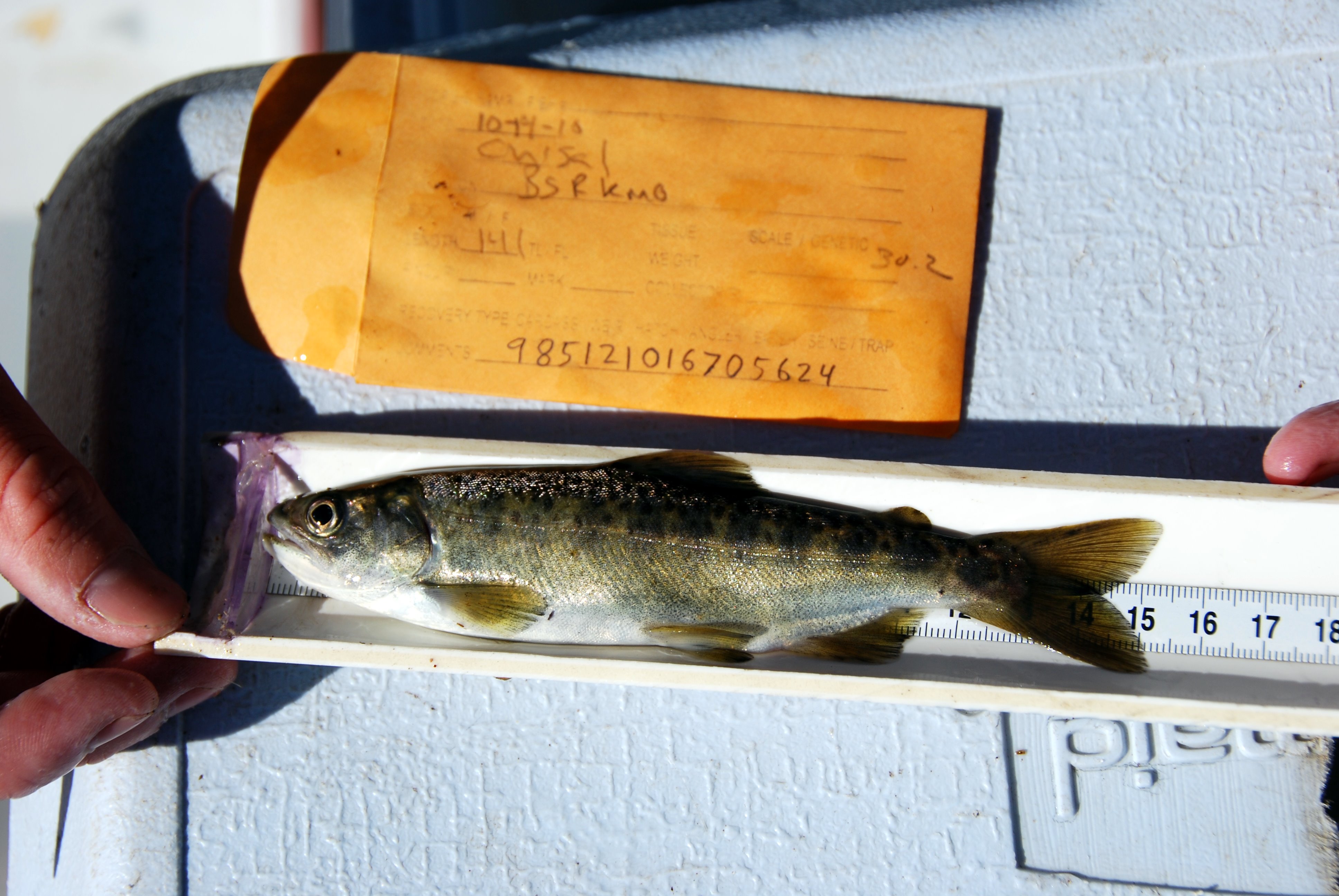
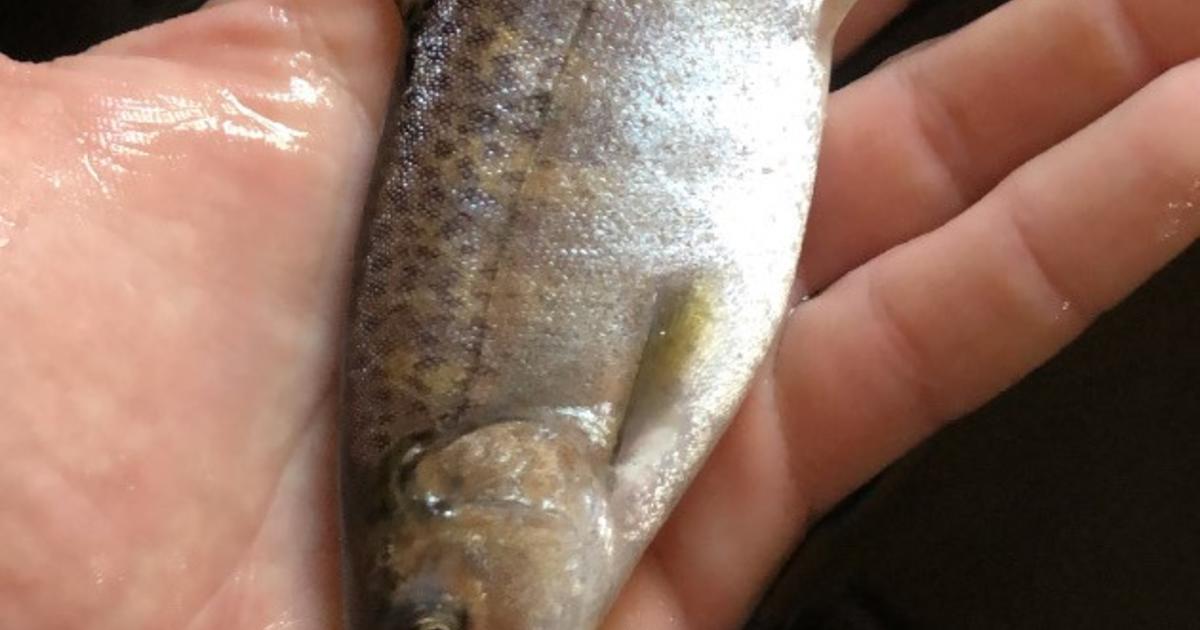
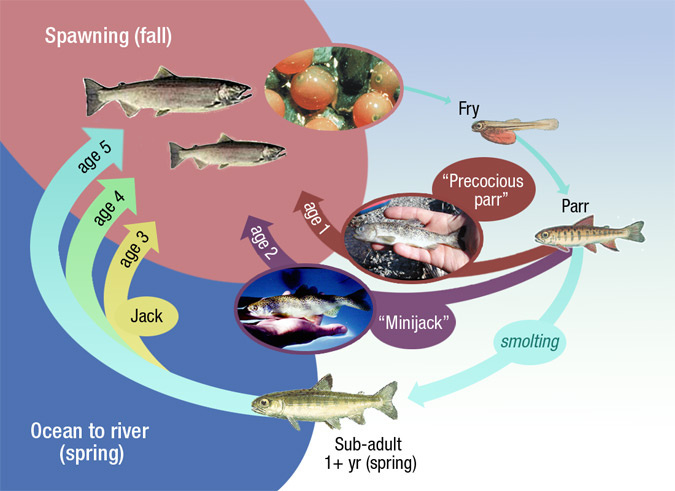
To maintain that source of protein under this kind of catch & kill pressure ^^^ they were transporting two sub-species of anadromous red-spotted masu salmon called
Amago and
Yamame, and whitespotted char called
Iwana, from lower elevations above the barriers for many-many years (
perhaps hundreds of years?). Long 1-piece
whole cane (
not split) fixed-line rods with braided horsehair lines to cast hand-tied (without a vise) flies were the
ideal way to catch these fish and kept stashed in strategic locations along these
extremely rugged mountainous stream reaches.
When Tenkara fixed-line fishing began to become known outside of the mountain regions and a gained a following amongst "leisure" sport fishermen in the 1960s the big Japanese fishing tackle companies (Daiwa, Shimano...) and family-run shops began producing fiberglass, and later graphite, Tenkara rods. Because the fish were being harvested for food the fish weren't maturing so
a 12" fish was considered a trophy. As a result the commercially built rods were designed for small fish and light nylon (later fluorocarbon) braided (later mono or "level") casting line and very light tippets. Now, with a migration of people from the mountainous regions to lower elevations combined with the remoteness of these areas and the extremely steep and rugged terrain removing the fishing pressure, along with acceptance of C&R by sport anglers in these streams, I am frequently seeing videos on this husband & wife team's Tenkara fishing - bushcraft YT channel with landlocked salmon and char like these being caught at elevations of 1000 - 2000 meters (
and higher?). They make me wish I'd discovered this 40+ years ago.
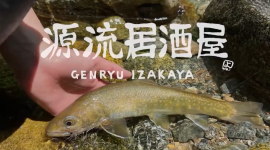
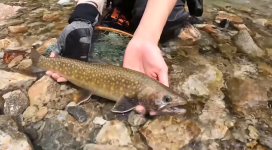
I don't speak or read Japanese, and there are no English subtitles but I'm fan.
https://www.youtube.com/@genryuizakaya
(translation: genryu - headwaters izakaya - pub)