

I find it interesting how different brands can reinvent themselves. Or perhaps how a subgroup of users will imbrace a legacy brand and make it there own.
Case in point. My 97 yo father in law has a favorite sipping whisky here's some history on it, it's know as I.W. Harper
"Isaac Wolfe Bernheim, a German-Jewish immigrant, named the brand to honor both his business associate (Frank Harper) and himself. The bourbon won numerous gold medals at international expositions in the late 19th and early 20th centuries—hence the "Gold Medal" branding often seen on vintage bottles"
He prefers the 100 proof Bottled in Bond. It's been impossible to find in Montana. My wife who dotes on her father will go to great lengths to locate a bottle & we've found a few while on vacation.
Anyway while researching the brand I came across this add
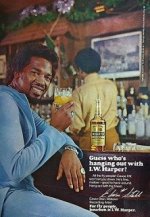
All the fly people, this 1980's add just cracked me up showing this old school whisky out clubbing with a new audience.
Case in point. My 97 yo father in law has a favorite sipping whisky here's some history on it, it's know as I.W. Harper
"Isaac Wolfe Bernheim, a German-Jewish immigrant, named the brand to honor both his business associate (Frank Harper) and himself. The bourbon won numerous gold medals at international expositions in the late 19th and early 20th centuries—hence the "Gold Medal" branding often seen on vintage bottles"
He prefers the 100 proof Bottled in Bond. It's been impossible to find in Montana. My wife who dotes on her father will go to great lengths to locate a bottle & we've found a few while on vacation.
Anyway while researching the brand I came across this add
All the fly people, this 1980's add just cracked me up showing this old school whisky out clubbing with a new audience.