I have no knowledge of the physics or engineering involved but this was my initial thought, supported by
until I read this article...

Science Busts The Biggest Myth Ever About Why Bridges Collapse
If you've ever thought the Tacoma Narrows Bridge collapsed due to resonance, you've fallen for the same myth that scientists did.www.forbes.com
Hubris? Ignorance? Both?
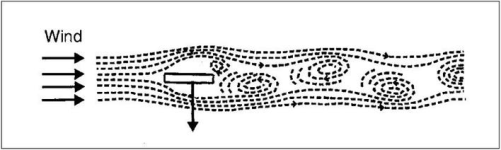
" Whenever you have an object suspended between two points, it's free to move, vibrate, oscillate, etc. It has its own response to outside stimuli, just like a guitar string vibrates in response to outside excitations. That's what the bridge did most of the time: simply vibrated up-and-down as cars passed over it, as the wind blew, etc. It did what any suspension bridge would do, only slightly more severely due to the cost-saving measures implemented in its construction... It didn't take any fancy resonance to bring the bridge down, just a lack of foresight of all the effects that would be at play, cheap construction techniques, and a failure to calculate all the relevant forces. "
"The phenomenon of flutter is now well-understood, but it has to be remembered in order to be effective. The two bridges currently spanning the Tacoma Narrows' previous path have shorn up those flaws, but London's Millennium Bridge and Russia's Volgograd Bridge have both had "flutter"-related flaws exposed in the 21st century.
Don't blame resonance for the most famous bridge-collapse of all. The true cause is much scarier, and could affect hundreds of bridges across the world if we ever forget to account for, and mitigate, the fluttering effects that brought this one down."
Is the "scarier" part the assumption that it can't - won't happen again?
interesting... much more than resonance... "value engineering" strikes again.
Another failure of similar means... aka...it takes a team and a few bad decisions... one of the worst.

Hyatt Regency walkway collapse - Wikipedia
*value engineering - cost savings to meet budget, market changes etc... designers worst nightmare - known by some as reality.