This fall has developed into one that is providing ideal conditions to chase cutthroat that looking at long range forecasts is likely to continue through October. It is the kind of fall that long term cutthroat chasers long for, but we only see once or maybe twice a decade. On my home water, the Stillaguamish, the dry weather has continued to produce the low flows that are essential for consistent fishing, the leaves are turning, water temperatures have dropped into the low 50s, caddis and BWO are active, fresh coho are playing in their typical haunts. In short, the table is set for a wonderful day of some the best cutthroat fishing the PNW. Here would be my plan and expectations for my day on the water.
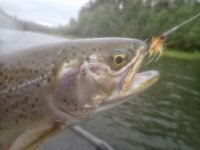
After a pre-dawn breakfast and the making of my traditional lunch of peanut butter and jam sandwich and an apple, I'll take Teal (my current lab) for our morning walk (likely will cut our usual 4 mile route a bit) I'll load the truck my gear. Can help but notice Teal's disappointment that the gear does not include a shotgun (sorry girl maybe tomorrow). Its a gray day with air heavy with moisture with the promise of light shower or two. By 9:30 I am putting my waders on, my 5-weight Sage SP strung, and orange spider tied to the tippet I am hiking up the river. After a mile or so I begin fishing my way down to the truck. It takes me a hour to reach my target pool but along the way from a nice pool and couple pockets I have 6 cutts to hand, include couple nice fish with that golden hue typical of fish that have been in the river for a while. I stop at the top of the large pool to watch for a minute or two and yes the BWO hatch is starting and there are fish moving into the shallow riffle. I make a change of flies to a small (size 14) soft hackle that experience has shown early in the hatch the cutthroat will readily accept. I fish the fly on the swing across the shallow riffle water. More and more of the fish are moving from the deeper downstream water looking for the BWOs. After a couple steelhead parr I get a nice cutt and the game is on.
Shortly after noon I'm in the truck eating my sandwich as I move to another location that has consistently produced during BWO hatches. I the second spot there is a nice pocket and 1/4 mile above the target pool. That pocket produces 2 more cutts include one better than 18 inches on my orange spider. Get to the target pool just a drizzle starts and fish are rising to the BWOs (about a size 18) so I make a fly switch to a size 14 dry. I have found that if the cutthroat have not been pressured, I can get away with the larger fly though future trips will likely require matching the hatch in both pattern and size. I see a fish rise which takes on my first cast. 3 more quickly follow and then I miss a fish and then another. What is going on. Quickly check fly and it looks fine, wait I know what is happening. After a couple drifts another fish rises to the fly, this time I wait a beat before sitting the hook and sure enough it's a nice whitefish. I catch a couple more just to prove the first wasn't a fluke. I have been watching an eddy where a mixed of steelhead parr and cutthroat rising. After wading to shore I loop around to the bottom of the shore side current. With the same size 14 dry I begin watch the rising fish try to pick out the cutthroat. In that situation the cutthroat are kind of goofy, they rise confidently to the hatching flies but after each rise, they return all the way to the bottom while the steelhead parr/rainbows often cruise much closer to the surface. After couple refusals by what I think are cutthroat I change to a small (size 16) BWO. The cutthroat like the change. As I continue fishing up the eddy line I see a nice fish beside a boulder just as the eddy water splits from the main current. In the 50 feet or so that I cover before reaching that boulder another handful of cutts have come to hand. I make a couple presentations to where I think that boulder fish is working without any success but decent to make that "just one more cast" this time with a reach cast to extend the drag free drift a bit sure, sure enough the fish takes the fly and, on the hook, sit comes flying out of the water; it's a rainbow of about 18 inches. After releasing the fish I decided it was a nice fish to quite on. As I'm driving down the river after reflecting on my day on the water, I get greedy and decide to stop to fish the main stem a bit.
On the main stem (which is open for coho) after running through my options I decide to fish the back side of an Island that typically has some cutthroat and maybe a coho. This part of the system also seems to have more small cutthroat (fish of 6 to 8 inches that I think are a combination of parr and sub-adult fish) than I find upriver. Sure enough the first several fish are those "babies" but as the channel deepens a nice cutthroat takes the spider (this time it's a black spider). By the time I reach the downstream tip of the Island another handful cutts (10 to 16 inches) have taken the black spider. I change back to the orange spider (size 4) hoping for a coho in the deeper water. After covering some water (maybe a dozen casts) I get a solid take resulting that heavy head shakes of a nice fish (a coho?). No as the fish rolls I see that golden hue of large cutthroat. As I release that fish of the day I'm think what a wonderful resource these cutthroat are. I'm lost in my reflections as I automatically cast and fish my fly with quick stripes when I'm jolted from my musing by the solid take from a coho. As I release that truly last fish of the day --- I awake from my dream!
While the above trip was dream it is fairly typical of the fishing I have expected and experienced under these conditions on my beloved Stillaguamish. Unfortunately, the river is closed. While we never know when Mother Nature will give another fall like this it is probably that WDFW will not let us fish it. Don't know how new anglers will build the memories that these glorious fall produce. The few days of the year we may get to fish have shown the fish are still present if only ....
"that's my Jam"
Curt


myflyvise.com

