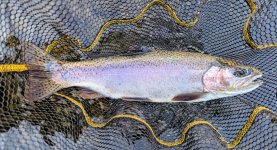
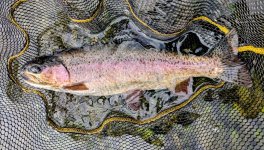
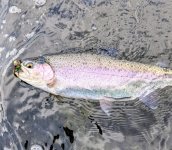
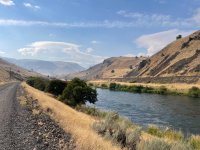
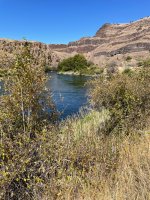
Totally understandable. To be clear though, I don't swing, I employ a far more active approach. The way I streamer fish there is no confusion. Plus, I've found that for the most part, rainbows, really prefer the smaller 2-3" max size streamers. I've caught a few by-catch steelhead over the years with a more active approach like this, but not nearly as many as euro nymphing (many of which I lose because well, I'm geared for trout). All one has to do is watch where and how someone is fishing to really know.
If someone is fishing trout spey out there this time of year, they ARE targeting steelhead, no doubt about it.....yeah, the whole "oopsie, caught another one swinging for trout" is total bullshit. With that method, trout ARE the by-catch. I always loved Kelly Galloup's description of swinging streamers for trout "trout aren't actually eating a baitfish that backs into their face ass-first", it's a total reactionary strike (like what you're after when steelhead fishing).
Re: hook size: honestly, I've settled on a size 8 jigged streamer hook for most of my local trout streamers. It's pretty little and is usually pretty sticky (today also was an exception there, had quite a few come unpinned).
They were pretty grabby today with my caddis pupae out fishing the streamer about 2 to 1 (no surprise there given the time of year).
It's funny, I actually took my snake hook because the weather looked and felt VERY snaky. Didn't see a single one (and I was looking).
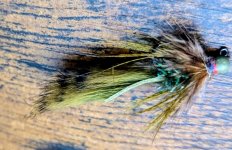
It's just a small jigged sculpin pattern that I've been working on that works really well for rainbows. Basically, rabbit tail, cactus chenille body, collar, either 4mm or 4.6mm tungsten bead and good to go. Total length is about 2-3" max. I use mottled olive and mottled brown beads for the head. It out produces the standard flashy ones by quite a large margin, at least for me.
edit:
It's basically this platform, then build off as one would see fit....I personally like using pink thread as it does give a little bit of a hotspot (same with many of the trouty nymphs I tie up) & sometimes comes through the dubbing there for a nice little bit of 'glow'....dunno if this helps or not, but it could be a confidence thing.
But the basics are rabbit tail, cactus chenille body, mallard under-collar, chickabou outer collar, dubbing to mostly cover thread wraps and make it look a little more "buggy"
View attachment 191567
My preferred method is casting up and stripping down the seam or next to an undercut, then out and across, then down and across, then jigged like a pseudo-tightline type of fishing, then move to the next spot. I'm also only fishing within 30' (usually closer) of where I'm standing, otherwise it's just too easy to lose contact with your fly (unless, of course, one is swinging down and across).