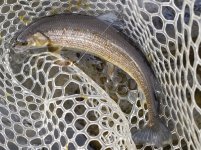
I believe that we underestimate the potential of western Washington anadromous streams to produce resident O. mykiss (rainbows) some of which can reach significant size. I have seen 20 inch or larger resident rainbows (based on ages from scale samples) in a number of north Sound anadromous rivers with some of those fish reaching age 10 and 25 inches. Once the young O. mykiss reach about 8 inches their behaviors (especially in the winter) such that they can take advantage of the nutrient bonanza provided by spawning salmon.
In spite of the feds intendedly exclude the resident form of O. mykiss in anadromous water from their ESA listing steelhead populations we now know that that life form contributes to the stability of steelhead populations with the offspring of steelhead producing some resident fish and the residents producing some future steelhead. It is past time of the State and its co-managers and those of us that care about the health of O. mykiss in our rivers to do the feds job by recognizing the importance of the resident life history to the anadromous steelhead and taking proactive action.
The WSC petition starts down a potential path to achieve the above goal, unfortunately they seem to have forgotten the complexity of our anadromous ecosystems and the diverse fisheries and management that results from that complexity. This likely would result in widespread loss of game fish fisheries and only partial protection of the wild O. mykiss population. Under current management paradigms for potential in-river salmon seasons the use of bait is typically allowed thus exposing non directed game fish to hooking mortalities from that bait use.
From my prospective a regulation package might include the following:
For all anadromous rivers with ESA listed steelhead or a wild steelhead population that is likely to be under escaped (3 of the previous 5 years of escapement under goal?) any and all freshwater fisheries (including salmon fisheries) will be under selective gear rules with the only steelhead/rainbows allowed for retention regardless of size will be fin clipped. The intent is that all fisheries target salmon, non-steelhead game fish populations (cutthroat, bull trout, whitefish, etc.) would be managed under that above rules. Any target steelhead fisheries would only be allowed after an approved River Fisheries Management (RFM) plan has been completed and approved as directed under the 2008 WDFW statewide steelhead management plan.
One potential thorny problem that might occur is any in-river sturgeon fisheries which require the use of bait. There has been an approach on the Skagit that may have broader application.
Curt