SteelheadBee
Steelhead
Wang in a box? Sounds like an SNL skitThat lone Wang in your box look so sad and lonely.

Follow along with the video below to see how to install our site as a web app on your home screen.
Note: This feature may not be available in some browsers.
Wang in a box? Sounds like an SNL skitThat lone Wang in your box look so sad and lonely.


Yee Yee!!! #MakeSteelheadersWangAgain!Dryfly steelheading indeed is a state of mind. I carry 1 or 2 wetflies in my summer steelhead box on the rare occasion that I fish a comeback wetfly (typically, all my comeback patterns are all dry flies)
Below are the only 2 boxes that I carry from June-November (I stop fishing for summer-runs in December):
View attachment 36653

There’s a lot of nuance there, are you talking about grease lining? Hitching a muddler on a classic wet fly swing?What was once considered a "damp" presentation, is now referred to as a dry fly presentation.

They can and do, Todd Hirano is one passionate advocate of pursuing them year around with dry flies and ties some nice flies. Check him out here:Do winter steelhead take skated dries or is it more of a active summer fish thing?
 toddhirano.blogspot.com

Yes. Not many people try it, so you don't hear many success stories.Do winter steelhead take skated dries or is it more of a active summer fish thing?
Traditionally when a floating fly was fished dead drift, it was considered a dry. When it came under tension, it became damp.There’s a lot of nuance there, are you talking about grease lining? Hitching a muddler on a classic wet fly swing?
There’s nothing damp about a Lil Wang! That’s kind of the point. Chug, downstream mend, get that thing moving especially through the top of a riffle. High and dry!
Indeed! Traditional is a funny word in this context.Traditionally when a floating fly was fished dead drift, it was considered a dry. When it came under tension, it became damp.
Well yeah!I’ll admit I love the way a fish that really wants to play eats a waked fly. Just the best.
I’ve never really tried to dead drift, primarily because I find the pattern of skating/waking/grease lining (depending on the water, and river) effective and super fun.What's really cool, is whe you get very familiar with a certain piece of water where you can predict where the fish will be. Dead drift your fly through it, then swing it out of there. It blows your mind when it happens. It's only happened to me a few times in my tenure, but it is really cool.
My best session for dry fly steelhead was in water temps that the thermometer registered at 37.8°Fahrenheit. It was a November morning with ice on the banks (and this wasn't in an eastside river historically known for a large native return. It's a hatchery river west of the Cascades). The sole reason I went to fish that day was to prove/disprove common knowledge.I've heard that 48F is the magic number for water temperature. Above 48F is floating line (wets or dries) and below 48F stick to sink tips and/or heavy flies down deeper.
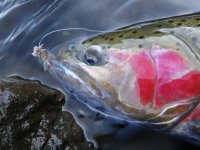
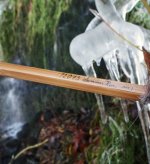
I have raised winter steelhead on dryflies. The conditions required for success are in such a small window that I don't pursue this method too often in the winter.Do winter steelhead take skated dries or is it more of a active summer fish thing?
Word up!!! I feel the same way with summers. Not many wets left in my summer wallet, and they only get wet when I’ve raised a player multiple times and want to make the hook stick. Lately, I’m pretty happy with toothmark trophies though.I have raised winter steelhead on dryflies. The conditions required for success are in such a small window that I don't pursue this method too often in the winter.
In comparison, I fish dries all summer and fall because I know I can fool more steelhead than swung wetfly techniques. I am that confident in summer surface fishing. Summer fish enter river sexually immature and dawdle around the stream becoming more surface oriented as the year wanes. Summer/fall river temps/flows tend to be more stable allowing the steelhead to feel more acclimated to their surroundings. As we know summer fish don't spawn until the following spring.
Winter steelhead are sexually mature and bolt to the spawning beds as soon as the window allows them upstream (no lolly-gagging around and smelling the mosses like their summer counterparts). Couple that with volatile winter river levels it is tough to make a decent sport of surface winter fish. Plus, I like swinging Atlantic Salmon wetfly patterns for winter steel so I need a means to my pastime.
Our pal Todd H, is our fellow that is of a different mind with dryfly winter steelheading. I jokingly state that he has different brain waves that power his drive for surface steel even in the harshest winter conditions.
If you want the best window for surface steelhead: I would look for mild air temps, recent precipitation with rising/dropping water levels, and maybe early or late in the winter season. I have risen dryfly winter steelhead in late November and late March thru early May.
Might be my favorite thing in life, and that’s saying something! I’ve got a lot to be grateful for, but next to my kid and my wife, surface steelhead might be right there in number 3 positionI dig chewed foam!

