Navigation
Install the app
How to install the app on iOS
Follow along with the video below to see how to install our site as a web app on your home screen.
Note: This feature may not be available in some browsers.
More options
Style variation
You are using an out of date browser. It may not display this or other websites correctly.
You should upgrade or use an alternative browser.
You should upgrade or use an alternative browser.
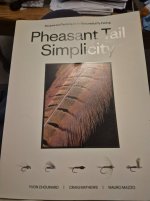
Pheasent Tail Simplicity
- Thread starter flybill
- Start date

Simple is good. I don't have the attention span for complexGood video!! Us fly guys love to keep it simple..not!
That looks like a great book! I tie and fish a lot of these:
That is a killer fly. I used to tie those with a darker hackle (might have been grouse). Looked better to me, the fish probably don’t care. The combo of pheasant tail and peacock just seems to work. I’m not sure if the fake peacock dubbing is quite as effective as the real thing, but it’s so much easier to work with.

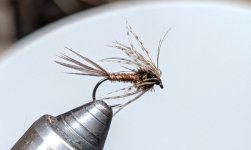
I sometimes use real peacock (wound around the tying thread for strength). I use the more brownish partridge feathers. Here's one I just tied, a 2 minute tie (size 12).That is a killer fly. I used to tie those with a darker hackle (might have been grouse). Looked better to me, the fish probably don’t care. The combo of pheasant tail and peacock just seems to work. I’m not sure if the fake peacock dubbing is quite as effective as the real thing, but it’s so much easier to work with.
See also:


I buy PT tail pieces that have 3 or 4 feathers still attached at the bottom. They have fibers long enough for me. By a "properly tied" PT nymph, do you mean one using copper wire for the 'thread' and lots of doubling back of the PT fibers?Just one comment on Pheasant tails: I searched for years for a tail that had fibers long enough to properly tie a Pheasant tail nymph. I finally found the quality and length I was looking for at McHardy's of Carlisle.

a Red PT jig can be the go to on the high lakes mid summer for whatever reason.
The absolute exception outlier to billionaires - what an apex human being he is.
That looks like a great book! I tie and fish a lot of these:
The absolute exception outlier to billionaires - what an apex human being he is.

Flymph
Life of the Party
I have PT nymphs of various sizes with thread-wire wrapped forward to hold down wire and pheasant tail body. The imported pheasant tails have fibers long enough for size 10 bugs.I buy PT tail pieces that have 3 or 4 feathers still attached at the bottom. They have fibers long enough for me. By a "properly tied" PT nymph, do you mean one using copper wire for the 'thread' and lots of doubling back of the PT fibers?
I'd love to see some pictures of those! My PT and wire nymphs look like crap!I have PT nymphs of various sizes with thread-wire wrapped forward to hold down wire and pheasant tail body. The imported pheasant tails have fibers long enough for size 10 bugs.

I doubt they look like crap.. I'll do some testing with them sometime!!I'd love to see some pictures of those! My PT and wire nymphs look like crap!


I have mentioned this additional PT variation before that has fooled hundreds of fish. It's my confidence fly with a T-rod.
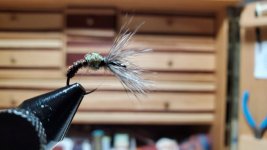
The Takayama Sakasa Kebari is a "reverse spider" wet fly for highstick tightline presentations typically tied with a thread body and no tail on a straight shank hook. This variation uses a PT body with copper wire ribbing for reinforcement and a segmented look tied on a scud or lighter wire Klinkhammer hook. It also has the PT fly pattern's Peacock Herl thorax reinforced by spinning it on the thread, or using Olive Ice dubbing that looks better ("buggy") after its picked out or chewed on by fish.
The Takayama Sakasa Kebari is a "reverse spider" wet fly for highstick tightline presentations typically tied with a thread body and no tail on a straight shank hook. This variation uses a PT body with copper wire ribbing for reinforcement and a segmented look tied on a scud or lighter wire Klinkhammer hook. It also has the PT fly pattern's Peacock Herl thorax reinforced by spinning it on the thread, or using Olive Ice dubbing that looks better ("buggy") after its picked out or chewed on by fish.
I will also mention that I have variations of variegated hackle for different types of water. For slower deeper water Partridge or hen Grizzly moves when manipulated (twitching, upstream - downstream & sideways jigging, etc). For higher gradient shallow pocket water a Griz rooster hackle can help slow the fly down and help me keep it in an eddy for a bit longer.I have mentioned this additional PT variation before that has fooled hundreds of fish. It's my confidence fly with a T-rod.
View attachment 196236
The Takayama Sakasa Kebari is a "reverse spider" wet fly for highstick tightline presentations typically tied with a thread body and no tail on a straight shank hook. This variation uses a PT body with copper wire ribbing for reinforcement and a segmented look tied on a scud or lighter wire Klinkhammer hook. It also has the PT fly pattern's Peacock Herl thorax reinforced by spinning it on the thread, or using Olive Ice dubbing that looks better ("buggy") after its picked out or chewed on by fish.
To be honest, I don't change flies at every gradient change. And hen Griz seems to be a good middle of the road.
I don't know man, it looks pretty crappy to me!I doubt they look like crap.. I'll do some testing with them sometime!!
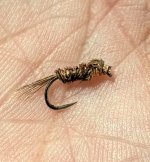

Looks like a cased Caddis, the kind that makes cases from pine needles, like theseI don't know man, it looks pretty crappy to me!
View attachment 196247
Caddisfly Species Brachycentrus americanus (American Grannoms) https://www.troutnut.com/hatch/1756/Caddisfly-Brachycentrus-americanus-American-Grannom

Ha! Yours just looks like a guide tied fly….this looks crappyI don't know man, it looks pretty crappy to me!
View attachment 196247