Composite Dubbing Loops

Tom Butler

Grandpa, Small Stream Fanatic
Forum Supporter
So I struggle with these and often just end up spinning a softhackle. I got some clips but I'm not having a lot of success with them.
Working with hare’s ear plus and grouse.
Any tips or video links appreciated.
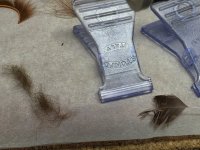
1738.jpg
1739.jpg
 
I've created some absolute monstrosities of composite loops, but have certainly gotten better over the years. Things that help:

A piece of paper with a vertical line on it. Build your material using the line as were the loop will hold the material.

Take the time to align your fibers so they are perpendicular to the loop. Fibers running parallel to the loop are killers.

When you form your loop, run your thread back over the top of the loop to "close" it. Getting the 2 stands to exit the shank from the same point on the shank, as opposed to from either side of it.

Wax. Thick wax, lightly applied to just one of the strands.

Use dubbing to sandwich your other materials from either side, and just a bit.

Take the time to properly fold the spun loop with wetted fingers to make it behave like a hackle.

Pick and brush it all to hell. It can always get thinner.

You succeed or fail on the table, before it goes in the loop. The time spent straightening and evening the material out on the table makes all the difference.

 
I've created some absolute monstrosities of composite loops, but have certainly gotten better over the years. Things that help:

A piece of paper with a vertical line on it. Build your material using the line as were the loop will hold the material.

Take the time to align your fibers so they are perpendicular to the loop. Fibers running parallel to the loop are killers.

When you form your loop, run your thread back over the top of the loop to "close" it. Getting the 2 stands to exit the shank from the same point on the shank, as opposed to from either side of it.

Wax. Thick wax, lightly applied to just one of the strands.

Use dubbing to sandwich your other materials from either side, and just a bit.

Take the time to properly fold the spun loop with wetted fingers to make it behave like a hackle.

Pick and brush it all to hell. It can always get thinner.

You succeed or fail on the table, before it goes in the loop. The time spent straightening and evening the material out on the table makes all the difference.
Thx, some noted errors and good fine points. I usually don't bother to bring the thread loop sides tight before spinning.
 
You succeed or fail on the table, before it goes in the loop. The time spent straightening and evening the material out on the table makes all the difference.
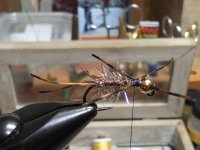
It always takes longer than you think to prep the materials, then take even longer after you think its done.
 
Back
Top