
Navigation
Install the app
How to install the app on iOS
Follow along with the video below to see how to install our site as a web app on your home screen.
Note: This feature may not be available in some browsers.
More options
Style variation
You are using an out of date browser. It may not display this or other websites correctly.
You should upgrade or use an alternative browser.
You should upgrade or use an alternative browser.
NFR New wildfires popping up on a daily basis!
- Thread starter Flymph
- Start date
Non-fishing related


Sunriver PD posted a bunch of signs a month ago, fireworks = $2500 fine. Didn't hear a single firework go off the whole weekend, and grateful for it. When we lived coastside it was non-stop for a week, fireworks, M80's and the occasional AR rip...our dog had to be tranquilized every 4th weekend.

It lasted from about noon until after midnight here in Port Angeles. There is a local forum where residents were asked to respect the vets with PTSD, the pets and area wildlife by finding another way to celebrate the 4th. I found it interesting that those on the forum who felt their rights were being unlawfully curtailed by the request to limit the explosions were the same cross section of the population who have incessantly crowed about the election of 2020 being rigged. Probably just a coincidence.

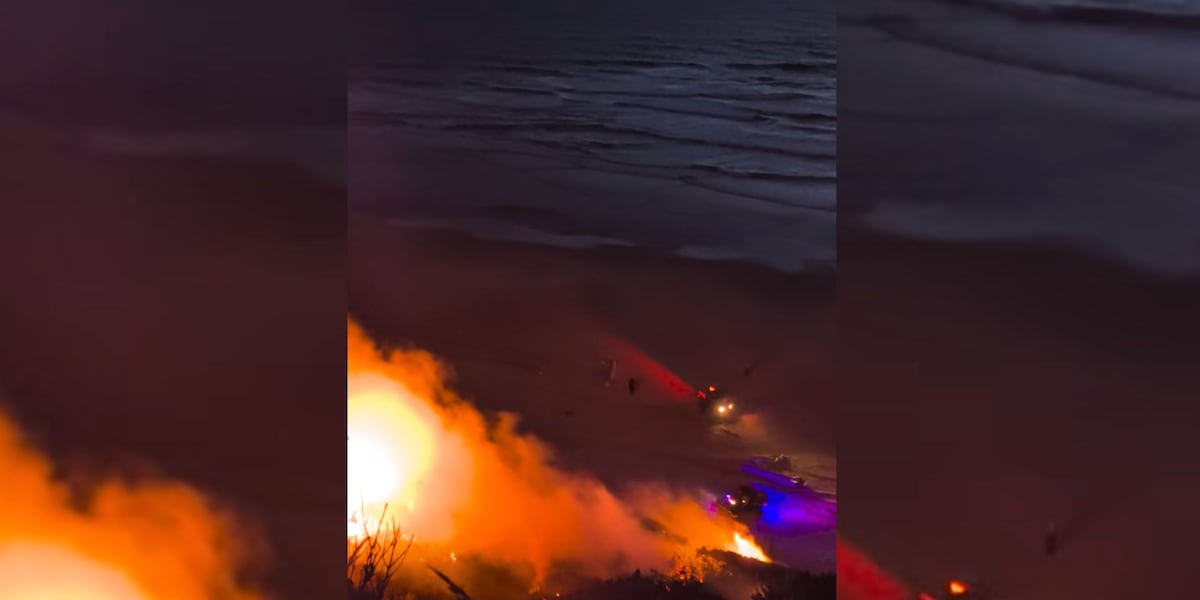
Fireworks causes fire on Oregon coast:
 www.kptv.com
Fireworks start brush fire at Oregon coast, 8 people charged
Lincoln City Police and North Lincoln Fire & Rescue crews responded to a brush fire caused by fireworks late on Saturday night.
www.kptv.com

Yep, seriously.Seriously?
Returning to 1960s harvest levels is probably lower than 1980s harvest levels, which on USFS lands in western WA were not sustainable. I don't have data, but it seems like BLM tends to be more aggressive about forest liquidation in OR than the USFS was. One forest industry person (surely a non-biased source) said OR forests are growing more trees than they are harvesting. I would think that's the point if one is trying to recover from unsustainable over harvests.
I suppose a good place to start would be with the management intent for public federal forests. At one time it was multiple use and sustainable timber harvest. So harvesting more timber than is grown would be a bad fit. Multiple use indicates that fish, wildlife, and recreation are management priorities, so maximizing harvest wouldn't necessarily occupy the position of highest priority. Given the way the current administration behaves, where a bird in the hand is always worth two in the bush, it's impossible to believe there's any priority other than fastest possible liquidation for near term profits.
What should the management plan be, and why? And who decides, and why?
I suspect the harvest levels on the western Washington forests were sustainable, but while I did talk to their analysts I didn't validate their models.
BUT, I can tell you as the person that did the sustainability calculations for the Wenatchee National Forest that not only were they sustainable, but the harvest levels were far, far below the tree growth on the forest. What your confusing is the harvest levels are set for a given set of parameters that restrict timber harvesting due to other uses. Those do not show total timber growth on the Forest.
The reason for a sustainability calculation by alternative is so you do not run out timber products for 300 years. Under the planning regulations, the harvest level could NOT dip during the 300 year period.
Here are the numbers:
President Clinton's NW Forest Plan.........harvest level was 25 MMBF.
Alternative C--preferred Alternative FS....harvest level was 123 MMBF.
Timber Harvest Plan 1970's.....................harvest level was 178 MMBF.
Annual Growth on the Wenatchee............500 million BF.
In 1994, the Wenatchee was concerned about our ability to protect Spotted Owl habitat from wildfire, barred owls and other threats. On wildfires, we thought we could hold any fire to 50,000 acres in the Entiat drainage. We thought the large fire would be in the Cle Elum Valley and that would go over 100,000 acres. The Tyee Fire was 187,000 acres in the Entiat drainage and had fire behavior that we had not seen before.
Since 1986, we have burned 1.5 million acres on the Okanogan-Wenatchee National Forest. For comparison, the entire Olympic National Park is only 922,000 acres. On ONE National Forest we have burned more the 1.5 times the total acreage of the Olympic National Park and we did that in only 40 years. The next 40 years will be much worse due to fire intensity.
Sustainability was never an issue until we adopted the most extreme environmental community alternatives in management of our National Forests. It is much worse looking at the entire National Forest system.
In my professional opinion, we are now negative. The Resources Planning Act report to Congress is due in 2030 and will show that. The report statistics are NOW being prepared.
Burning more trees, than growing. No longer sustainable. The liquidation of our National Forests is happening NOW, not for profit, but for environmental beliefs that do not align with forest science.
Here is a graph from 2017.
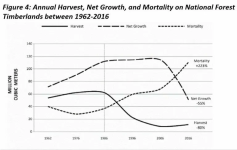
Bruce Lippke, Maureen Puettmann, Elaine Oneil & Chadwick Dearing Oliver(2021) The Plant a Trillion Trees Campaign to Reduce Global Warming – Fleshing Out the Concept, Journal of Sustainable Forestry, 40:1, page 8.
As to who decides. The Executive Branch prepares the plan. AND in recent court decisions Congress reserves the right to review and modify the Forest Plans. They actually always had this authority by the Constitution.
This is who I blame: https://camp70foresters.substack.com/p/the-lawyers-judges-and-politicians
I do have a question for you as a fisheries biologist.
We are converting much of our National Forests to brushfields for hundreds of years, if not thousands of years. That will result in altered streamflows. If I remember my hydrology correctly, this means high run-off flows, lower stream flows after spring run-off, and high water temperatures. Not a good outcome for fisheries as I see it.
Not a peep from the fisheries folks on the burning down of our National Forests. Why??
Last edited:

Ok, iggy time..Well actually your reply kinda validated my point about headlines often being misleading. The title doesn’t make any false claims however without examining closer it can easily be misleading.
Look closer at the data and the definitions they used for the variables in the study you just referred to.
The study you mentioned looked at the variables of snowpack, early melt off, severity of fires, and total number of acres burned. Interestingly they did not cite a correlation between low snowpack and number of acres burned but rather they found a correlation between low snow pack and burn severity (ie temperature and heat of the actual fire) This is NOT the same as total number of acres burned. I am sure that if they had found a strong correlation between low snowpack and total number of acres burned then they would have said so.
There are other factors that have a much greater influence on number of acres burned than snowpack. There have been years with great snowpack and high number of acres burned and other years with low snow pack and low number of acres burned. Hopefully this year we will be the latter. Only time will tell.
Hey thanks for the inadvertent heads up on the filtration. With her asthma Kay could really use this.We run a heavy duty Austin air purifier with medical grade HEPA filter year around, sits in our centrally located LR which has 17' ceilings, does wonders for indoor air quality.
Fairly amazed not a single fire burning in Oregon at this time. Chances we remain fire free by the end of July 4th weekend with the idiots and their fireworks..likely zero.
View attachment 187210

I think we need a working definition of what sustainable forestry is. One might argue for 40 year rotations of Doug fir pecker poles and call that sustainable. It's not what I have in mind. I was briefly acquainted with a forester in the harvest crazy 80s in the Mt Baker-Snoqualmie who said they'd never run out of 100 year old trees. That could have been true because there are a lot of wilderness areas that are off limits to logging.I suspect the harvest levels on the western Washington forests were sustainable
I suspect that management needs also differ by forest type. Fir, hemlock, & cedar type forests can endure for hundreds of years. I think I read that we don't see old growth forests of lodgepole pine because those forests exist where lightning caused fires are common, and most lodgepole burns on an average of every 30 years. Is there any truth to that?
I understand that the Executive Branch prepares the forest plan, but that is supposed to include public input, right? I think the public is entitled to have a say in what they collectively want from public lands, noting that the public voice is often overshadowed by the larger voices in lobbying.
I wasn't aware that ". . . We are converting much of our National Forests to brushfields for hundreds of years, if not thousands of years." I doubt many fish biologists are aware of that or even if that's true. Are you saying that because so much forest land is being burned in wildfires that it is coming back as brushfields that won't produce future timber stands? I'm pretty sure that few, if any, are wanting that.
From a fish habitat perspective, forests that suppress high peak flows, and prolong runoff by slowing rain runoff and slowing snowmelt, and store more groundwater create better fish habitat. Massive clear cutting, road building, and young tree farms are generally at odds with those desired habitat attributes. Massive fires produce effects similar to a massive clear cut from what I understand, so I think we want management efforts that reduce the frequency and size of large magnitude fires.
Wilderness areas are not included in the harvest calculations. I had to do a special run of ForPlan just to get the growth of trees in Wilderness and other no-cut resource allocations.I think we need a working definition of what sustainable forestry is. One might argue for 40 year rotations of Doug fir pecker poles and call that sustainable. It's not what I have in mind. I was briefly acquainted with a forester in the harvest crazy 80s in the Mt Baker-Snoqualmie who said they'd never run out of 100 year old trees. That could have been true because there are a lot of wilderness areas that are off limits to logging.
I suspect that management needs also differ by forest type. Fir, hemlock, & cedar type forests can endure for hundreds of years. I think I read that we don't see old growth forests of lodgepole pine because those forests exist where lightning caused fires are common, and most lodgepole burns on an average of every 30 years. Is there any truth to that?
I understand that the Executive Branch prepares the forest plan, but that is supposed to include public input, right? I think the public is entitled to have a say in what they collectively want from public lands, noting that the public voice is often overshadowed by the larger voices in lobbying.
I wasn't aware that ". . . We are converting much of our National Forests to brushfields for hundreds of years, if not thousands of years." I doubt many fish biologists are aware of that or even if that's true. Are you saying that because so much forest land is being burned in wildfires that it is coming back as brushfields that won't produce future timber stands? I'm pretty sure that few, if any, are wanting that.
From a fish habitat perspective, forests that suppress high peak flows, and prolong runoff by slowing rain runoff and slowing snowmelt, and store more groundwater create better fish habitat. Massive clear cutting, road building, and young tree farms are generally at odds with those desired habitat attributes. Massive fires produce effects similar to a massive clear cut from what I understand, so I think we want management efforts that reduce the frequency and size of large magnitude fires.
A 100-year-old Coast Douglas-fir western Washington typically reaches a height of 170 feet to 200 (51.8 meters) and a diameter at breast height (DBH) of roughly 28 to 48 inches (0.7 to 1.0 meters). Take a tape measure and lay out four feet on a desk. That is the diameter of a Douglas-fir at 100 years in western Washington.
The public is by law entitled to public comment on Forest Service decision and the right to appeal that decision. I found it interesting that the Clinton Forest Plan was issued as a Secretaries decision to bypass this. Nobody complained. I guess it depends on which horse your riding.
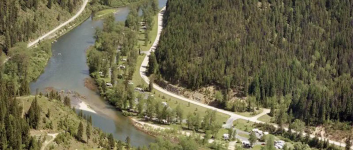
The management of forests is modified by ecological types and conditions and the GOALS for managing that land. Here is a campground I built with a TIMBER SALE on the St. Joe River while working for BLM.
Yes, we are converting our National Forests to brush fields. The problem isn't "that they won't produce future timber stands". The problem is that they will not produce FORESTS and the terrestrial and aquatic species that are dependent on FORESTED habitats. There is more to trees than 2X4's.
Here is the fire history since 2006. It is missing the first 20 years of the mega-fire era since 1986.
https://caltopo.com/map.html#ll=47.61677,-119.97902&z=8&b=mbr&a=fire_recent
The worst is yet to come. The second wave of fires, the REBURNS will be starting up in the next few years. And all those fire areas will burn again at GREATER INTENSITY and in large areas not only removing the tree seedlings, but the seed sources and even the soil.
The economic loss of timber stands is minor to the ecological impact of the total loss of forests in these areas for hundreds and in some cases thousands of years.
This article about the MILLION acre Dixie Fire and its reforestation is worth reading. The estimate is that since the year 2000 six to 11 percent of former California forests no longer exist.
https://www.ucdavis.edu/climate/new...estation-rates-california-among-highest-world
With the exception of the Save the Redwoods League, the environmental community thinks this is how we want to manage our public forests. Our children and their descendants will judge them harshly for this decision.

And we still allow personal fireworks……With no snow pack left, streams dropping fast, very low humidity, and plenty of wind, new wildfires seem to be a daily occurrence.
View attachment 187096

Flymph
Life of the Party
"mah rites" folks will stop at nothing, especially fireworks bans!And we still allow personal fireworks……

I like how you spelled it wrong. That's really smart. It shows that you think people who believe in having rights are idiots."mah rites" folks will stop at nothing

I think it could be about folks claiming rights that don't exist ... I could be wrong, but I Do have a right to state it ... I do not have a right to blow off fire works, well until the Supreme Court decides fire works are "free speech" or somehow fall under the Second AmendmentI like how you spelled it wrong. That's really smart. It shows that you think people who believe in having rights are idiots.
So any time someone doesn't understand the distinction between legally OK and a right, we belittle them and demean them by insinuating they're idiots that can't spell basic words? Got it.I think it could be about folks claiming rights that don't exist ... I could be wrong, but I Do have a right to state it ... I do not have a right to blow off fire works, well until the Supreme Court decides fire works are "free speech" or somehow fall under the Second Amendment
So any time someone doesn't understand the distinction between legally OK and a right, we belittle them and demean them by insinuating they're idiots that can't spell basic words? Got it.
Not excusing it, but I think it was somewhat in jest. Certainly, folks who disagree with my viewpoint paint an unflattering picture of me or folks like me with a similar viewpoint (communist, hate America, not "a patriot", etc, etc, etc). I recall some on here making jest of others, suggesting a backhoe is the solution (Backhoes R Us). Hoping you are as outraged at that ...
I don't think that is the intent at all. Rather, it is when someone behaves or talks like an idiot, then we insinuate that they are an idiot.So any time someone doesn't understand the distinction between legally OK and a right, we belittle them and demean them by insinuating they're idiots that can't spell basic words? Got it.
Hey, wait, are you insinuating that backhoes are NOT part of the solution?suggesting a backhoe is the solution (Backhoes R Us). Hoping you are as outraged at that ...
Flymph
Life of the Party
You are absolutely correct. "Anyone" who ignores fireworks bans is an idiot."mah rites" folks will stop at nothing, especially fireworks bans!